
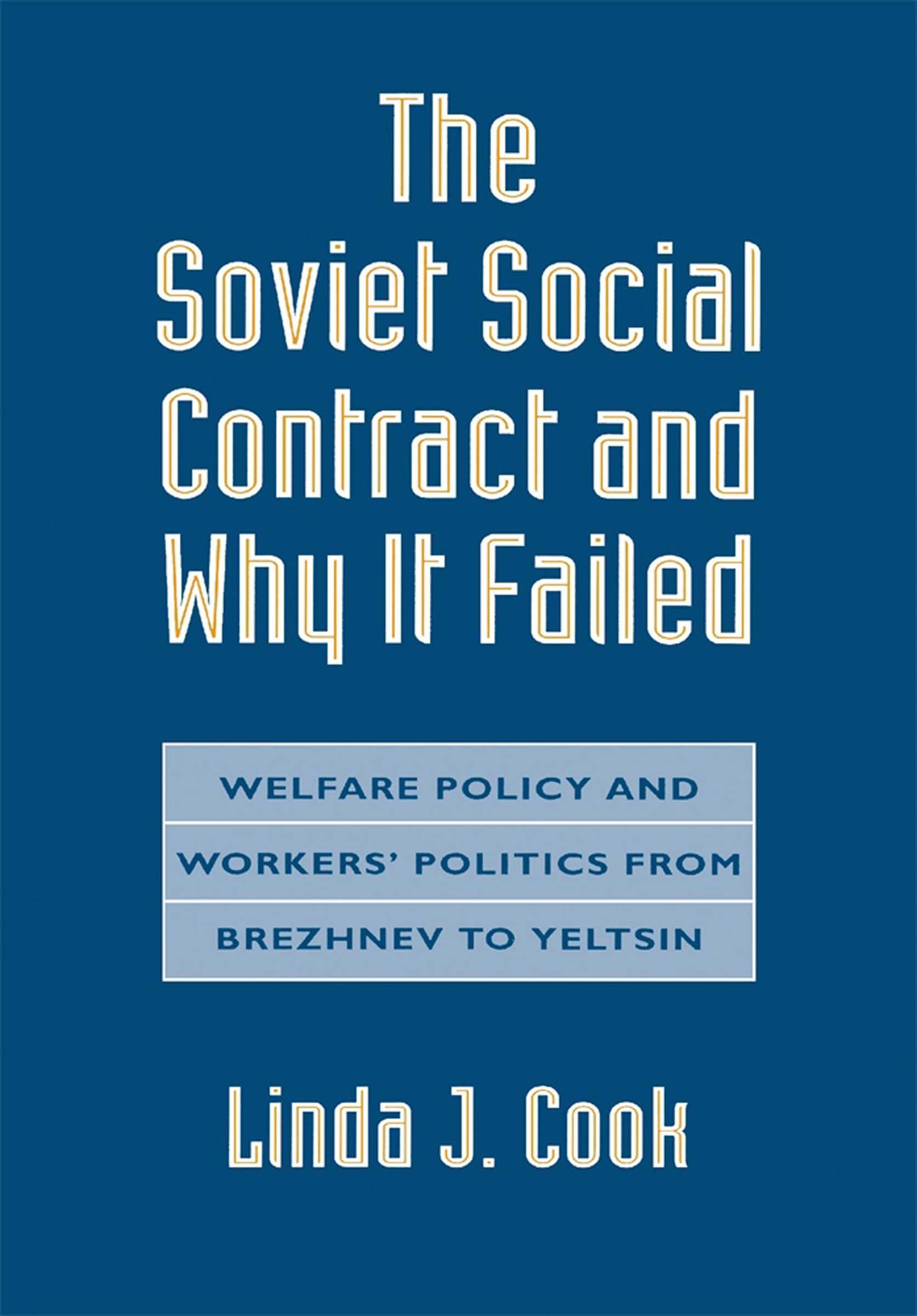
Title
The Soviet Social Contract and Why It Failed: Welfare Policy and Workers Politics from Brezhnev to Yeltsin (Russian Research Cen,New
Sold by Ergodebooks, an authorized reseller.
Returns accepted within 30 days | support@ergodebooks.com
Shipping Information
- Free Standard Shipping — United States only
- Processing Time: 3–5 business days
- Estimated Delivery: 6–10 business days after dispatch
- Double-boxed, fully insured & discreetly packaged
- Tracking number sent via email once dispatched
Returns & Refund
Returns accepted within 30 days of delivery.
Damaged or Defective Item
Free return shipping + replacement or full refund
Wrong Item Received
Free return shipping + replacement or full refund
Change of Mind
Return shipping at customer's expense · 25% restocking fee applies
Payment Option

As their woefully backward economy continues to crumble, much of the Soviet population remains indifferent, if not downright hostile, to the idea of reform. This phenomenon, so different from the Solidarity movement in Poland or the velvet revolution in Czechoslovakia, has been explained in terms of a social contracta tacit agreement between the postStalin regime and the working class whereby the state provided economic and social security in return for the workers' political compliance. This book is the first critical assessment of the likelihood and implications of such a contract.Linda Cook pursues the idea from Brezhnev's day to our own, and considers the constraining effect it may have had on Gorbachev's attempts to liberalize the Soviet economy. In case studies on job security, retail price stability, and social service subsidies, Cook identifies points at which leaders had to make critical decisionsto commit more resources or to abandon other policies at significant costin order to maintain the contract. The pattern that emerges attests to the validity of the social contract thesis for the Brezhnev period. At the same time, Cook's analysis points to several important factors, such as the uneven distribution of benefits, that help explain why labor unrest and activism have varied dramatically from sector to sector in recent years.Ultimately, these case studies reveal, particularly for the Gorbachev period, deep conflicts between the old contract and the requisites of economic reform. Cook extends her analysis into the Yeltsin period to show how the democratizing state dealt weakly with labor's demands, seeking to stabilize labor relations with an inappropriate corporate structure. In the end, mobilized labor contributed greatly to the pressures that undermined Gorbachev's regime, and remained an obstacle to economic reform through the early months of Yeltsin's Russia.
⚠️ WARNING (California Proposition 65):
This product may contain chemicals known to the State of California to cause cancer, birth defects, or other reproductive harm.
For more information, please visit www.P65Warnings.ca.gov.