
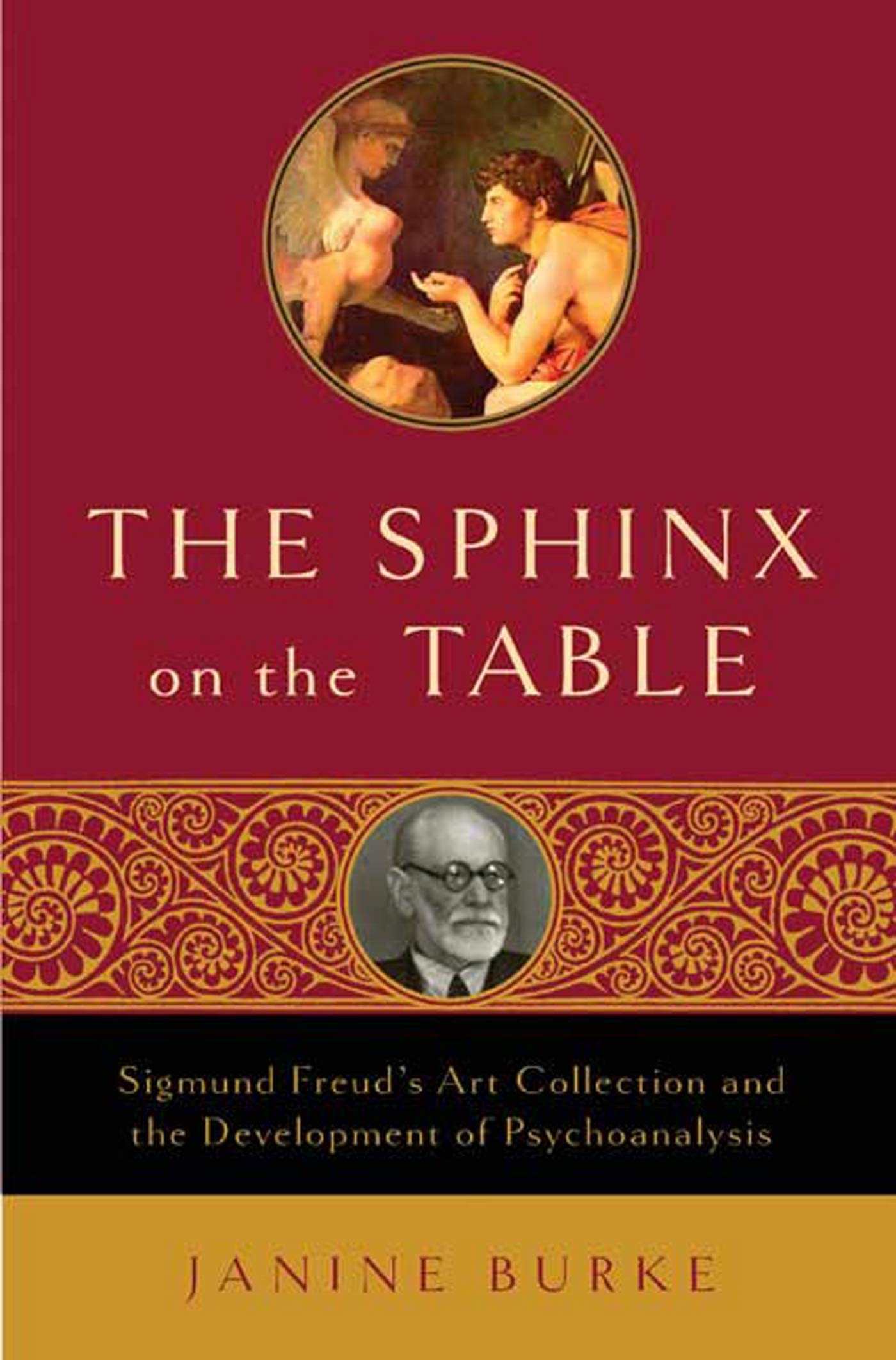
Title
The Sphinx on the Table: Sigmund Freud's Art Collection and the Development of Psychoanalysis,Used
Sold by Ergodebooks, an authorized reseller.
Returns accepted within 30 days | support@ergodebooks.com
Shipping Information
- Free Standard Shipping — United States only
- Processing Time: 3–5 business days
- Estimated Delivery: 6–10 business days after dispatch
- Double-boxed, fully insured & discreetly packaged
- Tracking number sent via email once dispatched
Returns & Refund
Returns accepted within 30 days of delivery.
Damaged or Defective Item
Free return shipping + replacement or full refund
Wrong Item Received
Free return shipping + replacement or full refund
Change of Mind
Return shipping at customer's expense · 25% restocking fee applies
Payment Option

Sigmund Freud's collection of Egyptian, Greek and Roman antiquities is one of the art world's bestkept secrets. Over a forty year period he amassed an extraordinary array of nearly three thousand statues, vases, reliefs, busts, rings and prints.For Freud, psychoanalysis and his art collection developed together in a symbiotic, nourishing relationship, each informing and enriching the other. Freud used myth to illustrate controversial theories like the Oedipus complex, situating ancient symbolism in a modern context. He explored the archaeology of the mind, unearthing his patients' dreams and memories while creating a personal museum of ancient treasure. Freud compared the process to analysis, where he, 'cleared away material, layer by layer', to the technique of excavating a buried city.To create a portrait of Freud the art collector, Janine Burke builds a vibrant, richly detailed and intimate image of his life and times, tracing Freud's taste for beautiful things back to his earliest years. The Sphinx on the Table is set against the glittering, decadent, backdrop of findesiecle Vienna where an artistic flowering took place in painting, theater, writing and architecture.
⚠️ WARNING (California Proposition 65):
This product may contain chemicals known to the State of California to cause cancer, birth defects, or other reproductive harm.
For more information, please visit www.P65Warnings.ca.gov.
- Q: What is the main subject of 'The Sphinx on the Table'? A: 'The Sphinx on the Table' explores Sigmund Freud's extensive art collection of Egyptian, Greek, and Roman antiquities and how it influenced the development of psychoanalysis.
- Q: Who is the author of this book? A: The book is authored by Janine Burke.
- Q: When was 'The Sphinx on the Table' published? A: 'The Sphinx on the Table' was published on November 14, 2006.
- Q: What is the condition of the book? A: The book is listed as 'New'.
- Q: What type of binding does this book have? A: This book is bound as a hardcover.
- Q: How many pages are in 'The Sphinx on the Table'? A: The book contains 384 pages.
- Q: What are some key themes discussed in the book? A: Key themes include the relationship between Freud's art collection and psychoanalysis, the use of myth in Freud's theories, and the cultural context of fin-de-siecle Vienna.
- Q: Is this book suitable for readers interested in psychology? A: Yes, this book is suitable for readers interested in psychology, art history, and the life of Sigmund Freud.
- Q: Does the book include illustrations or images of the art collection? A: The book includes detailed descriptions and discussions of the artworks, though it is not specified if it contains illustrations.
- Q: What is the significance of Freud's art collection? A: Freud's art collection is significant as it reflects his personal interests and how these influenced his psychological theories, serving as a backdrop for his exploration of the mind.