If you have any questions, you are always welcome to contact us. We'll get back to you as soon as possible, withing 24 hours on weekdays.
Customer service
All questions about your order, return and delivery must be sent to our customer service team by e-mail at yourstore@yourdomain.com
Sale & Press
If you are interested in selling our products, need more information about our brand or wish to make a collaboration, please contact us at press@yourdomain.com
Help
If you have any questions, you are always welcome to contact us. We'll get back to you as soon as possible, withing 24 hours on weekdays.
Customer service
All questions about your order, return and delivery must be sent to our customer service team by e-mail at yourstore@yourdomain.com
Sale & Press
If you are interested in selling our products, need more information about our brand or wish to make a collaboration, please contact us at press@yourdomain.com
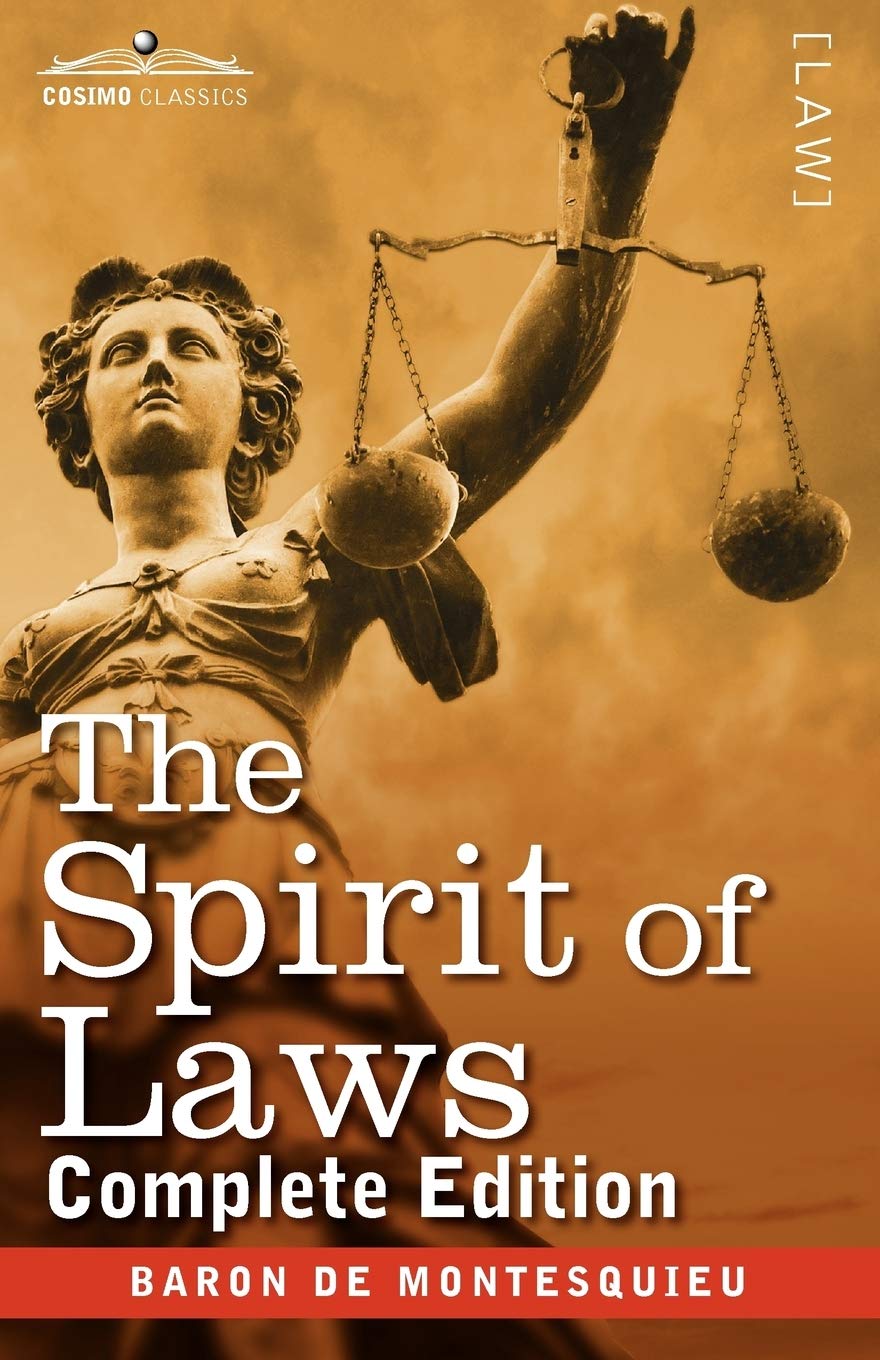
The Spirit of Laws, first published in 1750, is a detailed treatise on the structures and theory of government by French political philosopher Baron de Montesquieu. Unlike his wellloved Persian Letters, The Spirit of Laws scandalized the Frenchit was even banned by the Roman Catholic Church. The fact that it is hardly dated to modern readers is a testament to how revolutionary it must have seemed 250 years ago. Among its comparisons of different forms of governments, such as monarchies, despotic regimes, and republics, is the nowfamous section on Montesquieu's concept of the separation of powers, dividing the ruling body into legislative, executive, and judicial branches. Also included is the author's thinking on slavery, religion in government, families and censuses, the influence of climate on politics and culture, and the making of laws. A powerful influence on the framers of the U.S. Constitution, this classic work will appeal to history buffs and anyone interested in the roots of modern political theory and government. CHARLESLOUIS DE SECONDAT, BARON DE MONTESQUIEU (16891755), born in the South of France and often known simply as Montesquieu, was a political philosopher and social commentator known for his influential political views, especially for his 'separation of power' theory, still used today in constitutions around the world. Some of his bestknown work, the satirical Persian Letters, which made fun of life in Paris under Louis XIV, delighted France in the 1720s.
⚠️ WARNING (California Proposition 65):
This product may contain chemicals known to the State of California to cause cancer,
birth defects, or other reproductive harm.
For MAP (Minimum Advertised Price) violations and Intellectual Property (IP) or Trademark concerns, please contact:
support@ergodebooks.com
⚠️ California Proposition 65 Warning: Some products sold on this website may expose you to chemicals known to the State of California to cause cancer, birth defects, or other reproductive harm. For more information, visit www.P65Warnings.ca.gov.