
Title
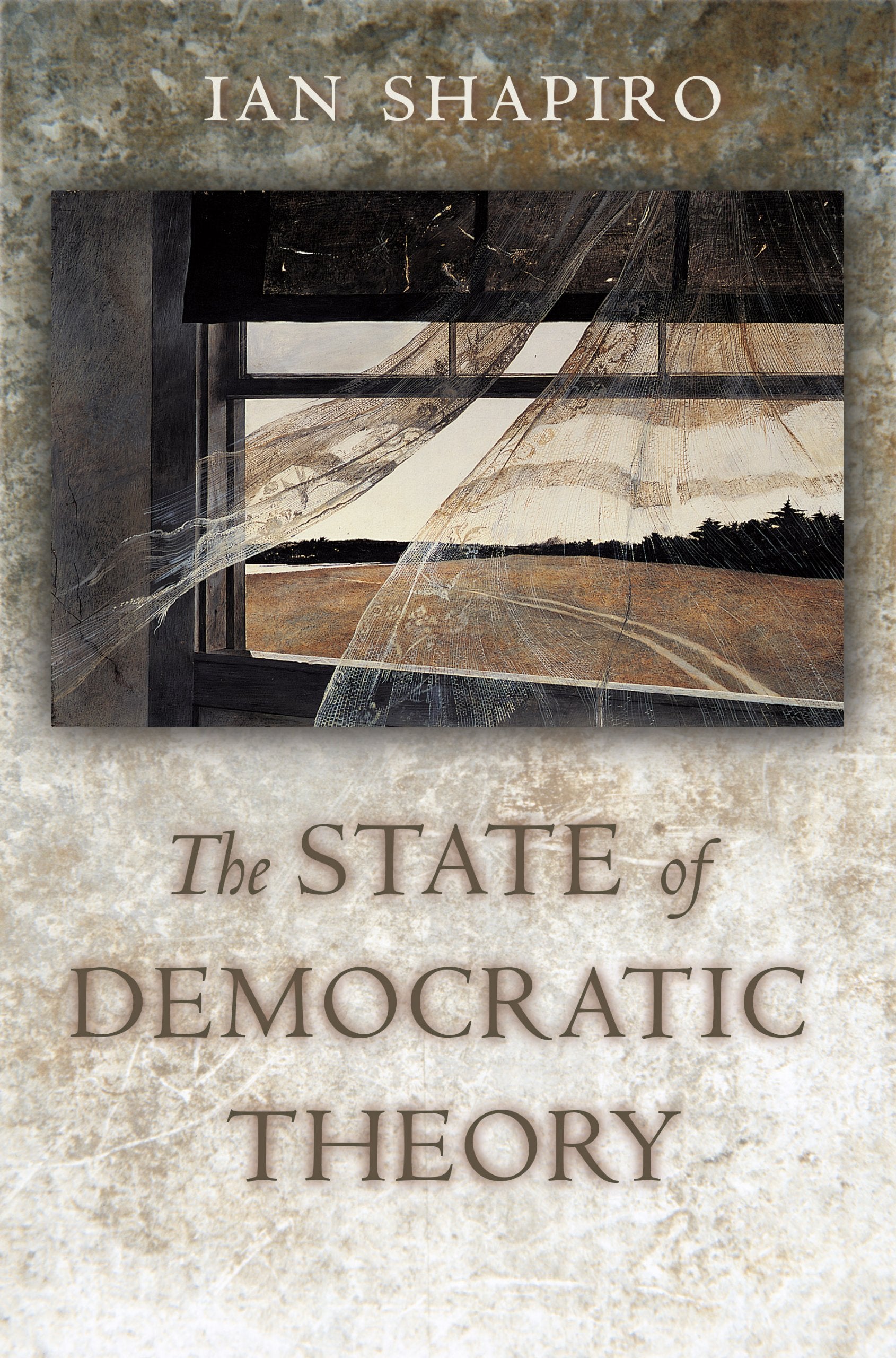
The State Of Democratic Theory,Used
Sold by Ergodebooks, an authorized reseller.
Returns accepted within 30 days | support@ergodebooks.com
Shipping Information
- Free Standard Shipping — United States only
- Processing Time: 3–5 business days
- Estimated Delivery: 6–10 business days after dispatch
- Double-boxed, fully insured & discreetly packaged
- Tracking number sent via email once dispatched
Returns & Refund
Returns accepted within 30 days of delivery.
Damaged or Defective Item
Free return shipping + replacement or full refund
Wrong Item Received
Free return shipping + replacement or full refund
Change of Mind
Return shipping at customer's expense · 25% restocking fee applies
Payment Option

What Should We Expect From Democracy, And How Likely Is It That Democracies Will Live Up To Those Expectations? In The State Of Democratic Theory, Ian Shapiro Offers A Critical Assessment Of Contemporary Answers To These Questions, Lays Out His Distinctive Alternative, And Explores Its Implications For Policy And Political Action.Some Accounts Of Democracy'S Purposes Focus On Aggregating Preferences; Others Deal With Collective Deliberation In Search Of The Common Good. Shapiro Reveals The Shortcomings Of Both, Arguing Instead That Democracy Should Be Geared Toward Minimizing Domination Throughout Society. He Contends That Joseph Schumpeter'S Classic Defense Of Competitive Democracy Is A Useful Starting Point For Achieving This Purpose, But That It Stands In Need Of Radical Supplementationboth With Respect To Its Operation In National Political Institutions And In Its Extension To Other Forms Of Collective Association. Shapiro'S Unusually Wideranging Discussion Also Deals With The Conditions That Make Democracy'S Survival More And Less Likely, With The Challenges Presented By Ethnic Differences And Claims For Group Rights, And With The Relations Between Democracy And The Distribution Of Income And Wealth.Ranging Over Politics, Philosophy, Constitutional Law, Economics, Sociology, And Psychology, This Book Is Written In Shapiro'S Characteristic Lucid Stylea Style That Engages Practitioners Within The Field While Also Opening Up The Debate To Newcomers.
⚠️ WARNING (California Proposition 65):
This product may contain chemicals known to the State of California to cause cancer, birth defects, or other reproductive harm.
For more information, please visit www.P65Warnings.ca.gov.
- Q: What is the page count of 'The State of Democratic Theory'? A: The book has two hundred pages. It's a hardcover edition published by Princeton University Press.
- Q: What are the dimensions of this book? A: The dimensions are six point two six inches in length, zero point seven five inches in width, and nine point two five inches in height.
- Q: Who is the author of 'The State of Democratic Theory'? A: The author is Ian Shapiro. He provides a critical assessment of democracy and its implications.
- Q: How do I engage with the themes in this book? A: You can read it to explore democratic theory and its implications. The book is suitable for scholars and general readers interested in political philosophy.
- Q: Is this book suitable for beginners in political theory? A: Yes, it is suitable for beginners. The author writes in a lucid style that engages newcomers while discussing complex themes.
- Q: Are there any specific prerequisites to understand this book? A: No specific prerequisites are required. However, familiarity with basic political concepts may enhance understanding.
- Q: How can I keep 'The State of Democratic Theory' in good condition? A: Store it in a cool, dry place and avoid exposure to direct sunlight. Clean the cover with a soft, dry cloth.
- Q: What type of binding does this book have? A: The book is bound in hardcover. This type of binding is durable and protects the pages.
- Q: Is there a warranty or return policy for this book? A: Typically, used books have a return policy based on the seller's terms. Check with the retailer for specific details.
- Q: What should I do if the book arrives damaged? A: Contact the seller immediately to report the issue. Most retailers will offer a replacement or refund.
- Q: Can this book be used in academic settings? A: Yes, it is suitable for academic settings. It provides insights into democratic theory that can be discussed in classes.
- Q: Does this book discuss contemporary democracy? A: Yes, it critically assesses contemporary democratic theory and its challenges. It offers a unique perspective on democracy.
- Q: Are there specific themes covered in this book? A: Yes, themes include minimizing domination, collective deliberation, and the relationship between democracy and income distribution.
- Q: Is this book written in an engaging style? A: Yes, Ian Shapiro's writing is characterized by clarity and engagement. It invites readers into complex discussions.
- Q: Who is the publisher of this book? A: The publisher is Princeton University Press. They are known for academic and scholarly publications.
- Q: What genre does this book belong to? A: The book belongs to the History & Theory genre. It explores political philosophy and democratic theory.