
Title
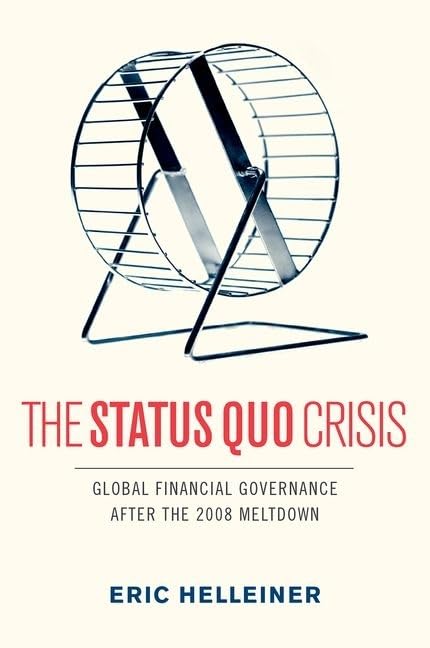
The Status Quo Crisis: Global Financial Governance After the 2008 Meltdown,Used
Sold by Ergodebooks, an authorized reseller.
Returns accepted within 30 days | support@ergodebooks.com
Shipping Information
- Free Standard Shipping — United States only
- Processing Time: 3–5 business days
- Estimated Delivery: 6–10 business days after dispatch
- Double-boxed, fully insured & discreetly packaged
- Tracking number sent via email once dispatched
Returns & Refund
Returns accepted within 30 days of delivery.
Damaged or Defective Item
Free return shipping + replacement or full refund
Wrong Item Received
Free return shipping + replacement or full refund
Change of Mind
Return shipping at customer's expense · 25% restocking fee applies
Payment Option

The 2008 financial crisis was the worst since the Great Depression and many voices argued that it would transform global financial governance. Analysts anticipated a "Bretton Woods moment", referring to the 1944 conference that established the postwar international financial order. Widespread expectations of change were then reinforced by the creation of the G20 leaders' forum, extensive debates about the dollar's global role, the launching of international financial regulatory reforms, and the establishment of the Financial Stability Board.But half a decade later, how much has really changed? In The Status Quo Crisis, Helleiner surveys the landscape and argues that continuity has marked global financial governance more than dramatic transformation. The G20 leaders forum contributed much less to the management of the crisis than advertised. The US dollar remains unchallenged as the world's dominant international currency. The marketfriendly nature of precrisis international financial regulation has been not overturned in a significant manner. And the Financial Stability Board has strengthened the governance of international financial standards in only very modest ways.What we are left with are some smallbore incremental changes that, collectively, have not fundamentally restructured the governance of the global financial system. Helleiner argues that this strangely conservative result was generated partly by the structural power and active policy choices of the country at the center of the crisis: the United States. Status quo outcomes also reflected the unexpected weakness of Europe and conservatism of policymakers in large emerging market countries. Only if this distinct configuration of power and politics among and within influential states shifted in the coming years might the 2008 crisis leave a more transformative legacy over the longer term.Cutting against much of the received wisdom on offer today, The Status Quo Crisis will be essential reading for those interested in the politics of global finance and for anyone curious how expectations of change can be thwarted after even in the most dire of crises.
⚠️ WARNING (California Proposition 65):
This product may contain chemicals known to the State of California to cause cancer, birth defects, or other reproductive harm.
For more information, please visit www.P65Warnings.ca.gov.