
Title
The Stelliferous Fold: Toward A Virtual Law Of Literature'S Selfformation,Used
Sold by Ergodebooks, an authorized reseller.
Returns accepted within 30 days | support@ergodebooks.com
Shipping Information
- Free Standard Shipping — United States only
- Processing Time: 3–5 business days
- Estimated Delivery: 6–10 business days after dispatch
- Double-boxed, fully insured & discreetly packaged
- Tracking number sent via email once dispatched
Returns & Refund
Returns accepted within 30 days of delivery.
Damaged or Defective Item
Free return shipping + replacement or full refund
Wrong Item Received
Free return shipping + replacement or full refund
Change of Mind
Return shipping at customer's expense · 25% restocking fee applies
Payment Option

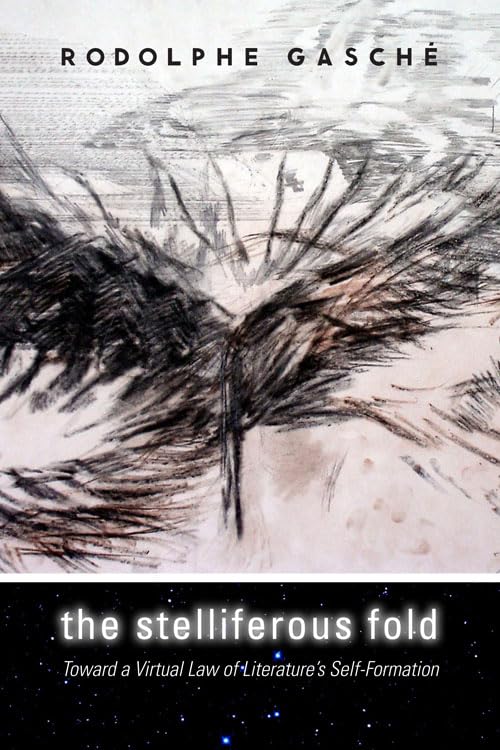
This book seeks to develop a novel approach to literature beyond the conventional divide between realism/formalism and history/aestheticism. It accomplishes this not only through a radical reassessment of the specificity of literature in distinction from one of its othersnamely, philosophybut above all by taking critical issue with the venerable concept of the text and its association with the artisanal techniques of weaving and interlacing. This conception of the text as an artisanal fabric is, the author holds, the unreflected presupposition of both realist, or historicist, and reflective, or deconstructive, criticism.Gasch argues that the scenes of production within literary works, created by their authors yet independent of those authors intentions, stage a works own production in virtual fashion and thus accomplish for those works a certain ideal ontological status that allows for both historical endurance and creative interpretation.In Gaschs construction of these scenes, in which literary works render visible within their own fabric the invisible conditions of their autonomous existence, certain images prevail: the fold, the star, the veil. By showing that these literary images are not simply the opposites of concepts, he not only puts into question the common opposition between literature and philosophy but shows that literary works perform a way of argumentation that, in spite of all its difference from philosophical conceptuality, is on a par with it.The argument progresses through close readings of literary works by Lautramont, Nerval, de lIsle Adam, Huysman, Flaubert, Artaud, Blanchot, Defoe, and Melville.
⚠️ WARNING (California Proposition 65):
This product may contain chemicals known to the State of California to cause cancer, birth defects, or other reproductive harm.
For more information, please visit www.P65Warnings.ca.gov.