If you have any questions, you are always welcome to contact us. We'll get back to you as soon as possible, withing 24 hours on weekdays.
Customer service
All questions about your order, return and delivery must be sent to our customer service team by e-mail at yourstore@yourdomain.com
Sale & Press
If you are interested in selling our products, need more information about our brand or wish to make a collaboration, please contact us at press@yourdomain.com
Help
If you have any questions, you are always welcome to contact us. We'll get back to you as soon as possible, withing 24 hours on weekdays.
Customer service
All questions about your order, return and delivery must be sent to our customer service team by e-mail at yourstore@yourdomain.com
Sale & Press
If you are interested in selling our products, need more information about our brand or wish to make a collaboration, please contact us at press@yourdomain.com
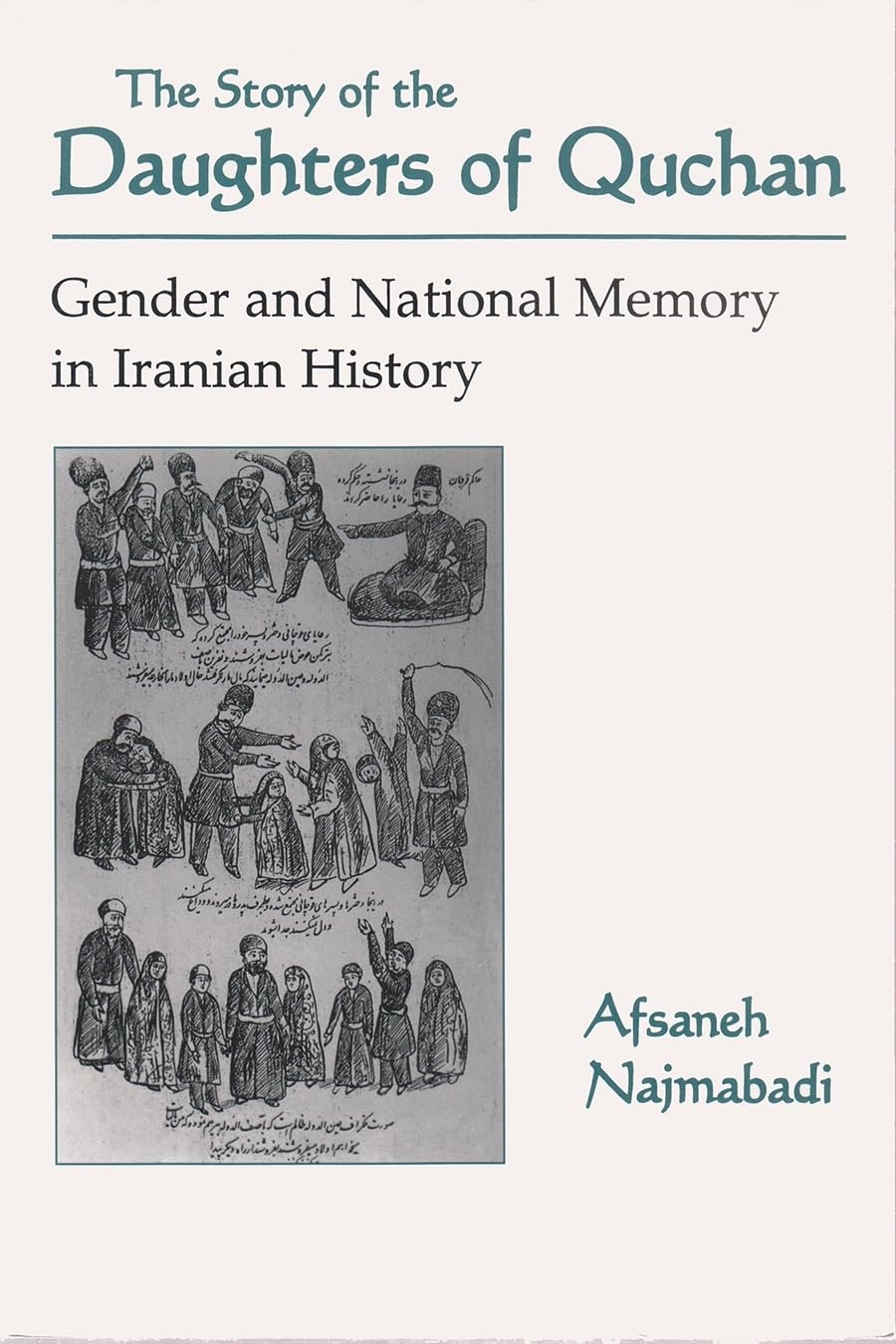
In 1905, the year preceding the Iranian Constitutional Revolution, Iranian women and girls were sold by needy peasants to pay their taxes, or taken as booty in a raid by Turkoman tribesmen against a village settlement in Northeast Iran. The telling and retelling of the event became a focus for outage and grievance, contributing to both popular mobilizations against autocracy and a constitutional regime. Indeed, the narration of this event took all of Iran by storm. Shortly after the opening of a new parliament in 1906, relatives of some of the captive women demanded that the parliament punish those responsible. The newly reconstituted Ministry of Justice investigated the matter and actually tried several people who were alleged to be responsible. In The Story of the Daughters of Quchan, Afsaneh Najambodi investigates what made this incident more powerful. How did a familiar incident of rural destitution and the story of yet another Turkoman raid became a uniquely outrageous story? Although it captured the Iranian national imagination, this event has been all but forgotten. What does this 'amnesia' tell us about the political culture or modern Iran, as well as that country's national memory, and about modernist historiography, as well as that country's national memory, and about modernist historiography in general?
⚠️ WARNING (California Proposition 65):
This product may contain chemicals known to the State of California to cause cancer,
birth defects, or other reproductive harm.
For MAP (Minimum Advertised Price) violations and Intellectual Property (IP) or Trademark concerns, please contact:
support@ergodebooks.com
⚠️ California Proposition 65 Warning: Some products sold on this website may expose you to chemicals known to the State of California to cause cancer, birth defects, or other reproductive harm. For more information, visit www.P65Warnings.ca.gov.