If you have any questions, you are always welcome to contact us. We'll get back to you as soon as possible, withing 24 hours on weekdays.
Customer service
All questions about your order, return and delivery must be sent to our customer service team by e-mail at yourstore@yourdomain.com
Sale & Press
If you are interested in selling our products, need more information about our brand or wish to make a collaboration, please contact us at press@yourdomain.com
Help
If you have any questions, you are always welcome to contact us. We'll get back to you as soon as possible, withing 24 hours on weekdays.
Customer service
All questions about your order, return and delivery must be sent to our customer service team by e-mail at yourstore@yourdomain.com
Sale & Press
If you are interested in selling our products, need more information about our brand or wish to make a collaboration, please contact us at press@yourdomain.com
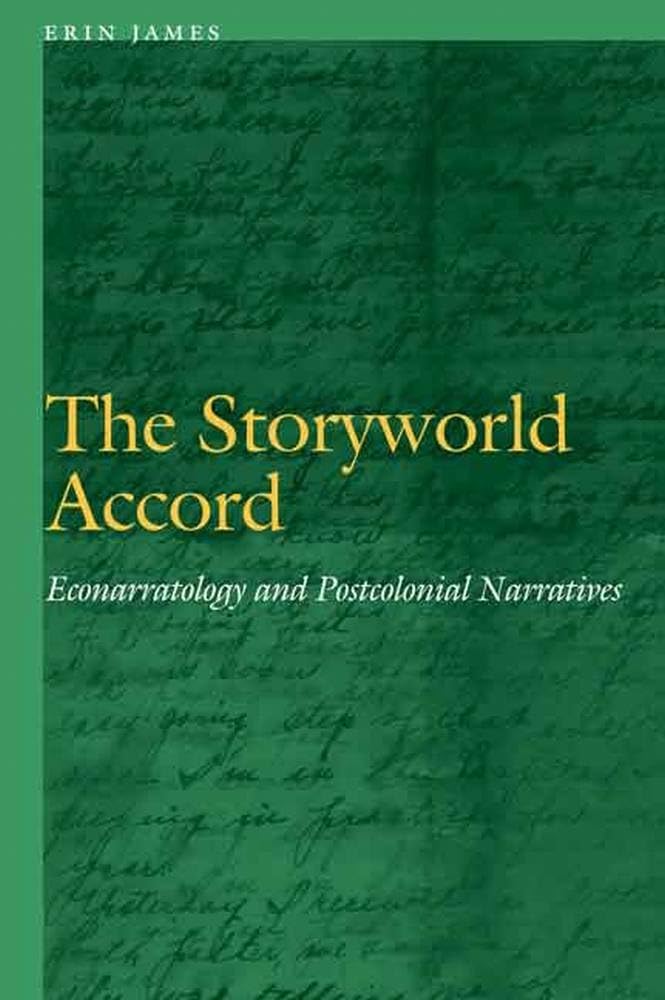
Storyworlds, mental models of context and environment within which characters function, is a concept used to describe what happens in narrative. Narratologists agree that the concept of storyworlds best captures the ecology of narrative interpretation by allowing a fuller appreciation of the organization of both space and time, by recognizing reading as a process that encourages readers to compare the world of a text to other possible worlds, and by highlighting the power of narrative to immerse readers in new and unfamiliar environments.Focusing on the work of writers from Trinidad and Nigeria, such as Sam Selvon and Ben Okri, The Storyworld Accord investigates and compares the storyworlds of nonrealist and postmodern postcolonial texts to show how such narratives grapple with the oftencollapsed concerns of subjectivity, representation, and environment, bringing together these narratological and ecocritical concerns via a mode that Erin James calls econarratology. Arguing that postcolonial ecocriticism, like ecocritical studies, has tended to neglect imaginative representations of the environment in postcolonial literatures, James suggests that readings of storyworlds in postcolonial texts helps narrative theorists and ecocritics better consider the ways in which culture, ideologies, and social and environmental issues are articulated in narrative forms and structures, while also helping postcolonial scholars more fully consider the environment alongside issues of political subjectivity and sovereignty.
⚠️ WARNING (California Proposition 65):
This product may contain chemicals known to the State of California to cause cancer,
birth defects, or other reproductive harm.
For MAP (Minimum Advertised Price) violations and Intellectual Property (IP) or Trademark concerns, please contact:
support@ergodebooks.com
⚠️ California Proposition 65 Warning: Some products sold on this website may expose you to chemicals known to the State of California to cause cancer, birth defects, or other reproductive harm. For more information, visit www.P65Warnings.ca.gov.