
Title
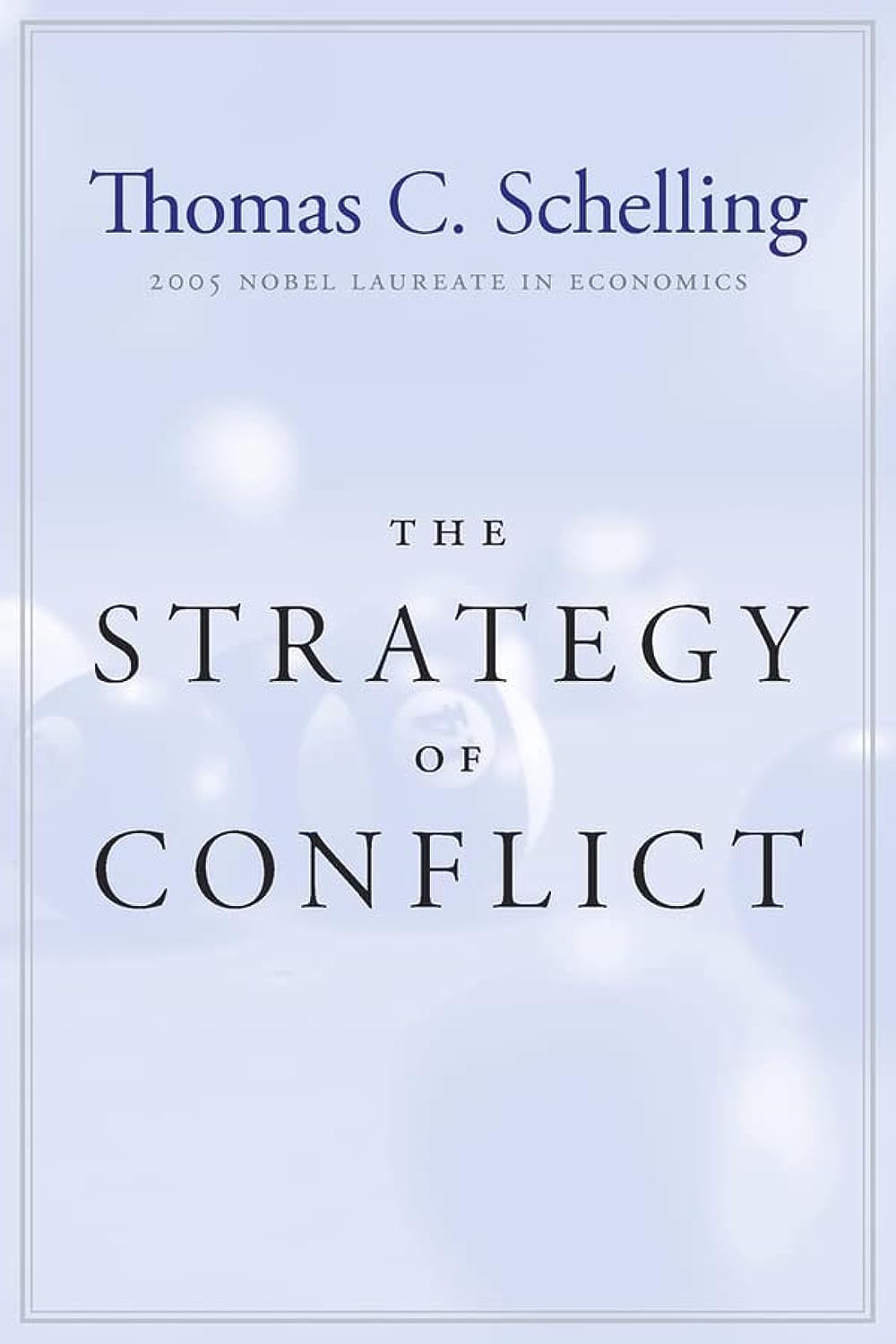
The Strategy Of Conflict: With A New Preface By The Author
Sold by Ergodebooks, an authorized reseller.
Returns accepted within 30 days | support@ergodebooks.com
Shipping Information
- Free Standard Shipping — United States only
- Processing Time: 3–5 business days
- Estimated Delivery: 6–10 business days after dispatch
- Double-boxed, fully insured & discreetly packaged
- Tracking number sent via email once dispatched
Returns & Refund
Returns accepted within 30 days of delivery.
Damaged or Defective Item
Free return shipping + replacement or full refund
Wrong Item Received
Free return shipping + replacement or full refund
Change of Mind
Return shipping at customer's expense · 25% restocking fee applies
Payment Option

A Series Of Closely Interrelated Essays On Game Theory, This Book Deals With An Area In Which Progress Has Been Least Satisfactorythe Situations Where There Is A Common Interest As Well As Conflict Between Adversaries: Negotiations, War And Threats Of War, Criminal Deterrence, Extortion, Tacit Bargaining. It Proposes Enlightening Similarities Between, For Instance, Maneuvering In Limited War And In A Traffic Jam; Deterring The Russians And Ones Own Children; The Modern Strategy Of Terror And The Ancient Institution Of Hostages.
⚠️ WARNING (California Proposition 65):
This product may contain chemicals known to the State of California to cause cancer, birth defects, or other reproductive harm.
For more information, please visit www.P65Warnings.ca.gov.
- Q: What is the page count of 'The Strategy of Conflict'? A: This book contains three hundred twenty-eight pages. It offers a comprehensive exploration of game theory.
- Q: What are the dimensions of this book? A: The dimensions are five point five one inches in length, zero point seven one inches in width, and eight point two seven inches in height.
- Q: What type of binding does this book have? A: This book is available in paperback binding. This makes it lightweight and easy to carry.
- Q: Who is the author of 'The Strategy of Conflict'? A: The author is Thomas C. Schelling. He is renowned for his work in game theory and conflict resolution.
- Q: What is the primary theme of this book? A: The primary theme revolves around game theory and its application in conflicts and negotiations. It explores both common interests and adversarial situations.
- Q: Is this book suitable for beginners in political science? A: Yes, this book is suitable for beginners. It presents complex ideas in an accessible manner.
- Q: How can I apply the concepts from this book? A: You can apply the concepts by understanding negotiation strategies and conflict resolution techniques. The essays provide practical insights into real-world situations.
- Q: Is there any recommended prior knowledge before reading this book? A: No specific prior knowledge is required. However, familiarity with basic political science concepts can enhance understanding.
- Q: How should I store this book to keep it in good condition? A: Store the book in a cool, dry place away from direct sunlight. This prevents damage to the cover and pages.
- Q: Can I lend this book to someone? A: Yes, you can lend this book. Just ensure the condition remains good when returning it.
- Q: What should I do if the book arrives damaged? A: If the book arrives damaged, contact the seller for return or exchange options. Keep the original packaging for reference.
- Q: Is there a warranty on this book? A: No, books typically do not come with a warranty. However, return policies may apply.
- Q: How do I clean this book if it gets dirty? A: To clean the book, gently wipe the cover with a soft, dry cloth. Avoid using water or cleaners.
- Q: Are there any similar books to 'The Strategy of Conflict'? A: Yes, similar books include 'Thinking, Fast and Slow' by Daniel Kahneman and 'Game Theory: An Introduction' by Steven Tadelis. They explore related themes in decision-making.
- Q: What topics are covered in 'The Strategy of Conflict'? A: Topics include negotiations, war, criminal deterrence, and bargaining strategies. The essays interlink these concepts with practical examples.
- Q: Is this book appropriate for academic study? A: Yes, this book is appropriate for academic study. It is often referenced in political science and economics courses.