
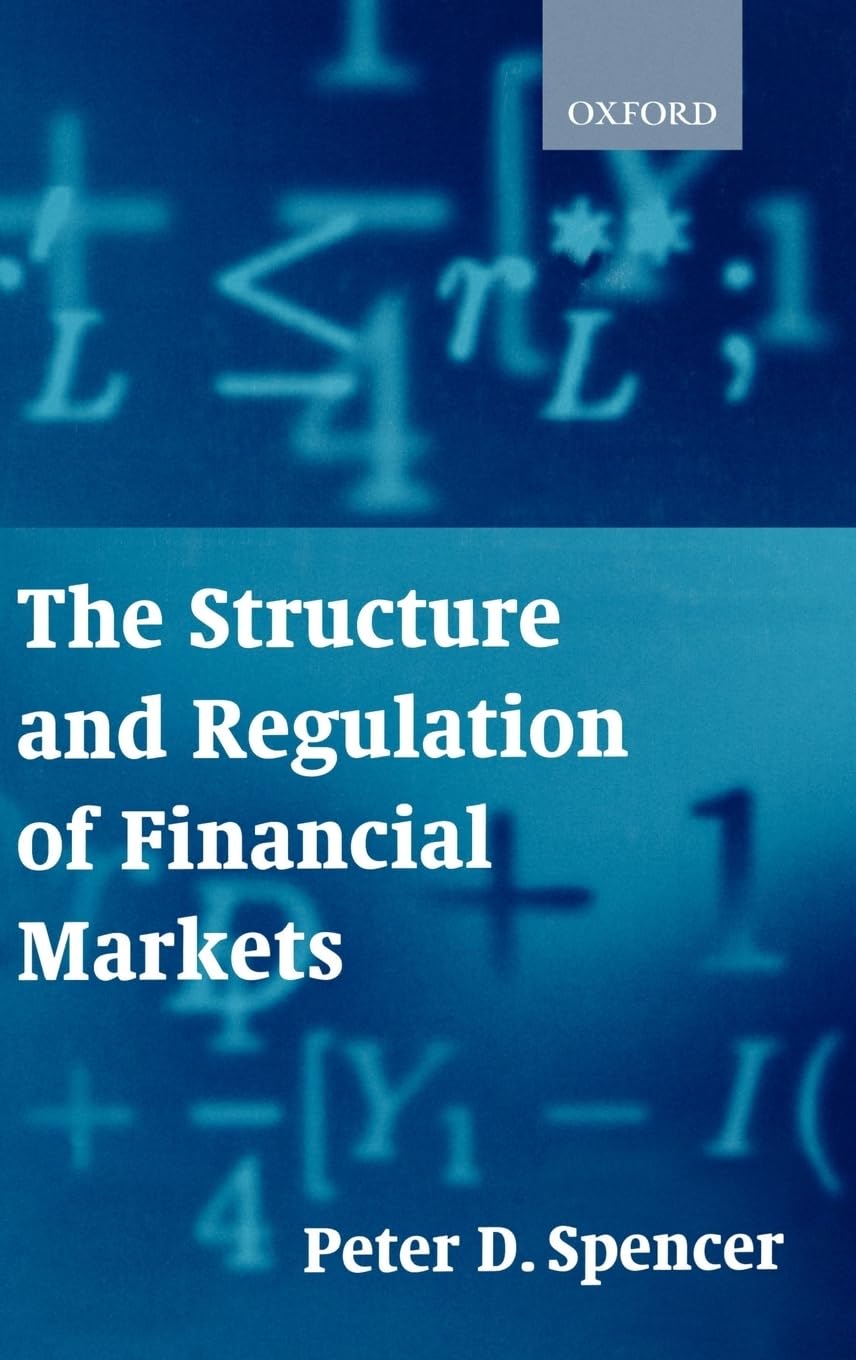
Title
The Structure and Regulation of Financial Markets,Used
Sold by Ergodebooks, an authorized reseller.
Returns accepted within 30 days | support@ergodebooks.com
Shipping Information
- Free Standard Shipping — United States only
- Processing Time: 3–5 business days
- Estimated Delivery: 6–10 business days after dispatch
- Double-boxed, fully insured & discreetly packaged
- Tracking number sent via email once dispatched
Returns & Refund
Returns accepted within 30 days of delivery.
Damaged or Defective Item
Free return shipping + replacement or full refund
Wrong Item Received
Free return shipping + replacement or full refund
Change of Mind
Return shipping at customer's expense · 25% restocking fee applies
Payment Option

This lucid text brings together and explains the main theoretical developments in economic thinking about financial markets, institutions, and regulations over the last twentyfive years. It relates the theory of asymmetric information to the main financial developments in the US, UK, and other AngloSaxon countries. After a preliminary discussion of financial markets and their transparency, it looks at the role of financial intermediaries such as banks. It argues that these institutions can compete with efficient markets because they are confidential. The book goes on to discuss bank credit rationing, bank failure and systemic risk, and the way in which regulation can control these risks.
⚠️ WARNING (California Proposition 65):
This product may contain chemicals known to the State of California to cause cancer, birth defects, or other reproductive harm.
For more information, please visit www.P65Warnings.ca.gov.
- Q: How many pages does this book have? A: This book has two hundred eighty pages. It's a comprehensive resource on financial markets and regulations.
- Q: What are the dimensions of this book? A: The dimensions are nine point two one inches in length, six point one four inches in width, and nine point zero two inches in height.
- Q: What type of binding does this book have? A: This book is bound in hardcover. This durable binding helps protect the pages and enhances its longevity.
- Q: Who is the author of this book? A: The author is Peter D. Spencer. He provides insights into financial theory and its practical implications.
- Q: What category does this book belong to? A: This book falls under the Development & Growth category. It focuses on economic theories related to financial markets.
- Q: Is this book suitable for beginners in finance? A: Yes, this book is suitable for beginners. It explains complex concepts in an accessible manner.
- Q: Can I use this book for academic research? A: Yes, this book is ideal for academic research. It compiles key theoretical developments in financial markets over twenty-five years.
- Q: Is this book appropriate for graduate-level studies? A: Yes, this book is appropriate for graduate-level studies. It provides in-depth analysis suitable for advanced learners.
- Q: How should I store this book to keep it in good condition? A: Store this book in a cool, dry place. Avoid direct sunlight to prevent fading and damage.
- Q: What are the cleaning instructions for this book? A: To clean this book, gently wipe the cover with a soft, dry cloth. Avoid using liquids that could damage the binding.
- Q: What if the book arrives damaged? A: If the book arrives damaged, contact customer service for assistance. They can guide you through the return process.
- Q: Does this book have a warranty? A: No, this book does not come with a warranty. However, you can return it if it arrives defective.
- Q: Is there a return policy for this book? A: Yes, there is a return policy in place. Typically, you can return it within thirty days of purchase.
- Q: What if I have questions about the content of the book? A: If you have questions about the content, consider reaching out to academic forums or discussion groups. They can provide valuable insights.
- Q: How does this book compare to others in the same genre? A: This book offers a unique perspective on financial regulation compared to others. It emphasizes asymmetric information, making it distinctive.
- Q: Is this book suitable for professionals in finance? A: Yes, this book is suitable for finance professionals. It addresses theoretical developments relevant to current practices.