
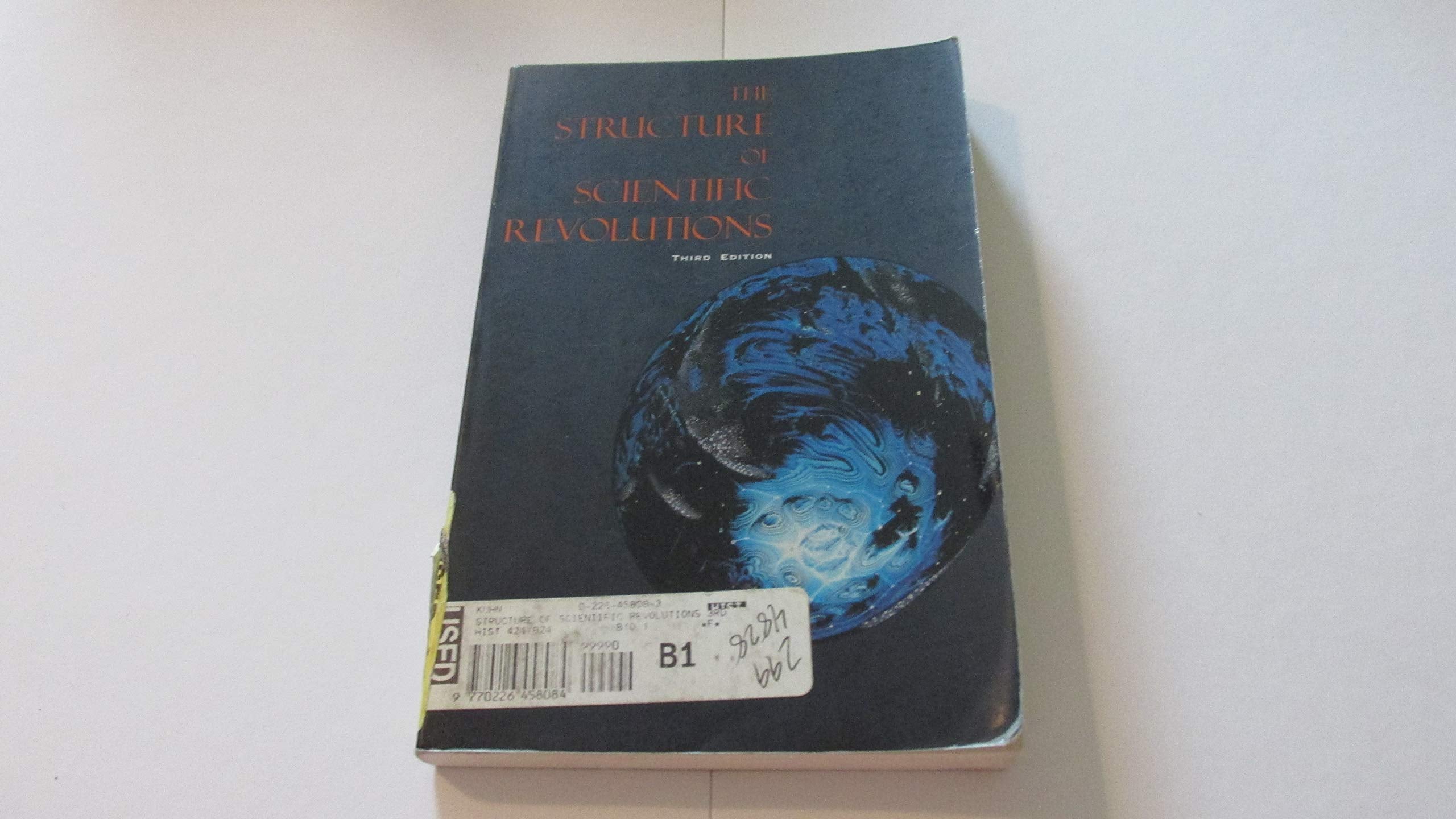
Title
The Structure Of Scientific Revolutions,New
Sold by Ergodebooks, an authorized reseller.
Returns accepted within 30 days | support@ergodebooks.com
Shipping Information
- Free Standard Shipping — United States only
- Processing Time: 3–5 business days
- Estimated Delivery: 6–10 business days after dispatch
- Double-boxed, fully insured & discreetly packaged
- Tracking number sent via email once dispatched
Returns & Refund
Returns accepted within 30 days of delivery.
Damaged or Defective Item
Free return shipping + replacement or full refund
Wrong Item Received
Free return shipping + replacement or full refund
Change of Mind
Return shipping at customer's expense · 25% restocking fee applies
Payment Option

A Landmark In Intellectual History Which Has Attracted Attention Far Beyond Its Own Immediate Field. . . . It Is Written With A Combination Of Depth And Clarity That Make It An Almost Unbroken Series Of Aphorisms. . . . Kuhn Does Not Permit Truth To Be A Criterion Of Scientific Theories, He Would Presumably Not Claim His Own Theory To Be True. But If Causing A Revolution Is The Hallmark Of A Superior Paradigm, [This Book] Has Been A Resounding Success.' Nicholas Wade, Science'Perhaps The Best Explanation Of [The] Process Of Discovery.' William Erwin Thompson, New York Times Book Review'Occasionally There Emerges A Book Which Has An Influence Far Beyond Its Originally Intended Audience. . . . Thomas Kuhn'S The Structure Of Scientific Revolutions . . . Has Clearly Emerged As Just Such A Work.' Ron Johnston, Times Higher Education Supplement'Among The Most Influential Academic Books In This Century.' Choiceone Of 'The Hundred Most Influential Books Since The Second World War,' Times Literary Supplement
⚠️ WARNING (California Proposition 65):
This product may contain chemicals known to the State of California to cause cancer, birth defects, or other reproductive harm.
For more information, please visit www.P65Warnings.ca.gov.
- Q: How many pages does the book have? A: The book contains two hundred twelve pages. This makes it a concise yet comprehensive read on the subject of scientific revolutions.
- Q: What is the binding type of this book? A: The book is available in paperback binding. This is a popular choice for readers who prefer a lighter and more flexible format.
- Q: What are the dimensions of this book? A: The book measures five point twenty-five inches in length, one point two inches in width, and eight inches in height. This size is portable and easy to handle.
- Q: Who is the author of this book? A: The author of the book is Thomas S. Kuhn. He is well-known for his influential work in the philosophy of science.
- Q: What genre does this book fall under? A: This book falls under the genre of History and Philosophy. It explores significant shifts in scientific thought and practice.
- Q: Is this book suitable for beginners in philosophy? A: Yes, this book is suitable for beginners. Its clear writing style and thought-provoking concepts make it accessible to new readers.
- Q: How do I read this book effectively? A: To read this book effectively, consider taking notes on key concepts and engaging with the examples provided. Reflecting on the material enhances understanding.
- Q: Is this book appropriate for academic studies? A: Yes, this book is appropriate for academic studies. It is often used in educational settings to discuss scientific paradigms and their historical context.
- Q: How should I store this book? A: Store this book in a cool, dry place away from direct sunlight. Keeping it on a bookshelf helps to maintain its condition.
- Q: Can I clean the cover of the book? A: Yes, you can clean the cover with a damp cloth. Avoid using harsh chemicals to preserve the book's integrity.
- Q: What should I do if the book arrives damaged? A: If the book arrives damaged, contact customer service for assistance. They can guide you on how to return or exchange the item.
- Q: Is there a return policy for this book? A: Yes, there is a return policy for this book. Be sure to check the specific terms provided at the time of purchase.
- Q: How does this book compare to other philosophical texts? A: This book is unique compared to other philosophical texts due to its focus on the history of science and paradigm shifts, making it highly influential.
- Q: What level of understanding is required to read this book? A: A basic understanding of scientific concepts is helpful, but the book is written for a general audience, so prior knowledge is not mandatory.
- Q: Who published this book? A: The book is published by the University of Chicago Press. They are known for their academic publications and quality scholarship.
- Q: What impact has this book had in academia? A: This book has had a significant impact in academia, often being cited in discussions about the philosophy and history of science.