
Title
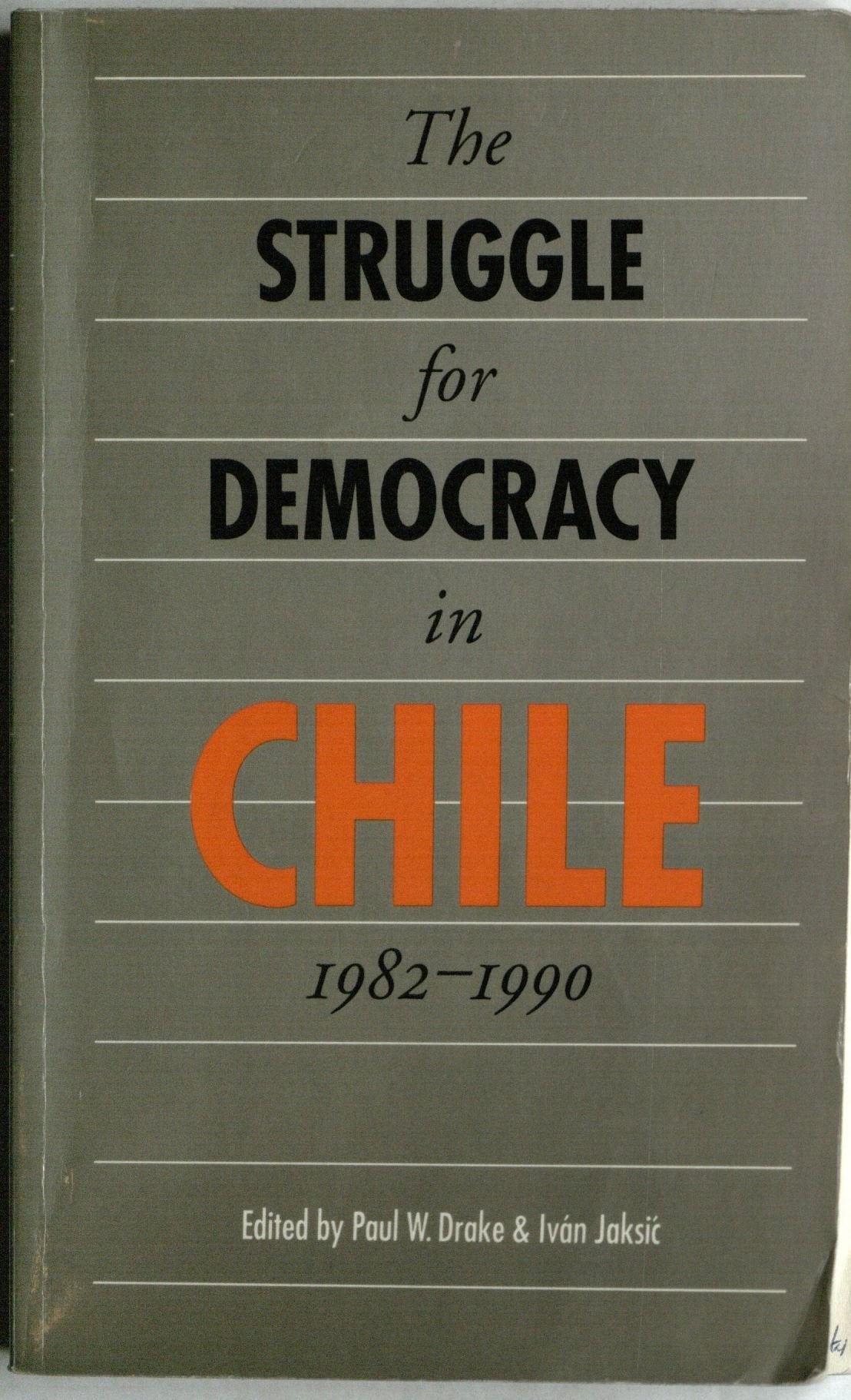
The Struggle for Democracy in Chile, 19821990 (Latin American Studies Series),Used
Sold by Ergodebooks, an authorized reseller.
Returns accepted within 30 days | support@ergodebooks.com
Shipping Information
- Free Standard Shipping — United States only
- Processing Time: 3–5 business days
- Estimated Delivery: 6–10 business days after dispatch
- Double-boxed, fully insured & discreetly packaged
- Tracking number sent via email once dispatched
Returns & Refund
Returns accepted within 30 days of delivery.
Damaged or Defective Item
Free return shipping + replacement or full refund
Wrong Item Received
Free return shipping + replacement or full refund
Change of Mind
Return shipping at customer's expense · 25% restocking fee applies
Payment Option

After a decade of dictatorship, the resurrection of democratic forces in Chile began with the debt crisis and recession of the early 1980s. Mass demonstrations erupted and political parties revived with unexpected vigor despite the repression of General Augusto Pinochet's regime. The United States pressed for democratization. In 1988, to the astonishment of the world, Pinochet allowed his oppenents to win an honest plebiscite and accepted the resulting transition to democracy. The Struggle for Democracy in Chile, 19821990 is the first book to discuss in comprehensive detail that unusual transition.This book provides background on the evolution of the military dictatorship in the 1970s and then concentrates on its erosion in the 1980s. It concludes with the installation of Patricio Aylwin as the democratically elected president in 1990. Here, eleven leading experts examine how the most significant social and political sectors reacted to liberalization in the 1980s, and how the opposition took advantage of the dictatorship's own legality to bring about an end to authoritarian rule.First the book examines the Pinochet regime's supporters, with essays by Arturo Valenzuela ("The Military Power"), Augusto Varas ("The Crisis of Legitimacy of Authoritarianism"), Eduardo Silva ("The Political Economy of Regime Transition"), and Guillermo Campero ("Entrepreneurs under the Military Regime").Second, it studies Pinochet's opponents, with chapters by Mara Elena Valenzuela ("The New Roles of Women"), Alan Angell ("Unions and Workers in the 1980s"), Manuel Antonio Garretn ("The Political Opposition and the Party System"), Carlos Portales ("External Factors and the Authoritarian Regime"), and Felipe Larran ("The Economic Challenges of Democratic Development").
⚠️ WARNING (California Proposition 65):
This product may contain chemicals known to the State of California to cause cancer, birth defects, or other reproductive harm.
For more information, please visit www.P65Warnings.ca.gov.