
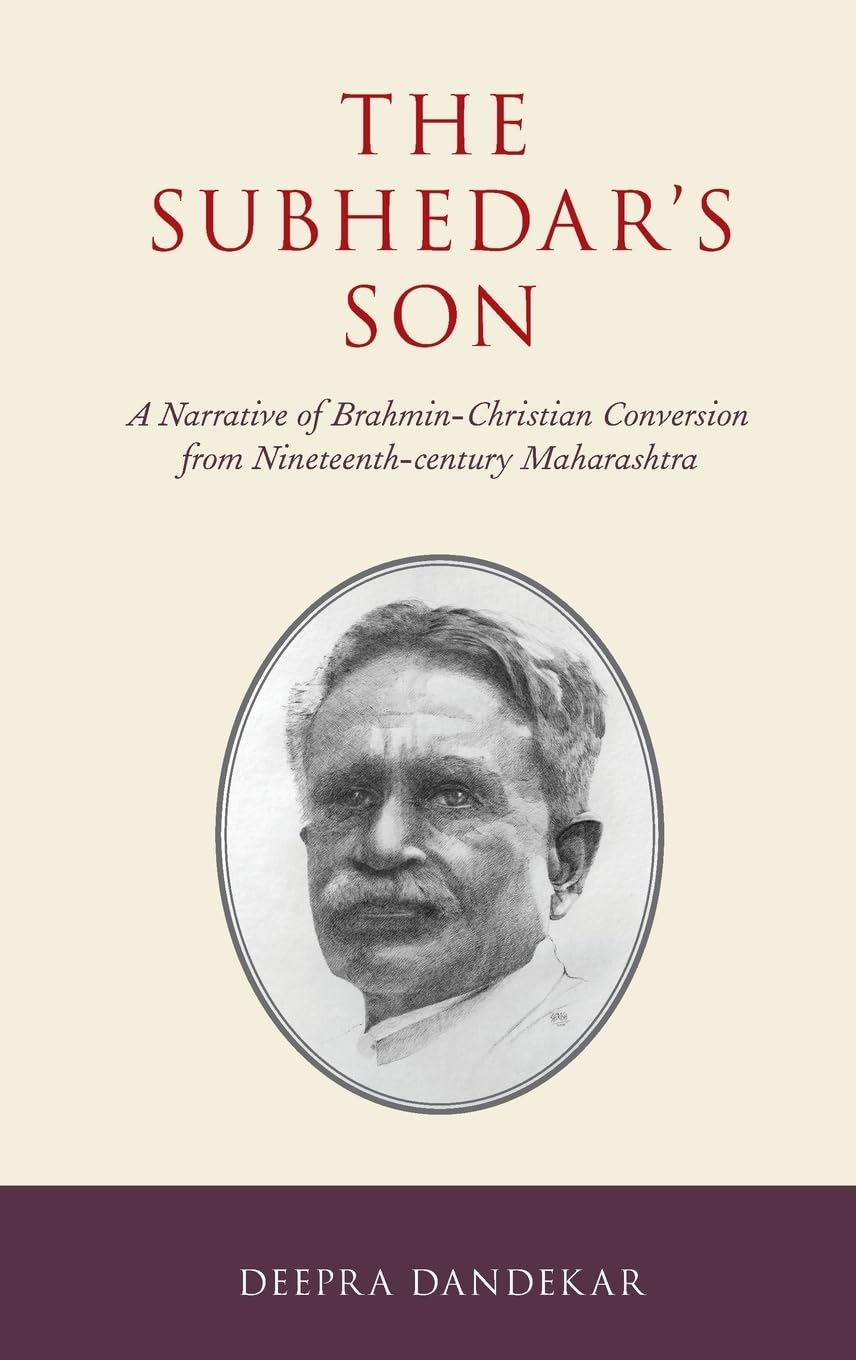
Title
The Subhedar's Son: A Narrative of BrahminChristian Conversion from Nineteenthcentury Maharashtra (AAR Religion in Translation,Used
Sold by Ergodebooks, an authorized reseller.
Returns accepted within 30 days | support@ergodebooks.com
Shipping Information
- Free Standard Shipping — United States only
- Processing Time: 3–5 business days
- Estimated Delivery: 6–10 business days after dispatch
- Double-boxed, fully insured & discreetly packaged
- Tracking number sent via email once dispatched
Returns & Refund
Returns accepted within 30 days of delivery.
Damaged or Defective Item
Free return shipping + replacement or full refund
Wrong Item Received
Free return shipping + replacement or full refund
Change of Mind
Return shipping at customer's expense · 25% restocking fee applies
Payment Option

The 19th century was a pioneering age for vernacular texts in India. Vernacular writings became popular for making the 'first' interventions of their kind, written by Indians for Indians, and establishing new genres such as the biographical novel. The Subhedar's Son, an awardwinning Marathi novel, was written in 1895 and published by the Bombay Tract and Book Society, and comprised overlapping personal and political trajectories. The author, Rev. Dinkar Shankar Sawarkar, inscribed multiple viewpoints into his narrative, including that of his own father, Rev. Shankar Nana (18191884), a Brahmin who was one of the early converts of the Church Missionary Society in Western India and served the CMS and the Anglican Church in various capacities for many years. Apart from Shankar Nana's conversionstory, Sawarkar provides readers with a blueprint of what a Brahminical journey towards Christian conversion encompassed, while describing his personal background of having lived a Christian life as a product of both Brahminism and Christianity. Attempting to deconstruct Brahmanism through Christianity he claimed Brahmin roots as a Christian with an aim of combatting the stigma of conversion. Contextualized within the early history of Maharashtra's missions and the specificities of individual conversions, the novel allows modern researchers to appreciate the particularity of regional and vernacular Indian Christianity. This culturallyspecific Christianity spurred the production of Christian vernacular print culture, associating 'being Marathi' with broader and more universal frameworks of Christianity. But this new genre also produced nativist forms of Christian devotion and piety. Deepra Dandekar introduces this annotated translation of The Subhedar's Son, with an examination of the Church Missionary Society's socio political context; a biography of Shankar Nana gleaned from archival sources; a brief summary of Sawarkar's biography; and an analysis of the multiple political opinions framing the book.
⚠️ WARNING (California Proposition 65):
This product may contain chemicals known to the State of California to cause cancer, birth defects, or other reproductive harm.
For more information, please visit www.P65Warnings.ca.gov.