If you have any questions, you are always welcome to contact us. We'll get back to you as soon as possible, withing 24 hours on weekdays.
Customer service
All questions about your order, return and delivery must be sent to our customer service team by e-mail at yourstore@yourdomain.com
Sale & Press
If you are interested in selling our products, need more information about our brand or wish to make a collaboration, please contact us at press@yourdomain.com
Help
If you have any questions, you are always welcome to contact us. We'll get back to you as soon as possible, withing 24 hours on weekdays.
Customer service
All questions about your order, return and delivery must be sent to our customer service team by e-mail at yourstore@yourdomain.com
Sale & Press
If you are interested in selling our products, need more information about our brand or wish to make a collaboration, please contact us at press@yourdomain.com
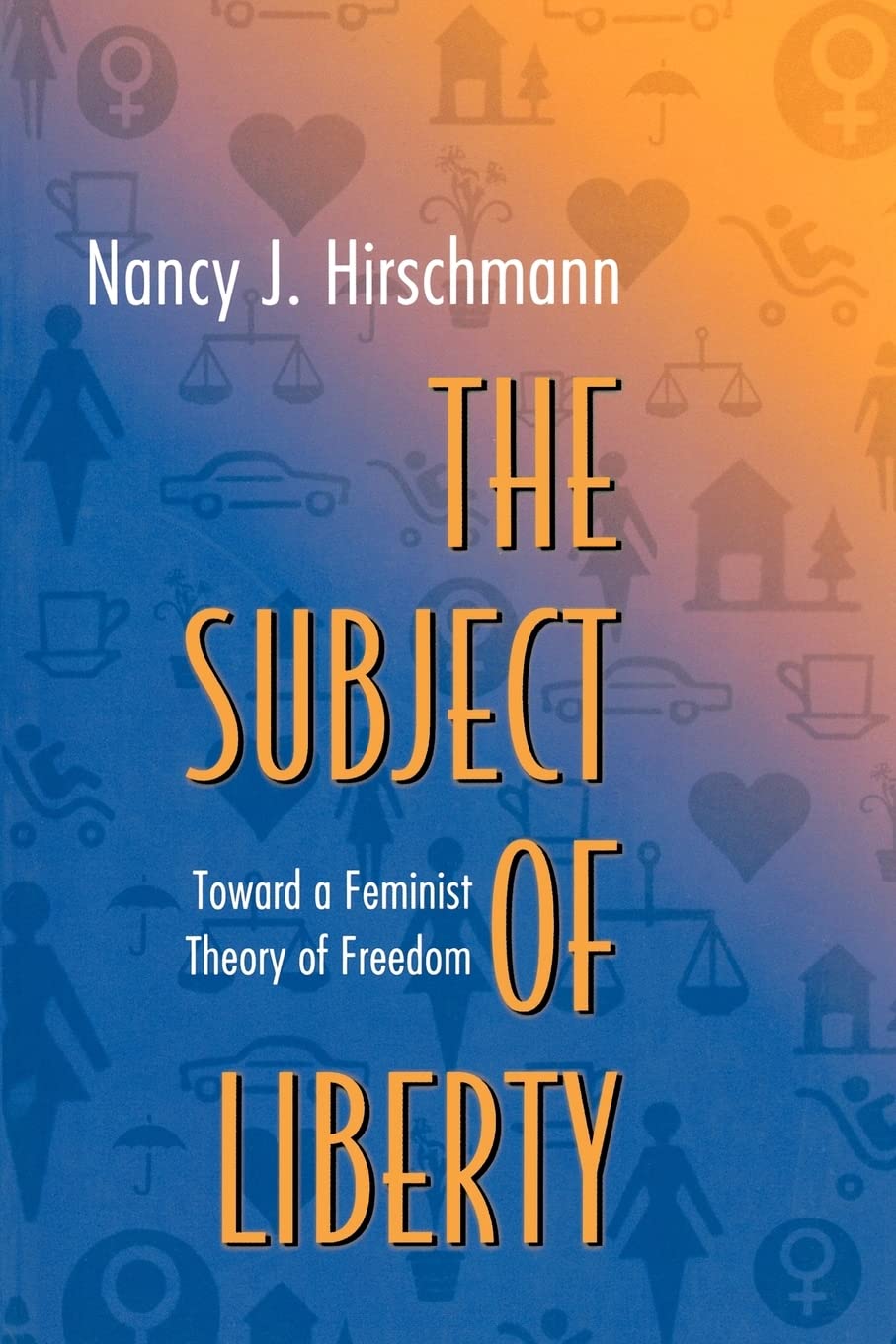
This book reconsiders the dominant Western understandings of freedom through the lens of women's reallife experiences of domestic violence, welfare, and Islamic veiling. Nancy Hirschmann argues that the typical approach to freedom found in political philosophy severely reduces the concept's complexity, which is more fully revealed by taking such practical issues into account.Hirschmann begins by arguing that the dominant Western understanding of freedom does not provide a conceptual vocabulary for accurately characterizing women's experiences. Often, free choice is assumed when women are in fact coercedas when a battered woman who stays with her abuser out of fear or economic necessity is said to make this choice because it must not be so badand coercion is assumed when free choices are madesuch as when Westerners assume that all veiled women are oppressed, even though many Islamic women view veiling as an important symbol of cultural identity.Understanding the contexts in which choices arise and are made is central to understanding that freedom is socially constructed through systems of power such as patriarchy, capitalism, and race privilege. Social norms, practices, and language set the conditions within which choices are made, determine what options are available, and shape our individual subjectivity, desires, and selfunderstandings. Attending to the ways in which contexts construct us as 'subjects' of liberty, Hirschmann argues, provides a firmer empirical and theoretical footing for understanding what freedom means and entails politically, intellectually, and socially.
⚠️ WARNING (California Proposition 65):
This product may contain chemicals known to the State of California to cause cancer,
birth defects, or other reproductive harm.
For MAP (Minimum Advertised Price) violations and Intellectual Property (IP) or Trademark concerns, please contact:
support@ergodebooks.com
⚠️ California Proposition 65 Warning: Some products sold on this website may expose you to chemicals known to the State of California to cause cancer, birth defects, or other reproductive harm. For more information, visit www.P65Warnings.ca.gov.