
Title
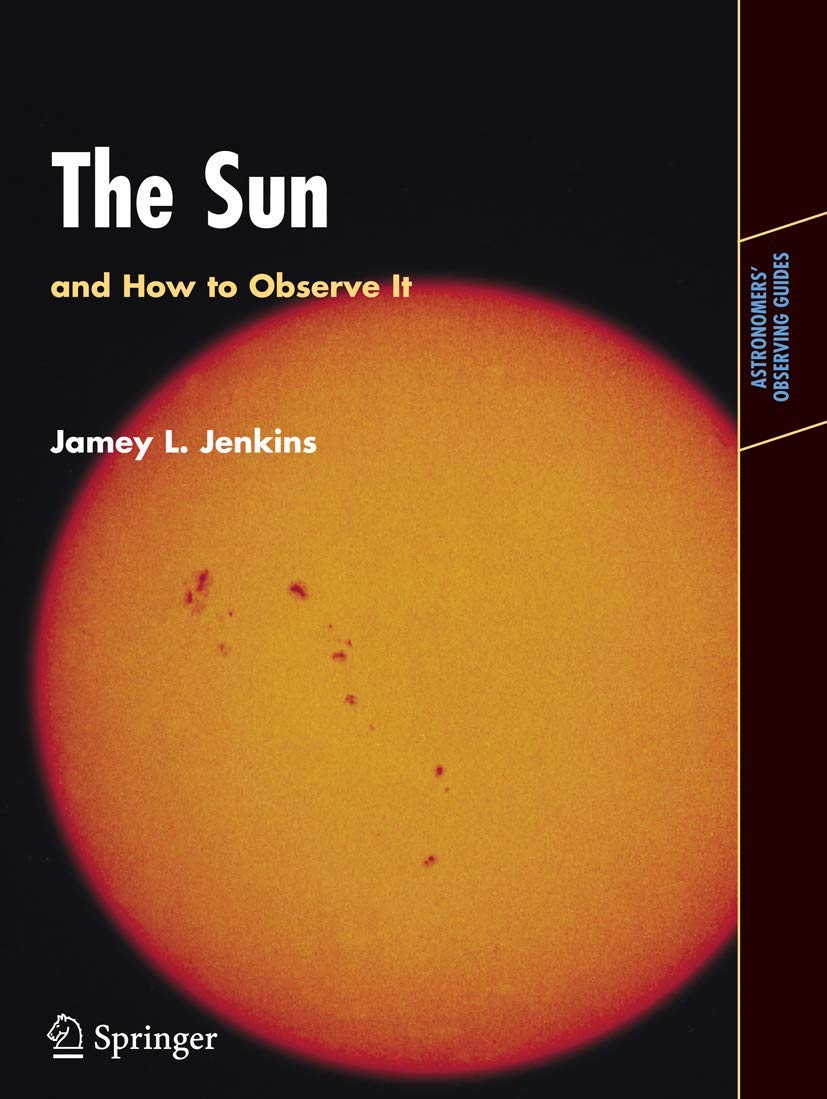
The Sun And How To Observe It (Astronomers' Observing Guides)
Sold by Ergodebooks, an authorized reseller.
Returns accepted within 30 days | support@ergodebooks.com
Shipping Information
- Free Standard Shipping — United States only
- Processing Time: 3–5 business days
- Estimated Delivery: 6–10 business days after dispatch
- Double-boxed, fully insured & discreetly packaged
- Tracking number sent via email once dispatched
Returns & Refund
Returns accepted within 30 days of delivery.
Damaged or Defective Item
Free return shipping + replacement or full refund
Wrong Item Received
Free return shipping + replacement or full refund
Change of Mind
Return shipping at customer's expense · 25% restocking fee applies
Payment Option

In Part 1, The Book Describes The Very Latest Thinking On Solar Physics In (Mostly Nonmathematical) Detail, Incorporating The Latest Results From Research Concerning The Structure And Behaviour Of The Sun. There Is Particular Emphasis On The Surface Features Visible From The Earth, And How These Are The Result Of The Extraordinary Processes That Are Taking Place Within The Sun.In Part 2, The Book Details The Techniques For Observing And Imaging The Sun With Commerciallyavailable Equipment. The Many Recent Advances In Optical Equipment Now Allow Amateur Astronomers To Observe Phenomena That Until Recently Could Only Be Seen With The Extremely Expensive Equipment Available At Universities And Research Observatories Notably Halpha And Calciumk Telescopes.This Is A Completely Uptodate Solar Observing Book, While Providing The Science Background Necessary For An Understanding Of The Observations With The Latest Equipment. It Also Features The Most Complete Solar Observing And Imaging Guide Available.
⚠️ WARNING (California Proposition 65):
This product may contain chemicals known to the State of California to cause cancer, birth defects, or other reproductive harm.
For more information, please visit www.P65Warnings.ca.gov.
- Q: What are the dimensions of the book? A: The book measures seven point zero one inches in length, zero point five one inches in width, and nine point two five inches in height.
- Q: How many pages does this book have? A: This book contains two hundred twenty pages, providing a comprehensive guide to solar observation.
- Q: What type of binding does this book have? A: The book is available in paperback binding, making it lightweight and easy to handle.
- Q: What is the main topic of this book? A: The book focuses on solar physics and techniques for observing the Sun using commercial equipment.
- Q: Is this book suitable for beginners? A: Yes, this book is designed for both beginners and experienced astronomers, offering detailed explanations in accessible language.
- Q: How can I use this book for observing the Sun? A: You can use this book as a guide to learn about solar observation techniques and to understand the equipment required for imaging the Sun.
- Q: What equipment do I need to follow the book's instructions? A: You will need commercially-available telescopes, such as H-alpha and Calcium-K telescopes, to observe the Sun as described in the book.
- Q: What age group is this book suitable for? A: This book is suitable for a wide range of age groups, from young adults to seasoned professionals interested in astronomy.
- Q: How should I store this book to keep it in good condition? A: Store the book in a cool, dry place and avoid direct sunlight to preserve its quality over time.
- Q: Is this book safe for children? A: While the content is educational, parental guidance is recommended for younger children due to the complexity of solar physics.
- Q: Can I return this book if I am not satisfied? A: Yes, most retailers have a return policy that allows you to return the book if you are not satisfied with your purchase.
- Q: What if the book arrives damaged? A: If the book arrives damaged, you should contact the retailer immediately for a replacement or refund.
- Q: Is there a warranty for this book? A: Typically, books do not come with a warranty, but you can check with the retailer for any specific policies.
- Q: How do I clean the book if it gets dirty? A: To clean the book, gently wipe the cover with a soft, dry cloth to remove dust and fingerprints.
- Q: What makes this book stand out from other astronomy books? A: This book combines the latest findings in solar physics with practical observing techniques, making it a unique resource for astronomers.
- Q: Can I find this book in libraries? A: Yes, this book may be available in local libraries, especially those with strong science and astronomy collections.