
Title
The Surveillance Studies Reader,Used
Sold by Ergodebooks, an authorized reseller.
Returns accepted within 30 days | support@ergodebooks.com
Shipping Information
- Free Standard Shipping — United States only
- Processing Time: 3–5 business days
- Estimated Delivery: 6–10 business days after dispatch
- Double-boxed, fully insured & discreetly packaged
- Tracking number sent via email once dispatched
Returns & Refund
Returns accepted within 30 days of delivery.
Damaged or Defective Item
Free return shipping + replacement or full refund
Wrong Item Received
Free return shipping + replacement or full refund
Change of Mind
Return shipping at customer's expense · 25% restocking fee applies
Payment Option

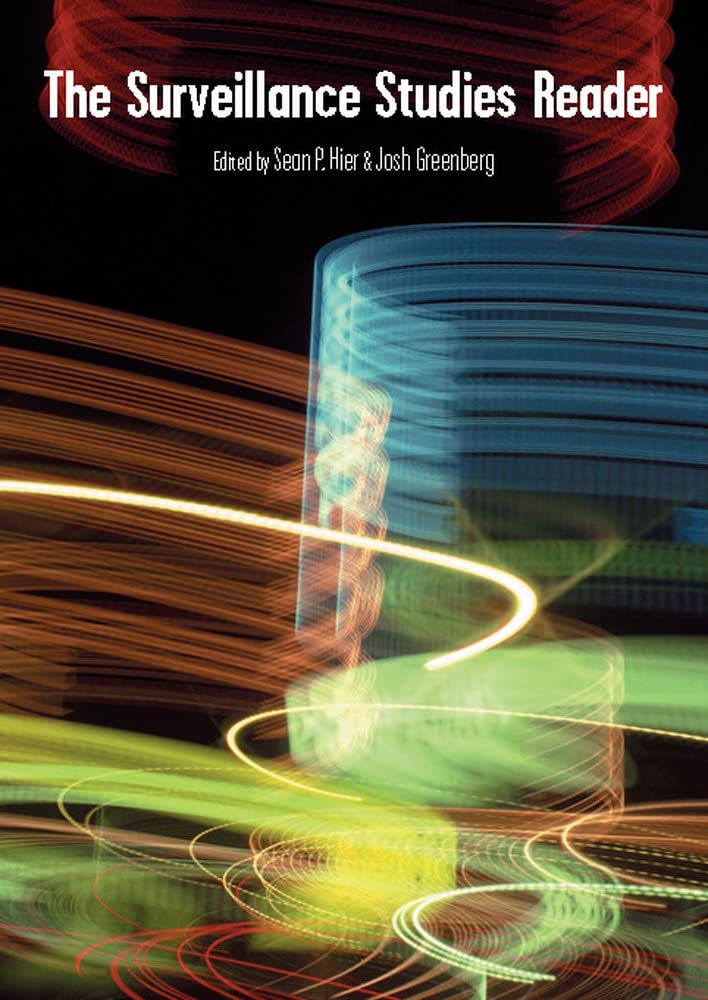
From the horrific images of James Bulger's abduction at the Strand Shopping Centre in Bootle, through to the frighteningly mundane pictures of the July 7th bombers at Luton Station, surveillance is a key part of our everyday lives.In this topical reader Sean Hier and Josh Greenberg bring together extracts from some of the most influential readings on surveillance studies. The reader examines thoughts about selfsurveillance, scrutiny of specific parts of society, sophisticated data gathering techniques and the ubiquity of CCTV. While surveillance is an intrinsic feature of human social relationships, it is only in the past few years that information and datagathering techniques have emerged as a sustained multidisciplinary topic of investigation and theorization.Surveillance studies, now a rapidly growing area of academic study, has begun documenting the changing character and consequences of surveillance techniques throughout the world. The readings presented in this book represent one more step towards developing a coherent statement on surveillance studies.The readings are organised into distinct sections: Surveillance, the nationstate and social control Computers, simulations and assemblages Surveillance in everyday life Surveillance, politics and social inequality Surveillance and public opinion Ethics, privacy and resistanceThe Surveillance Studies Reader is key reading for students of sociology, politics, social policy, media and communications studies, social psychology and criminology.Essays by: Charles Barker, Colin Bennett, William Bogard, Roy Coleman, Christopher Dandeker, Richard Eriscson, Michel Foucault, Oscar H. Gandy, Anthony Giddens, John Gilliom, Stephen Graham, Kevin Haggerty, Susan Hansen, Sean P. Hier, David Lyon, Gary Marx, Dawn Moore, Mike Nellis, Charles Raab, Alasdair Roberts, James Rule, Graham Sewell, Mimi Sheller, John Torpey, John Urry, Kevin Walby, David Wood.
⚠️ WARNING (California Proposition 65):
This product may contain chemicals known to the State of California to cause cancer, birth defects, or other reproductive harm.
For more information, please visit www.P65Warnings.ca.gov.
- Q: What is 'The Surveillance Studies Reader' about? A: 'The Surveillance Studies Reader' compiles influential writings on surveillance studies, exploring themes like self-surveillance, data gathering techniques, and the societal impacts of surveillance.
- Q: Who are the authors of this book? A: The book is edited by Sean Hier and Josh Greenberg, featuring essays from prominent thinkers like Michel Foucault, Anthony Giddens, and David Lyon.
- Q: What topics are covered in this reader? A: Key topics include surveillance and social control, everyday surveillance, ethics and privacy, and the political implications of surveillance.
- Q: Is this book suitable for academic study? A: Yes, 'The Surveillance Studies Reader' is essential reading for students in sociology, politics, social policy, media studies, social psychology, and criminology.
- Q: What is the condition of the book? A: This book is categorized as a 'Used Book in Good Condition', indicating it may show some signs of wear but is overall functional and readable.
- Q: How many pages does the book contain? A: 'The Surveillance Studies Reader' contains 408 pages, providing a comprehensive overview of the subject matter.
- Q: When was this book published? A: 'The Surveillance Studies Reader' was published on August 1, 2007.
- Q: What is the binding type of this book? A: The book is available in paperback binding, making it lightweight and flexible for reading.
- Q: Who can benefit from reading this book? A: Students, researchers, and anyone interested in understanding the dynamics of surveillance in society will benefit from this reader.
- Q: Does the book include contemporary issues related to surveillance? A: Yes, it includes discussions on modern data-gathering methods and the implications of surveillance technologies in contemporary society.