
Title
The Survival Chemist (#C562),New
Sold by Ergodebooks, an authorized reseller.
Returns accepted within 30 days | support@ergodebooks.com
Shipping Information
- Free Standard Shipping — United States only
- Processing Time: 3–5 business days
- Estimated Delivery: 6–10 business days after dispatch
- Double-boxed, fully insured & discreetly packaged
- Tracking number sent via email once dispatched
Returns & Refund
Returns accepted within 30 days of delivery.
Damaged or Defective Item
Free return shipping + replacement or full refund
Wrong Item Received
Free return shipping + replacement or full refund
Change of Mind
Return shipping at customer's expense · 25% restocking fee applies
Payment Option

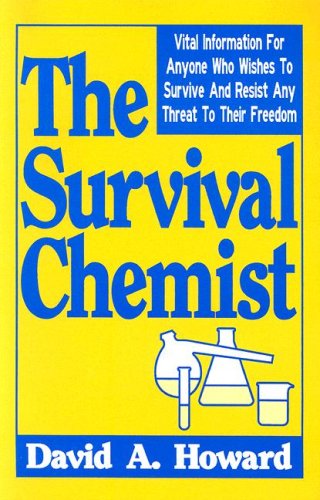
The Survival Chemist Brings Survivalists Important Information On Building And Maintaining Shelters, Leather Preservation, The Making Of Explosives Such As Dynamite, Blasting And Percussion Powders, Gunpowder, Nitroglycerin And Fuses. Other Chapters Cover Water Purification, Survival Foods, Meat Preservation, Brewing Your Own Beer And Liquor, Making Poison Gas, Protecting Against Radiation, The Use Of Drugs, And Precious Metals Testing. 5.5 X 8.5, 59 Pages, Illus., & Softcover.
⚠️ WARNING (California Proposition 65):
This product may contain chemicals known to the State of California to cause cancer, birth defects, or other reproductive harm.
For more information, please visit www.P65Warnings.ca.gov.
- Q: What is the size of The Survival Chemist book? A: The book measures five and a half inches by eight and a half inches. It is a compact paperback, making it easy to carry.
- Q: How many pages does The Survival Chemist have? A: The Survival Chemist contains fifty-nine pages. This length provides ample information on various survival topics.
- Q: What type of binding does The Survival Chemist use? A: The book is bound in paperback. This makes it flexible and lightweight for easy handling.
- Q: Who is the author of The Survival Chemist? A: The author is David A. Howard. He provides expert insights into survival techniques and chemistry.
- Q: What is the main theme of The Survival Chemist? A: The main theme is survival preparedness. It includes information on shelters, food preservation, and more.
- Q: How can I use The Survival Chemist effectively? A: You can use this book as a practical guide for survival skills. It covers everything from shelter building to water purification.
- Q: Is The Survival Chemist suitable for beginners? A: Yes, it is suitable for beginners. The content is straightforward and easy to understand for anyone interested in survival.
- Q: What survival skills does The Survival Chemist teach? A: It teaches skills like building shelters, purifying water, and preserving food. These skills are essential for survivalists.
- Q: Can I find recipes for survival foods in The Survival Chemist? A: Yes, the book includes recipes for survival foods. This is helpful for those preparing for emergencies.
- Q: How should I store The Survival Chemist book? A: Store the book in a cool, dry place. This will help preserve the condition of the pages and binding.
- Q: How do I care for The Survival Chemist book? A: Keep the book away from moisture and direct sunlight. This will prevent damage and fading over time.
- Q: Is The Survival Chemist safe to read for young adults? A: Yes, it is safe for young adults. The content focuses on survival techniques without explicit material.
- Q: What if The Survival Chemist arrives damaged? A: If it arrives damaged, you should contact the seller for a return or replacement. Most sellers have policies for damaged goods.
- Q: Can I return The Survival Chemist if I don't like it? A: Yes, generally you can return it if you are unsatisfied. Check the specific return policy of the seller.
- Q: What kind of illustrations does The Survival Chemist include? A: The book includes illustrations that enhance understanding of survival techniques. These visuals aid in learning.
- Q: Does The Survival Chemist cover making explosives? A: Yes, it covers the making of explosives like dynamite and gunpowder. This information is for educational purposes only.