
Title
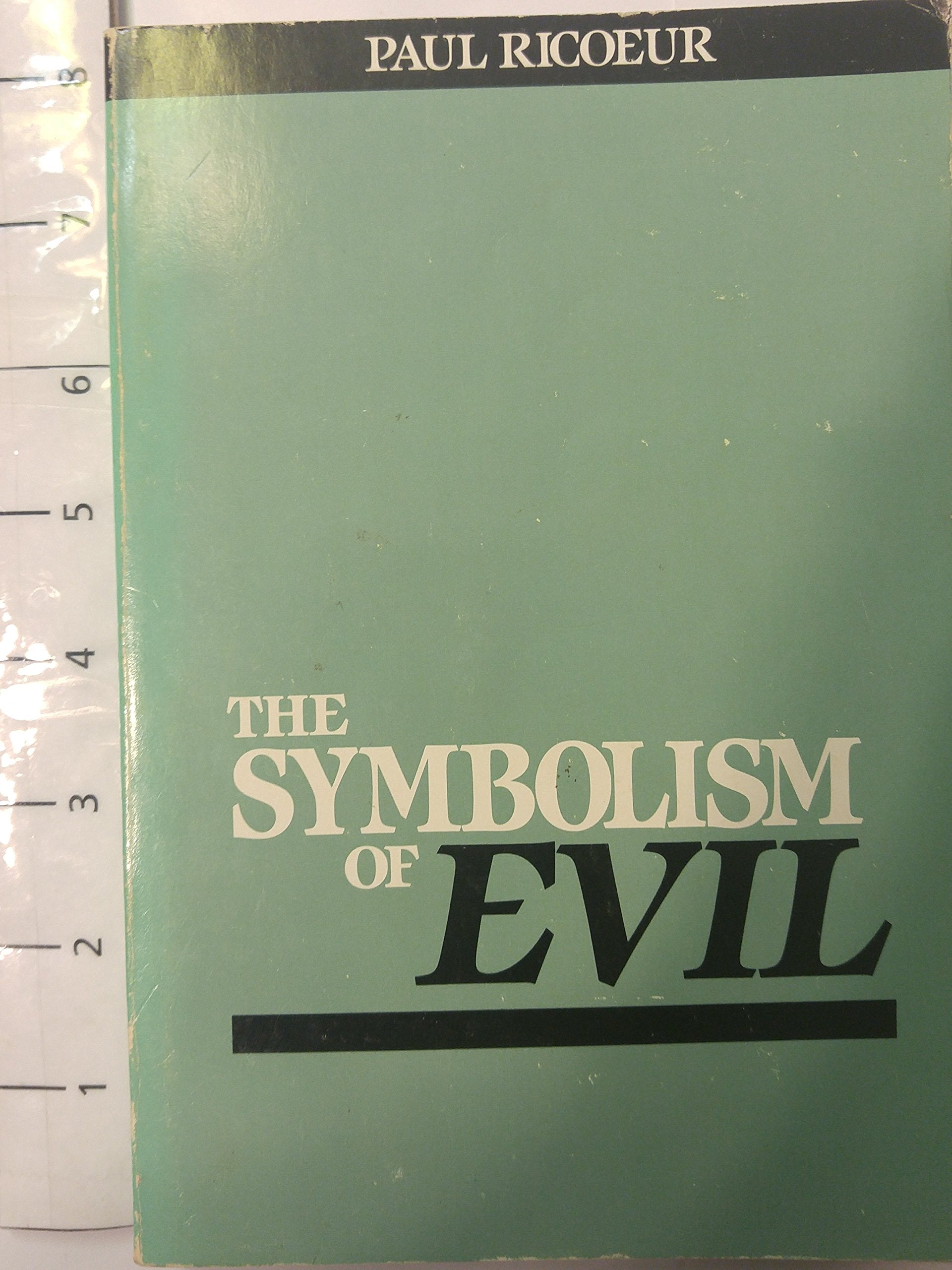
The Symbolism of Evil,Used
Sold by Ergodebooks, an authorized reseller.
Returns accepted within 30 days | support@ergodebooks.com
Shipping Information
- Free Standard Shipping — United States only
- Processing Time: 3–5 business days
- Estimated Delivery: 6–10 business days after dispatch
- Double-boxed, fully insured & discreetly packaged
- Tracking number sent via email once dispatched
Returns & Refund
Returns accepted within 30 days of delivery.
Damaged or Defective Item
Free return shipping + replacement or full refund
Wrong Item Received
Free return shipping + replacement or full refund
Change of Mind
Return shipping at customer's expense · 25% restocking fee applies
Payment Option

According to Ricoeur, the most primal and spontaneous symbols of evil are defilement, sin and guilt ... Ricoeur moves from the elementary symbols of evil into the rich world of myths ... and he ends by suggesting that the clue to the relation between philosophy to mythology is to be found in the aphorism 'The symbol gives rise to the thought' ... Ricoeur's method and argument are too intricate and rich to assess in so short a review. Suffice it to say that this is the most massive accomplisment of any philosopher within the ambience of Christian faith since the appearance of Gabriel Marcel' Sam Keen, The Christian Century
⚠️ WARNING (California Proposition 65):
This product may contain chemicals known to the State of California to cause cancer, birth defects, or other reproductive harm.
For more information, please visit www.P65Warnings.ca.gov.
- Q: What is 'The Symbolism of Evil' about? A: 'The Symbolism of Evil' by Paul Ricoeur explores the primal symbols of evil such as defilement, sin, and guilt. Ricoeur delves into myths and suggests a connection between philosophy and mythology, emphasizing that 'the symbol gives rise to the thought.'
- Q: Who is the author of this book? A: The author of 'The Symbolism of Evil' is Paul Ricoeur, a renowned philosopher known for his work in hermeneutics and phenomenology.
- Q: What is the condition of the book? A: The book is classified as 'Used Book in Good Condition,' indicating that it has been previously owned but remains in satisfactory shape for reading.
- Q: How many pages does 'The Symbolism of Evil' have? A: 'The Symbolism of Evil' consists of 368 pages, providing an in-depth exploration of its themes.
- Q: What type of binding does this book have? A: This edition of 'The Symbolism of Evil' is available in paperback binding, making it a flexible and lightweight option for readers.
- Q: When was 'The Symbolism of Evil' published? A: 'The Symbolism of Evil' was published on November 12, 1986.
- Q: What category does this book fall under? A: 'The Symbolism of Evil' is categorized under Psychology & Counseling, reflecting its exploration of psychological themes related to evil and morality.
- Q: Is there an edition of 'The Symbolism of Evil'? A: The book does not specify a particular edition, but it was published as a standalone work.
- Q: What are some key themes discussed in the book? A: Key themes in 'The Symbolism of Evil' include the nature of evil, the interplay between philosophy and mythology, and the significance of symbols in understanding moral concepts.
- Q: Can this book be used for academic study? A: 'The Symbolism of Evil' is suitable for academic study, particularly in fields like philosophy, psychology, and theology, providing valuable insights into the nature of evil.