
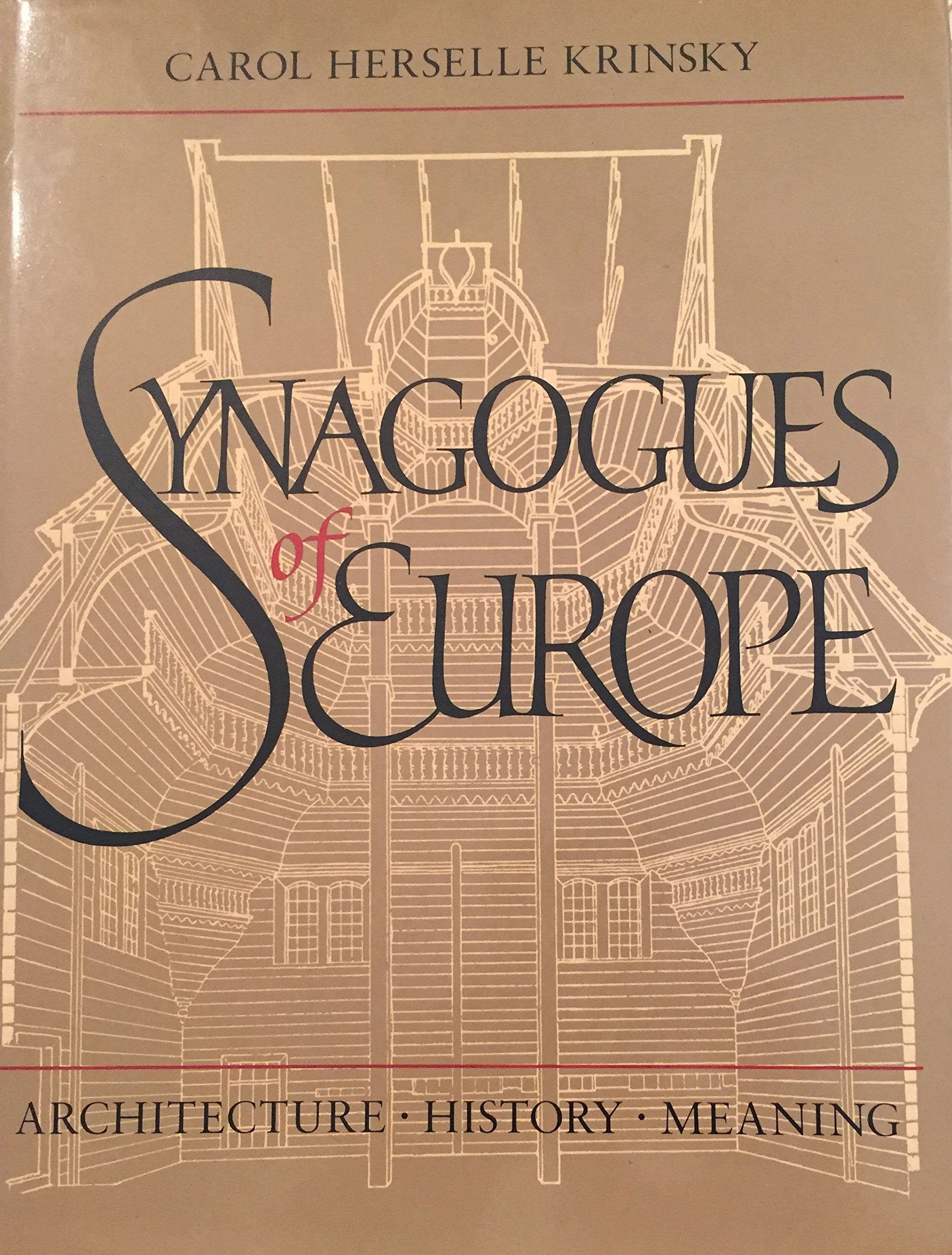
Title
The Synagogues of Europe: Architecture, History, Meaning,Used
Sold by Ergodebooks, an authorized reseller.
Returns accepted within 30 days | support@ergodebooks.com
Shipping Information
- Free Standard Shipping — United States only
- Processing Time: 3–5 business days
- Estimated Delivery: 6–10 business days after dispatch
- Double-boxed, fully insured & discreetly packaged
- Tracking number sent via email once dispatched
Returns & Refund
Returns accepted within 30 days of delivery.
Damaged or Defective Item
Free return shipping + replacement or full refund
Wrong Item Received
Free return shipping + replacement or full refund
Change of Mind
Return shipping at customer's expense · 25% restocking fee applies
Payment Option

Winner, National Jewish Book Award.The most comprehensive treatment of the subject in any language, Synagogues of Europe is a unique testament of a minority which had to temper its architectural ambitions to suit political and social circumstances, as well as an account of design and function. The loss of so many structures makes it a particularly poignant record.The book is divided into two parts, the first dealing with the origin and nature of a synagogue. Chapters compare the synagogue to the Temple of Jerusalem and to churches and mosques, discuss the affect of liturgical furnishings on the building's form, and take up such questions as whether there is a Jewish style in architecture, the importance of the designer's religion, the limits that outside society imposed on Jewish building, and the public and private images presented by the minority in its religious architecture.The book's second part analyzes specific buildings with examples ranging in time from the Roman empire to the present. They are taken from almost every European capital from London to Leningrad, and include buildings designed by such distinguished architects as Gottfried Semper and Hector Guimard. Smaller cities' synagogues are also included medieval Spanish buildings in Toledo; imposing Renaissance examples in Venice and Pinsk; a nineteenthcentury skyscraper in Turin; Sir Moses Montefiore's own synagogue; a synagogue that looks like a Gothic church; and the most beautiful of the Polish wooden synagogues. The illustrations of surviving and demolished buildings include old prints and photographs, plans, and paintings, some published here for the first time. An extensive bibliography and Notes for the Visitor provide a useful resource for travelers.Carol Krinsky is Professor of Fine Arts at New York University. She is the author of Rockefeller Center and currently president of the Society of Architectural Historians.
⚠️ WARNING (California Proposition 65):
This product may contain chemicals known to the State of California to cause cancer, birth defects, or other reproductive harm.
For more information, please visit www.P65Warnings.ca.gov.