
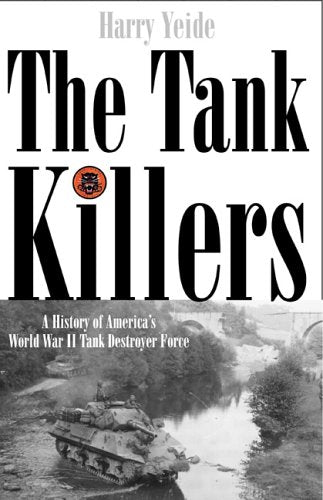
Title
The Tank Killers: A History Of America'S World War Ii Tank Destroyer Force
Sold by Ergodebooks, an authorized reseller.
Returns accepted within 30 days | support@ergodebooks.com
Shipping Information
- Free Standard Shipping — United States only
- Processing Time: 3–5 business days
- Estimated Delivery: 6–10 business days after dispatch
- Double-boxed, fully insured & discreetly packaged
- Tracking number sent via email once dispatched
Returns & Refund
Returns accepted within 30 days of delivery.
Damaged or Defective Item
Free return shipping + replacement or full refund
Wrong Item Received
Free return shipping + replacement or full refund
Change of Mind
Return shipping at customer's expense · 25% restocking fee applies
Payment Option

The Tank Killers Is The Story Of The American Tank Destroyer Force In North Africa, Italy, And The European Theater During World War Ii. The Tank Destroyer (Td) Was A Boldif Some Would Say Flawedanswer To The Challenge Posed By The Seemingly Unstoppable German Blitzkrieg. The Td Was Conceived To Be Light And Fast Enough To Outmaneuver Panzer Forces And Go Where Tanks Could Not. At The Same Time, The Td Would Wield The Firepower Needed To Kill Any German Tank On The Battlefield. Indeed, American Doctrine Stipulated That Tds Would Fight Tanks, While American Tanks Wouldconcentrate On Achieving And Exploiting Breakthroughs Of Enemy Lines.The Tank Killers Follows The Men Who Fought In The Tds From The Formation Of The Force In 1941 Through The Victory Over The Third Reich In 1945. It Is A Story Of American Flexibility And Pragmatism In Military Affairs. Tankdestroyers Were Among The Very First Units To Land In North Africa In 1942. Their First Vehicles Were Ad Hoc Affairs: Halftracks And Weapons Carriers With Guns No Better Than Those On Tanks And Thin Armor Affording The Crews Considerably Less Protection. Almost Immediately, The Crews Realized That Their Doctrine Was Incomplete. They Began Adapting To Circumstances, Along With Their Partners In The Infantry And Armored Divisions. By The Time That North Africa Was In Allied Hands, The Td Had Become A Valued Tank Fighter, Assault Gun, And Artillery Piece. The Reconnaissance Teams In Td Battalions, Meanwhile, Had Established A Record For Daring Operations That They Would Continue For The Rest Of The War.The Story Continues With The Invasion Of Italy And Finally That Of Fortress Europe On 6 June 1944. By Now, The Brass Had Decreed That Half The Force Would Convert To Towed Guns, A Decision That Dogged The Affected Crews Through The End Of The War. The Td Men Encountered Increasingly Lethal Enemies, Ever More Dangerous Panzers That Were Often Vulnerable Only To Their Guns While American Tank Crews Watched In Frustration As Their Rounds Bounced Harmlessly Off The Thick German Armor. They Fought Under Incredibly Diverse Conditions That Demanded Constant Modification Of Tactics. Their Equipment Became Ever More Deadly. By Ve Day, The Tank Destroyer Battalions Had Achieved Impressive Records, Generally With Kill/Loss Rates Heavily In Their Favor. Yet The Army After The War Concluded That The Concept Of A Separate Td Arm Was So Fundamentally Flawed That Not A Single Battalion Existed After November 1946.The Tank Killers Draws Heavily On The Records Of The Tank Destroyer Battalions And The Units With Which They Fought. Veterans Of The Force Add Their Personal Stories.Table Of Contentsprefacechapter 1: Seek, Strike, And Destroychapter 2: North Africa: Seeing The Elephantchapter 3: From Gloom To Glorychapter 4: The Tough Underbellychapter 5: Anzio And Two Roads To Romechapter 6: Storming Fortress Europechapter 7: Armored Thunderchapter 8: The Battle For The Borderchapter 9: The Battle Of The Bulgechapter 10: Sought, Struck, And Destroyedappendix A: Tank Destroyer Battalions By Campaignappendix B: Battalion Profilesglossarynotesbibliographyindex
⚠️ WARNING (California Proposition 65):
This product may contain chemicals known to the State of California to cause cancer, birth defects, or other reproductive harm.
For more information, please visit www.P65Warnings.ca.gov.
- Q: What is the page count of 'The Tank Killers'? A: The book contains two hundred fifty-six pages. This length allows for a comprehensive exploration of the American Tank Destroyer Force during World War II.
- Q: What is the binding type of this book? A: This book is hardcover. The hardcover binding provides durability and a quality feel, making it suitable for collectors and avid readers.
- Q: Who is the author of 'The Tank Killers'? A: The author is Harry Yeide. He provides a detailed account of the American Tank Destroyer Force's history and operations.
- Q: What are the dimensions of 'The Tank Killers'? A: The dimensions are six and a half inches in length, one inch in width, and nine and a half inches in height. These measurements make it a manageable size for reading and shelf storage.
- Q: How do I read 'The Tank Killers'? A: You can read this book like any standard book. Simply open it and start from the beginning, following the chapters that unfold the history of the tank destroyers.
- Q: Is this book suitable for casual readers? A: Yes, this book is suitable for casual readers. It presents military history in an engaging manner, making it accessible even to those new to the subject.
- Q: How should I store 'The Tank Killers' to keep it in good condition? A: Store the book upright on a shelf in a cool, dry place. This prevents warping and damage to the binding and pages.
- Q: Can I clean the book if it gets dirty? A: Yes, you can clean the book gently. Use a dry cloth to wipe the cover and avoid using liquids that could damage the pages.
- Q: Is 'The Tank Killers' appropriate for children? A: The book is generally suitable for older children and teenagers interested in history. However, parental discretion is advised due to the mature themes of war.
- Q: How does 'The Tank Killers' compare to other military history books? A: This book offers a unique focus on the American Tank Destroyer Force, distinguishing it from other military history books that may cover broader topics.
- Q: What should I do if the book arrives damaged? A: If the book arrives damaged, contact the seller for a return or exchange. Most retailers offer options for damaged items.
- Q: Does 'The Tank Killers' include personal accounts from veterans? A: Yes, the book includes personal stories from veterans of the tank destroyer battalions. These accounts add depth and authenticity to the historical narrative.
- Q: What topics are covered in the chapters of 'The Tank Killers'? A: The chapters cover various campaigns and battles involving the tank destroyers, including North Africa, Italy, and the European Theater.
- Q: Are there any illustrations or maps in the book? A: Yes, the book includes illustrations and maps to enhance the reader's understanding of the campaigns and tactics discussed.
- Q: What is the main theme of 'The Tank Killers'? A: The main theme is the evolution and impact of the American Tank Destroyer Force during World War II, showcasing its successes and challenges.