
Title
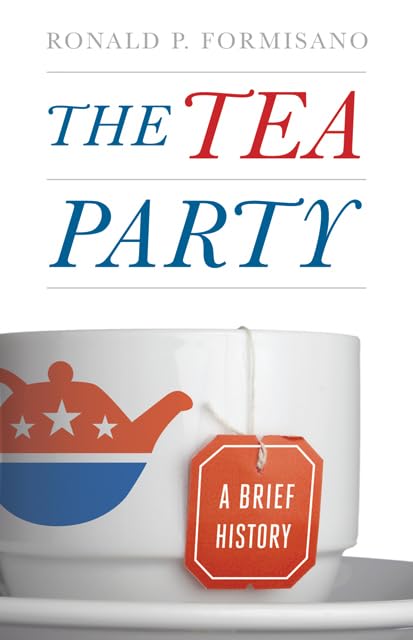
The Tea Party: A Brief History,Used
Sold by Ergodebooks, an authorized reseller.
Returns accepted within 30 days | support@ergodebooks.com
Shipping Information
- Free Standard Shipping — United States only
- Processing Time: 3–5 business days
- Estimated Delivery: 6–10 business days after dispatch
- Double-boxed, fully insured & discreetly packaged
- Tracking number sent via email once dispatched
Returns & Refund
Returns accepted within 30 days of delivery.
Damaged or Defective Item
Free return shipping + replacement or full refund
Wrong Item Received
Free return shipping + replacement or full refund
Change of Mind
Return shipping at customer's expense · 25% restocking fee applies
Payment Option

The Tea Party burst on the national political scene in 20092010, powered by rightwing grassroots passion and Astroturf big money. Its effect on electoral politics and the political process is undeniable, but the message, aims, and staying power of the loosely organized groups seem less clear. In this concise book, American political historian Ronald P. Formisano probes the remarkable rise of the Tea Party movement during a time of economic crisis and cultural change and examines its powerful impact on American politics.A confederation of intersecting and overlapping organizations, with a strong connection to the Christian fundamentalist Right, the phenomenon could easily be called the Tea Parties. The American medias fascination with the Tea Partyand the tendency of political leaders who have embraced the movement to say and do outlandish thingsnot only has fueled the fire driving the movement, but has diverted attention from its roots, agenda, and the enormous influence it holds over the Republican Party and the American political agenda. Looking at the Tea Party's claims to historical precedent and patriotic values, Formisano locates its antistate and libertarian impulses deep in American political culture as well as in voter frustrations that have boiled over in recent decades. He sorts through the disparate goals the movements different factions espouse and shows that, ultimately, the contradictions of Tea Party libertarianism reflect those ingrained in the broad mass of the electorate.Throughout American history, third parties, pressure groups, and social movements have emerged to demand reforms or radical change, only to eventually fade away, even if parts of their programs often are later adopted. The Tea Partys impact as a pressure group has been more immediate. Whether the Tea Party endures remains to be seen. Formisanos brief history certainly gives us clues.
⚠️ WARNING (California Proposition 65):
This product may contain chemicals known to the State of California to cause cancer, birth defects, or other reproductive harm.
For more information, please visit www.P65Warnings.ca.gov.