If you have any questions, you are always welcome to contact us. We'll get back to you as soon as possible, withing 24 hours on weekdays.
Customer service
All questions about your order, return and delivery must be sent to our customer service team by e-mail at yourstore@yourdomain.com
Sale & Press
If you are interested in selling our products, need more information about our brand or wish to make a collaboration, please contact us at press@yourdomain.com
Help
If you have any questions, you are always welcome to contact us. We'll get back to you as soon as possible, withing 24 hours on weekdays.
Customer service
All questions about your order, return and delivery must be sent to our customer service team by e-mail at yourstore@yourdomain.com
Sale & Press
If you are interested in selling our products, need more information about our brand or wish to make a collaboration, please contact us at press@yourdomain.com
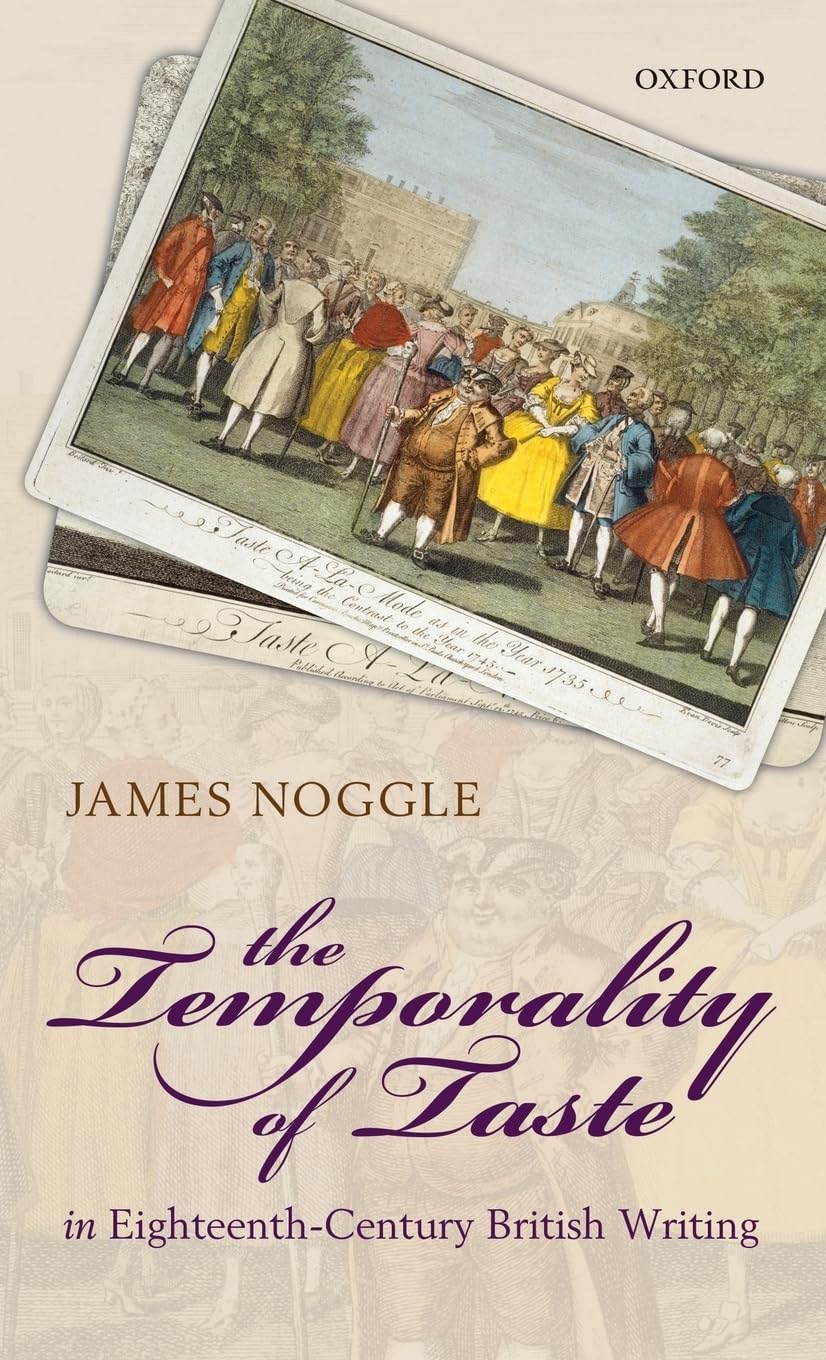
Is taste a quick, momentary experience in the individual mind? Or something durable, shaped by slow, historical processes, affecting groups of people at different times and places? British writers in the eighteenth century believed that it was both, and the tension between these temporal poles shaped the meaning of taste in the period and set a course for aesthetics in following centuries. Focusing on works in many genresAlexander Pope's poems, David Hume's historiography, essays by Hannah More and Anna Barbauld, and novels by Frances Burney and William Beckfordthis book sees the divided temporality of taste as an unpredictable force in British writing. The eighteenth century was the age of taste. Writers considered its intense effects on individual minds as especially characteristic of the collective present of British modernity, whilst they also recognized the disturbing tendency of taste's immediacy and its historical roles to interrupt and foreclose on each other. While noting how taste's two temporal flavors may be made to agree in order to consolidate various national, social, and gendered identities, this book also demonstrates that taste's dual temporality makes it more disruptive than scholars usually think. As such, taste models a kind of critical practice that this book itself endeavours to inherit: the insistent testing of the moment of discernment and ongoing patterns of thinking and feeling against each other.
⚠️ WARNING (California Proposition 65):
This product may contain chemicals known to the State of California to cause cancer,
birth defects, or other reproductive harm.
For MAP (Minimum Advertised Price) violations and Intellectual Property (IP) or Trademark concerns, please contact:
support@ergodebooks.com
⚠️ California Proposition 65 Warning: Some products sold on this website may expose you to chemicals known to the State of California to cause cancer, birth defects, or other reproductive harm. For more information, visit www.P65Warnings.ca.gov.