
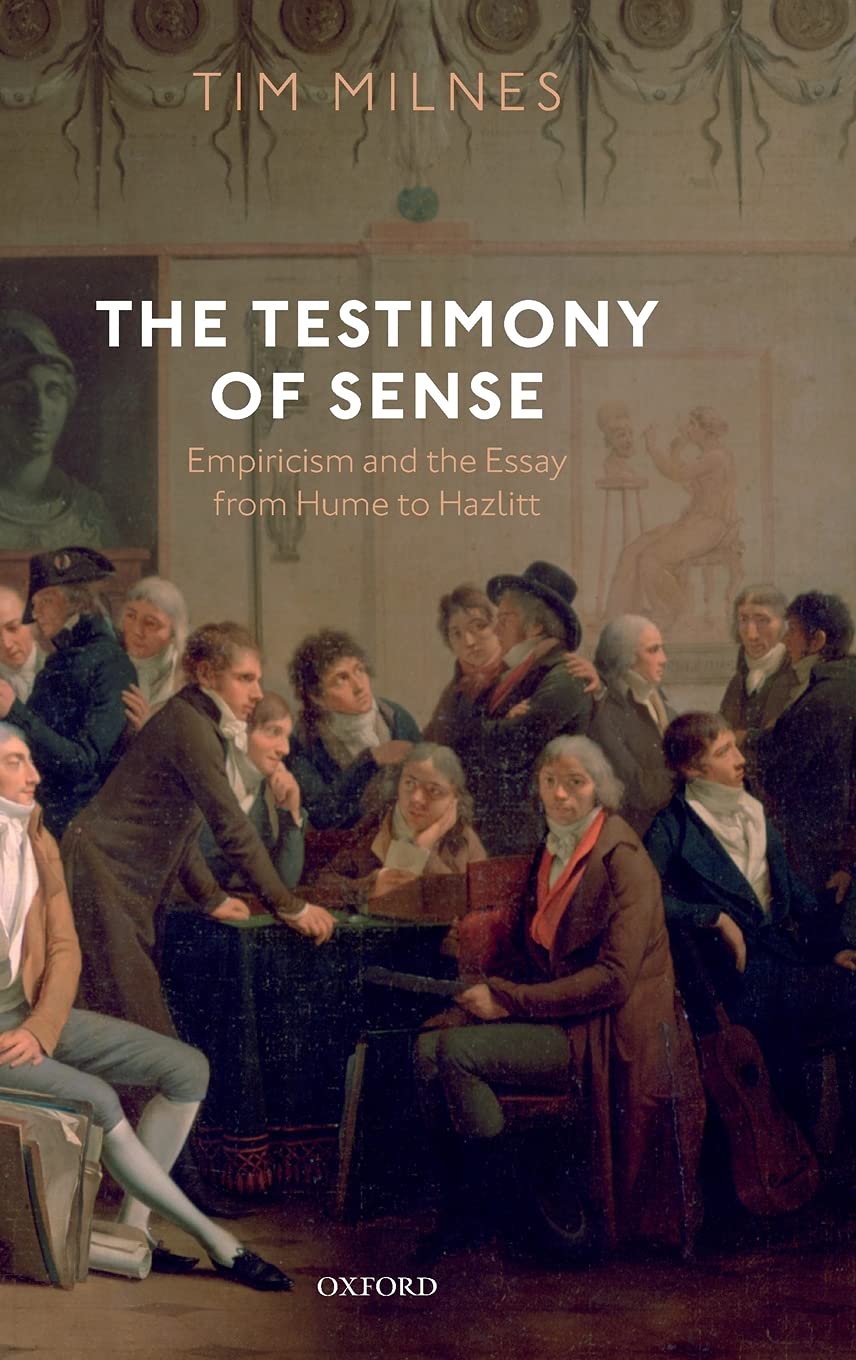
Title
The Testimony of Sense: Empiricism and the Essay from Hume to Hazlitt,Used
Sold by Ergodebooks, an authorized reseller.
Returns accepted within 30 days | support@ergodebooks.com
Shipping Information
- Free Standard Shipping — United States only
- Processing Time: 3–5 business days
- Estimated Delivery: 6–10 business days after dispatch
- Double-boxed, fully insured & discreetly packaged
- Tracking number sent via email once dispatched
Returns & Refund
Returns accepted within 30 days of delivery.
Damaged or Defective Item
Free return shipping + replacement or full refund
Wrong Item Received
Free return shipping + replacement or full refund
Change of Mind
Return shipping at customer's expense · 25% restocking fee applies
Payment Option

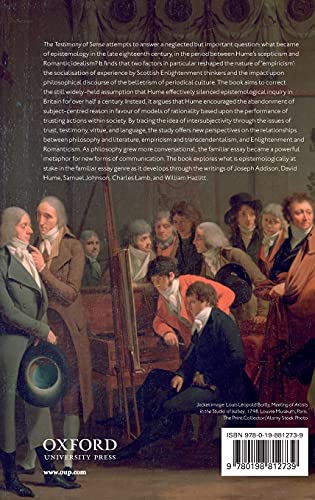
The Testimony of Sense attempts to answer a neglected but important question: what became of epistemology in the late eighteenth century, in the period between Hume's scepticism and Romantic idealism? It finds that two factors in particular reshaped the nature of 'empiricism': the socialisation of experience by Scottish Enlightenment thinkers and the impact upon philosophical discourse of the belletrism of periodical culture. The book aims to correct the still widelyheld assumption that Hume effectively silenced epistemological inquiry in Britain for over half a century. Instead, it argues that Hume encouraged the abandonment of subjectcentred reason in favour of models of rationality based upon the performance of trusting actions within society. Of particular interest here is the way in which, after Hume, fundamental ideas like the self, truth, and meaning are conceived less in terms of introspection, correspondence, and reference, and more in terms of community, coherence, and communication. By tracing the idea of intersubjectivity through the issues of trust, testimony, virtue and language, the study offers new perspectives on the relationships between philosophy and literature, empiricism and transcendentalism, and Enlightenment and Romanticism. As philosophy grew more conversational, the familiar essay became a powerful metaphor for new forms of communication. The book explores what is epistemologically at stake in the familiar essay genre as it develops through the writings of Joseph Addison, David Hume, Samuel Johnson, Charles Lamb, and William Hazlitt. It also offers readings of philosophical texts, such as Hume's Treatise, Thomas Reid's Inquiry, and Adam Smith's Theory of Moral Sentiments, as literary performances.
⚠️ WARNING (California Proposition 65):
This product may contain chemicals known to the State of California to cause cancer, birth defects, or other reproductive harm.
For more information, please visit www.P65Warnings.ca.gov.