
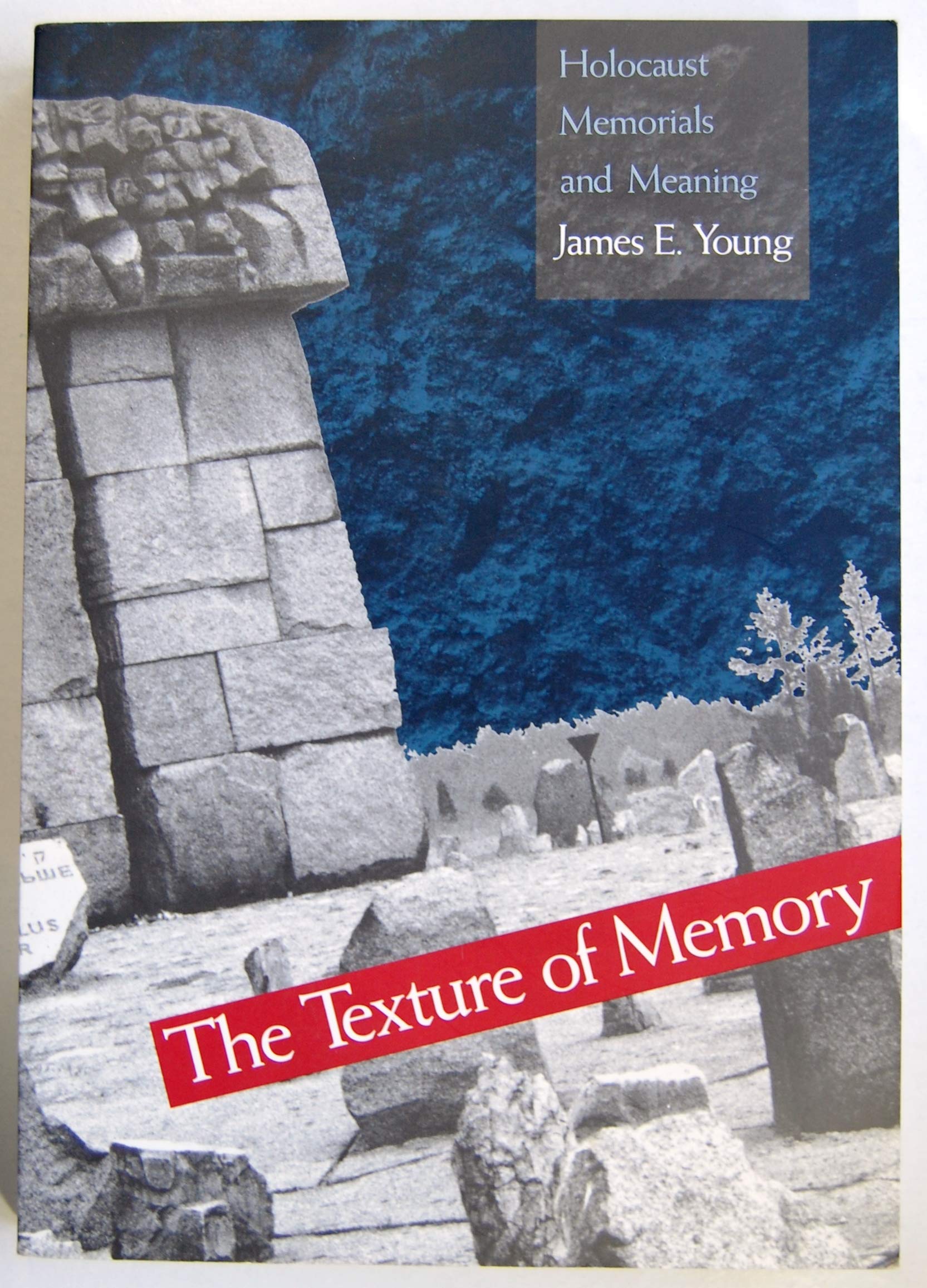
Title
The Texture of Memory: Holocaust Memorials and Meaning,Used
Sold by Ergodebooks, an authorized reseller.
Returns accepted within 30 days | support@ergodebooks.com
Shipping Information
- Free Standard Shipping — United States only
- Processing Time: 3–5 business days
- Estimated Delivery: 6–10 business days after dispatch
- Double-boxed, fully insured & discreetly packaged
- Tracking number sent via email once dispatched
Returns & Refund
Returns accepted within 30 days of delivery.
Damaged or Defective Item
Free return shipping + replacement or full refund
Wrong Item Received
Free return shipping + replacement or full refund
Change of Mind
Return shipping at customer's expense · 25% restocking fee applies
Payment Option

In Dachau, Auschwitz, Yad Vashem, and thousands of other locations throughout the world, memorials to the Holocaust are erected to commemorate its victims and its significance. This fascinating work by James E. Young examines Holocaust monuments and museums in Europe, Israel, and America, exploring how every nation remembers the Holocaust according to its own traditions, ideals, and experiences, and how these memorials reflect their place in contemporary aesthetic and architectural discourse. The result is a groundbreaking study of Holocaust memory, public art, and their fusion in contemporary life.Among the issues Young discusses are: how memorials suppress as much as they commemorate; how museums tell as much about their makers as about events; the differences between memorials conceived by victims and by victimizers; and the political uses and abuses of officially cast memory. Young describes, for example, Germany's 'counter monuments,' one of which was designed to disappear over time, and the Polish memorials that commemorate the whole of Polish destruction through the figure of its murdered Jewish part. He compares European museums and monuments that focus primarily on the internment and killing process with Israeli memorials that include portrayals of Jewish life before and after the destruction. In his concluding chapters, he finds that American Holocaust memorials are guided no less by distinctly American ideals, such as liberty and pluralism.Interweaving graceful prose and arresting photographs, the book is eloquent testimony to the way varied cultures and nations commemorate an era that breeds guilt, shame, pain, and amnesia, but rarely pride. By reinvigorating these memorials with the stories of their origins, Young highlights the everchanging life of memory over its seemingly frozen face in the landscape.
⚠️ WARNING (California Proposition 65):
This product may contain chemicals known to the State of California to cause cancer, birth defects, or other reproductive harm.
For more information, please visit www.P65Warnings.ca.gov.
- Q: What is the main theme of 'The Texture of Memory'? A: 'The Texture of Memory' explores how various nations commemorate the Holocaust through memorials and museums, highlighting the differing traditions and cultural narratives associated with these monuments.
- Q: Who is the author of this book? A: The book is authored by James E. Young, a prominent scholar in the field of Holocaust studies.
- Q: What are some key topics addressed in the book? A: Key topics include the suppression and commemoration aspects of memorials, the narratives conveyed by museums, the distinctions between memorials designed by victims versus victimizers, and the political implications of memory.
- Q: How does the book compare European and Israeli memorials? A: The book contrasts European memorials that focus on the internment and killing processes with Israeli memorials that depict Jewish life before and after the Holocaust.
- Q: What type of binding does this book have? A: 'The Texture of Memory' is available in a paperback binding.
- Q: When was 'The Texture of Memory' published? A: The book was published on January 25, 1994.
- Q: How many pages does the book contain? A: 'The Texture of Memory' contains a total of 415 pages.
- Q: Is this book suitable for academic research? A: Yes, the book is a comprehensive study that can serve as a valuable resource for academic research on Holocaust memorials and public art.
- Q: Are there any photographs included in the book? A: Yes, the book includes arresting photographs that complement the text and provide visual context to the memorials discussed.
- Q: What edition of the book is available? A: The available version of the book is a reprint edition.