
Title
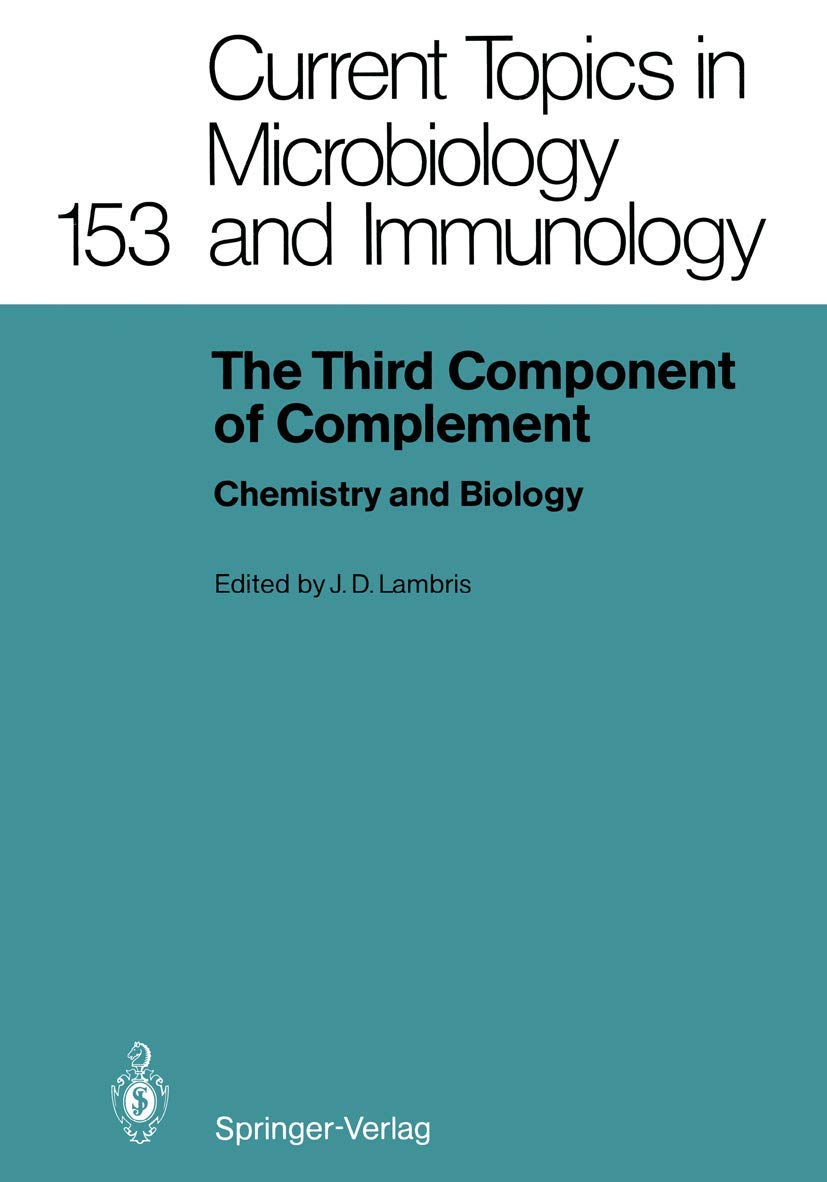
The Third Component of Complement: Chemistry and Biology (Current Topics in Microbiology and Immunology, 153),Used
Sold by Ergodebooks, an authorized reseller.
Returns accepted within 30 days | support@ergodebooks.com
Shipping Information
- Free Standard Shipping — United States only
- Processing Time: 3–5 business days
- Estimated Delivery: 6–10 business days after dispatch
- Double-boxed, fully insured & discreetly packaged
- Tracking number sent via email once dispatched
Returns & Refund
Returns accepted within 30 days of delivery.
Damaged or Defective Item
Free return shipping + replacement or full refund
Wrong Item Received
Free return shipping + replacement or full refund
Change of Mind
Return shipping at customer's expense · 25% restocking fee applies
Payment Option

The third component of complement, C3, is one of the most versatile proteins and an important participant in immune surveillance and immune response pathways. Its multifunctio nality is based on its ability to interact specifically with multiple serum complement proteins, cell surface receptors, and mem brant;associated regulatory proteins. One of its most intriguing strategies of interaction with cell surfaces is the covalent binding of activated C3 through the internal thioester. The field has expanded over the past 10 years and a wealth of information has accumulated. C3 from various species and many of the human C3 binding proteins have been cloned and expressed. Numerous cellular responses mediated by the diffe rent fragments of C3 have been described. The findings that C3 interacts in a ligandreceptorlike fashion with proteins of nonself origin such as the gC of herpes simplex virus, a 70kDa protein from Candida albicans, proteins from EpsteinBarr virus, etc. has opened a new field of investigation. The papers assembled in this volume summarize the wealth of data on the various aspects of the C3 interactions; together they bring to the reader new information on the chemistry, molecular gene tics, biology, and pathophysiology of C3 and C3binding proteins. Emphasis is given to structural features as they relate to functions. Spring 1989 JOHN D. LAMBRIS, HANS J. MULLEREBERHARD Table of Contents J. E. VOLANAKIS: Participation of C3 and Its Ligands in Complement Activation . . . . . . . . . . . 1 S. R. BARNUM, G. FEY, and B. F. TACK: Biosynthesis and Genetics of C3 . . . . . . . . . . . . .
⚠️ WARNING (California Proposition 65):
This product may contain chemicals known to the State of California to cause cancer, birth defects, or other reproductive harm.
For more information, please visit www.P65Warnings.ca.gov.