
Title
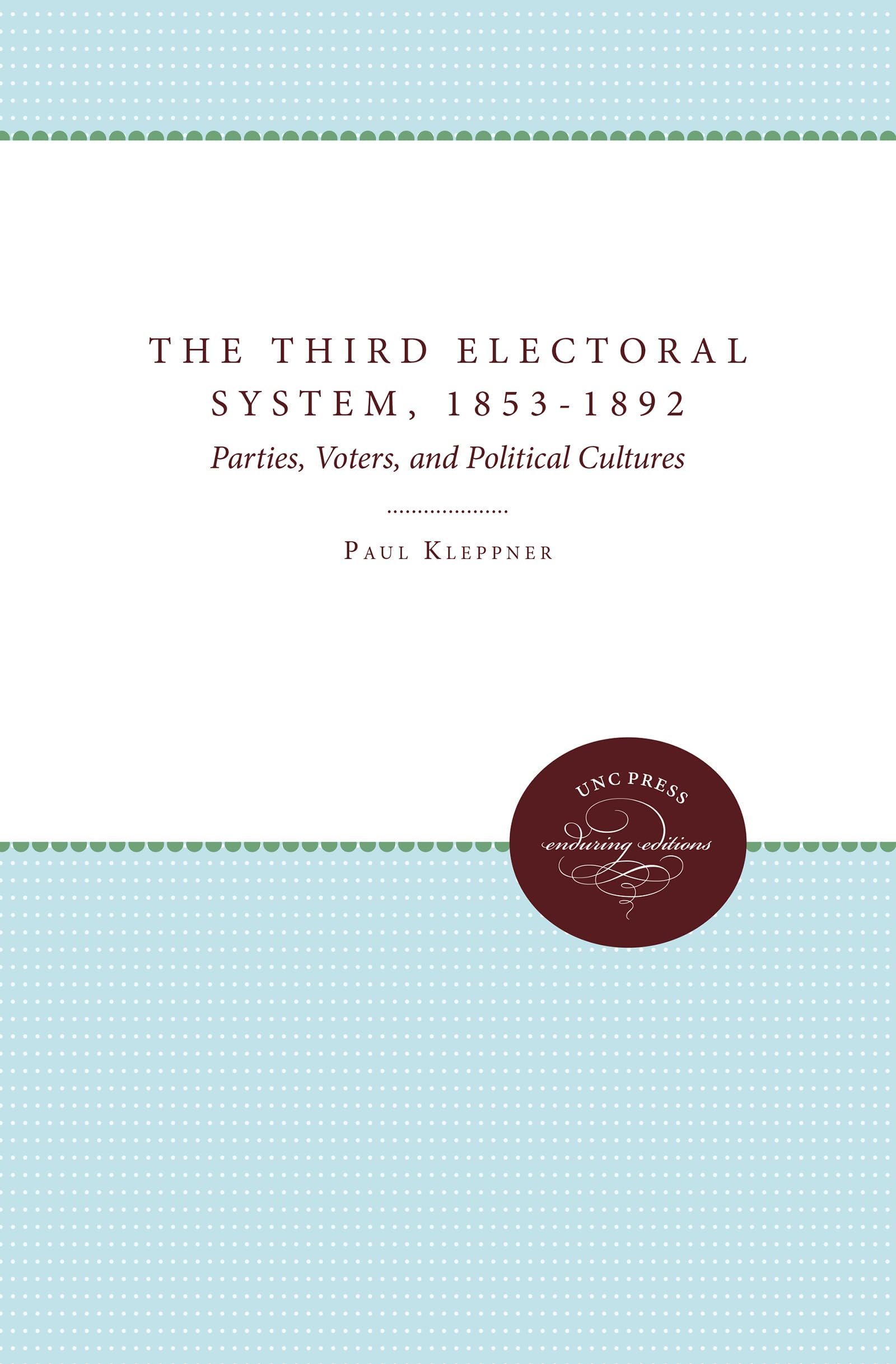
The Third Electoral System, 18531892: Parties, Voters, And Political Cultures,New
Sold by Ergodebooks, an authorized reseller.
Returns accepted within 30 days | support@ergodebooks.com
Shipping Information
- Free Standard Shipping — United States only
- Processing Time: 3–5 business days
- Estimated Delivery: 6–10 business days after dispatch
- Double-boxed, fully insured & discreetly packaged
- Tracking number sent via email once dispatched
Returns & Refund
Returns accepted within 30 days of delivery.
Damaged or Defective Item
Free return shipping + replacement or full refund
Wrong Item Received
Free return shipping + replacement or full refund
Change of Mind
Return shipping at customer's expense · 25% restocking fee applies
Payment Option

This analysis of the contours and social bases of mass voting behavior in the United States over the course of the third electoral era, from 1853 to 1892, provides a deep and rich understanding of the ways in which ethnoreligious values shaped party combat in the late nineteenth century. It was this uniquely American mode of 'political confessionals' that underlay the distinctive characteristics of the era's electoral universe.In its exploration of the the political roles of native and immigrant ethnic and religious groups, this study bridges the gap between political and social history. The detailed analysis of ethnoreligious experiences, values, and beliefs is integrated into an explanation of the relationship between group political subcultures and partisan preferences which wil be of interest to political sociologists, political scientists, and also political and social historians.Unlike other works of this genre, this book is not confined to a single description of the voting patterns of a single state, or of a series of states in one geographic region, but cuts across states and regions, while remaining sensitive to the enormously significant ways in which political and historical context conditioned mass political behavior. The author accomplishes this remarkable fusion by weaving the small patterns evident in detailed case studies into a larger overview of the electoral system. The result is a unified conceptual framework that can be used to understand both American political behavior duing an important era and the general preconditions of socialgroup political consciousness. Challenging in major ways the liberalrational assumptions that have dominated political history, the book provides the foundation for a synthesis of party tactics, organizational practices, public rhetoric, and elite and mass behaviors.
⚠️ WARNING (California Proposition 65):
This product may contain chemicals known to the State of California to cause cancer, birth defects, or other reproductive harm.
For more information, please visit www.P65Warnings.ca.gov.