
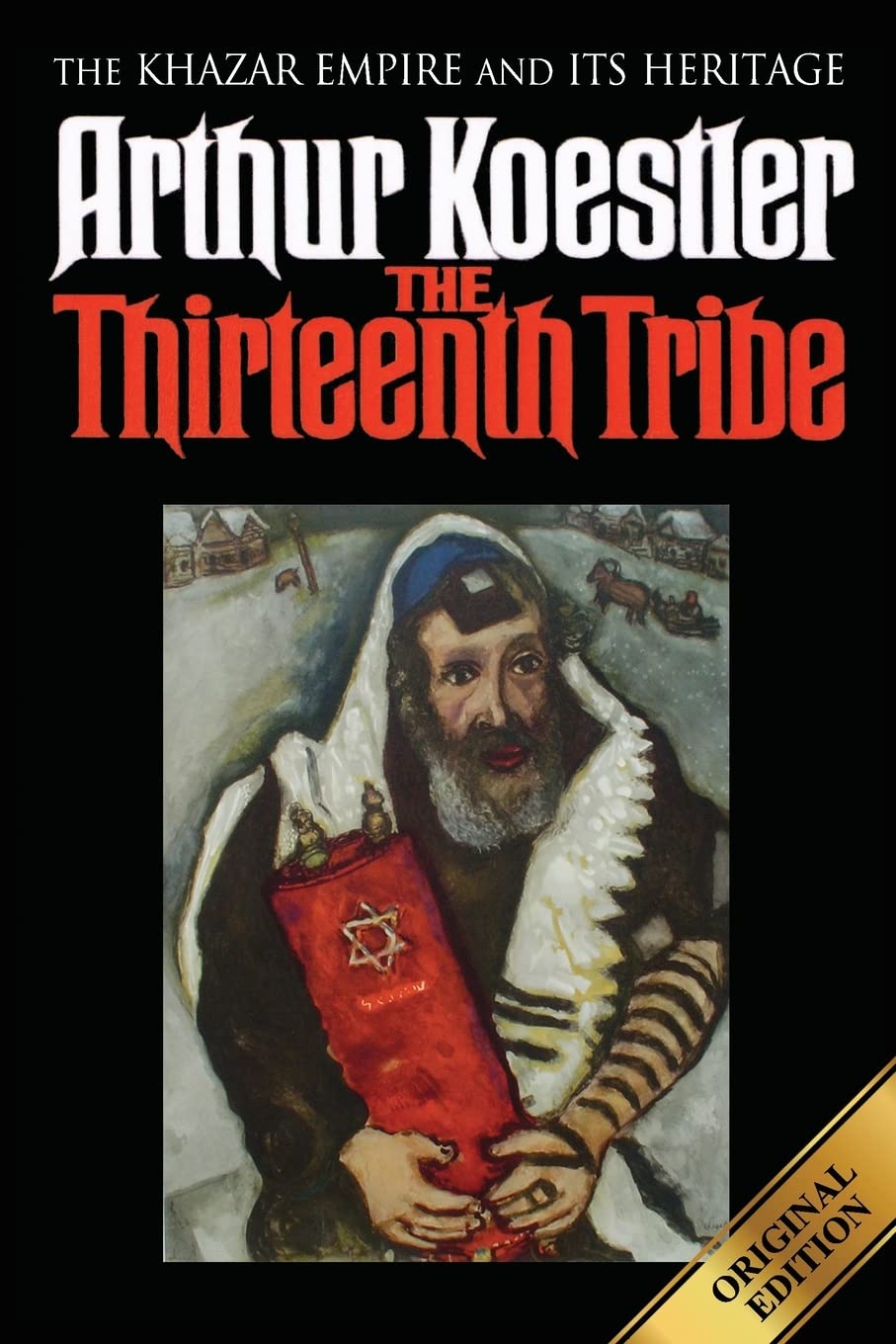
Title
The Thirteenth Tribe: The Khazar Empire and its Heritage,New
Sold by Ergodebooks, an authorized reseller.
Returns accepted within 30 days | support@ergodebooks.com
Shipping Information
- Free Standard Shipping — United States only
- Processing Time: 3–5 business days
- Estimated Delivery: 6–10 business days after dispatch
- Double-boxed, fully insured & discreetly packaged
- Tracking number sent via email once dispatched
Returns & Refund
Returns accepted within 30 days of delivery.
Damaged or Defective Item
Free return shipping + replacement or full refund
Wrong Item Received
Free return shipping + replacement or full refund
Change of Mind
Return shipping at customer's expense · 25% restocking fee applies
Payment Option

All original edition. Nothing added, nothing removed. This book traces the history of the ancient Khazar Empire, a major but almost forgotten power in Eastern Europe, which in the Dark Ages became converted to Judaism. Khazaria was finally wiped out by the forces of Genghis Khan, but evidence indicates that the Khazars themselves migrated to Poland and formed the cradle of Western Jewry. To the general reader the Khazars, who flourished from the 7th to 11th century, may seem infinitely remote today. Yet they have a close and unexpected bearing on our world, which emerges as Koestler recounts the fascinating history of the ancient Khazar Empire. At about the time that Charlemagne was Emperor in the West. The Khazars' sway extended from the Black Sea to the Caspian, from the Caucasus to the Volga, and they were instrumental in stopping the Muslim onslaught against Byzantium, the eastern jaw of the gigantic pincer movement that in the West swept across northern Africa and into Spain.Thereafter the Khazars found themselves in a precarious position between the two major world powers: the Eastern Roman Empire in Byzantium and the triumphant followers of Mohammed. As Koestler points out, the Khazars were the Third World of their day. They chose a surprising method of resisting both the Western pressure to become Christian and the Eastern to adopt Islam. Rejecting both, they converted to Judaism.Mr. Koestler speculates about the ultimate faith of the Khazars and their impact on the racial composition and social heritage of modern Jewry. He produces detailed research to support a theory which could make the term 'antiSemitism' become void of meaning.
⚠️ WARNING (California Proposition 65):
This product may contain chemicals known to the State of California to cause cancer, birth defects, or other reproductive harm.
For more information, please visit www.P65Warnings.ca.gov.
- Q: What is the main topic of 'The Thirteenth Tribe'? A: 'The Thirteenth Tribe' by Arthur Koestler explores the history of the ancient Khazar Empire, its conversion to Judaism, and its influence on the heritage of modern Jewry.
- Q: Who is the author of this book? A: The author of 'The Thirteenth Tribe' is Arthur Koestler, a noted writer and historian.
- Q: What time period does the book cover regarding the Khazar Empire? A: The book covers the history of the Khazar Empire from the 7th century to the 11th century.
- Q: Is this book a new edition? A: 'The Thirteenth Tribe' is presented as an original edition, with nothing added or removed from the content.
- Q: How many pages does the book have? A: 'The Thirteenth Tribe' contains 210 pages.
- Q: What is the binding type of this book? A: This book is available in paperback binding.
- Q: In which category is this book listed? A: 'The Thirteenth Tribe' is categorized under Middle East history.
- Q: When was 'The Thirteenth Tribe' published? A: 'The Thirteenth Tribe' was published on August 3, 1976.
- Q: What condition is the book in? A: The book is in new condition.
- Q: What themes are explored in the book? A: The book explores themes of religious identity, historical migration, and the impact of the Khazar Empire on modern Jewish heritage.