
Title
The Three Blessings: Boundaries, Censorship, and Identity in Jewish Liturgy,Used
Sold by Ergodebooks, an authorized reseller.
Returns accepted within 30 days | support@ergodebooks.com
Shipping Information
- Free Standard Shipping — United States only
- Processing Time: 3–5 business days
- Estimated Delivery: 6–10 business days after dispatch
- Double-boxed, fully insured & discreetly packaged
- Tracking number sent via email once dispatched
Returns & Refund
Returns accepted within 30 days of delivery.
Damaged or Defective Item
Free return shipping + replacement or full refund
Wrong Item Received
Free return shipping + replacement or full refund
Change of Mind
Return shipping at customer's expense · 25% restocking fee applies
Payment Option

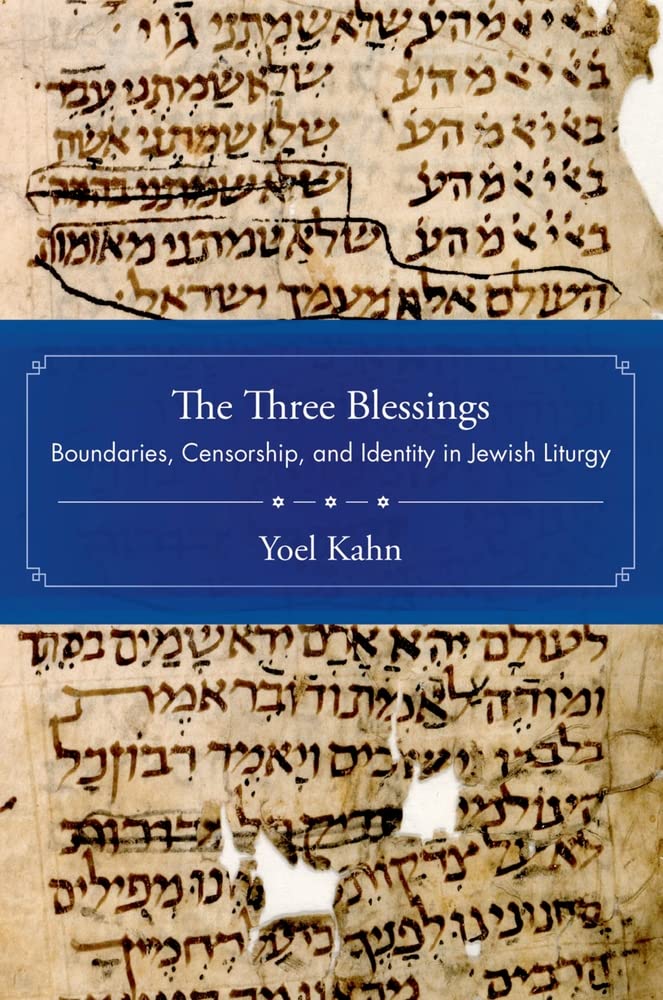
In the traditional Jewish liturgy, a man thanks God daily for not having been made a gentile, a woman, or a slave. Yoel Kahn traces the history of this prayer from its extraJewish origins to the present, demonstrating how different generations and communities understood the significance of these words.Marginalized and persecuted groups used this prayer to mark the boundary between "us" and "them," affirming their own identity and sense of purpose. After the medieval Church seized and burned books it considered offensive, new, coded formulations of the three blessings emerged as forms of spiritual resistance. Book owners voluntarily expurgated the passage to save the books from being destroyed, creating new language and meaning while seeking to preserve the structure and message of the received tradition. During the Renaissance, Jewish women defied their rabbis and declared their gratitude at being "made a woman and not a man." And, as Jewish emancipation began in the nineteenth century, Jews again had to balance fealty to historical practice with their place in the world. Seeking to be recognized as modern and European, early modern Jews rewrote the liturgy to suit modern sensibilities and identified themselves with the Christian West against the historical pagan and the uncivilized infidel.The Three Blessings is an insightful and wideranging study of one of the most controversial Jewish prayers, showing its constantly evolving language, usage, and interpretation over the past 2,000 years.
⚠️ WARNING (California Proposition 65):
This product may contain chemicals known to the State of California to cause cancer, birth defects, or other reproductive harm.
For more information, please visit www.P65Warnings.ca.gov.