
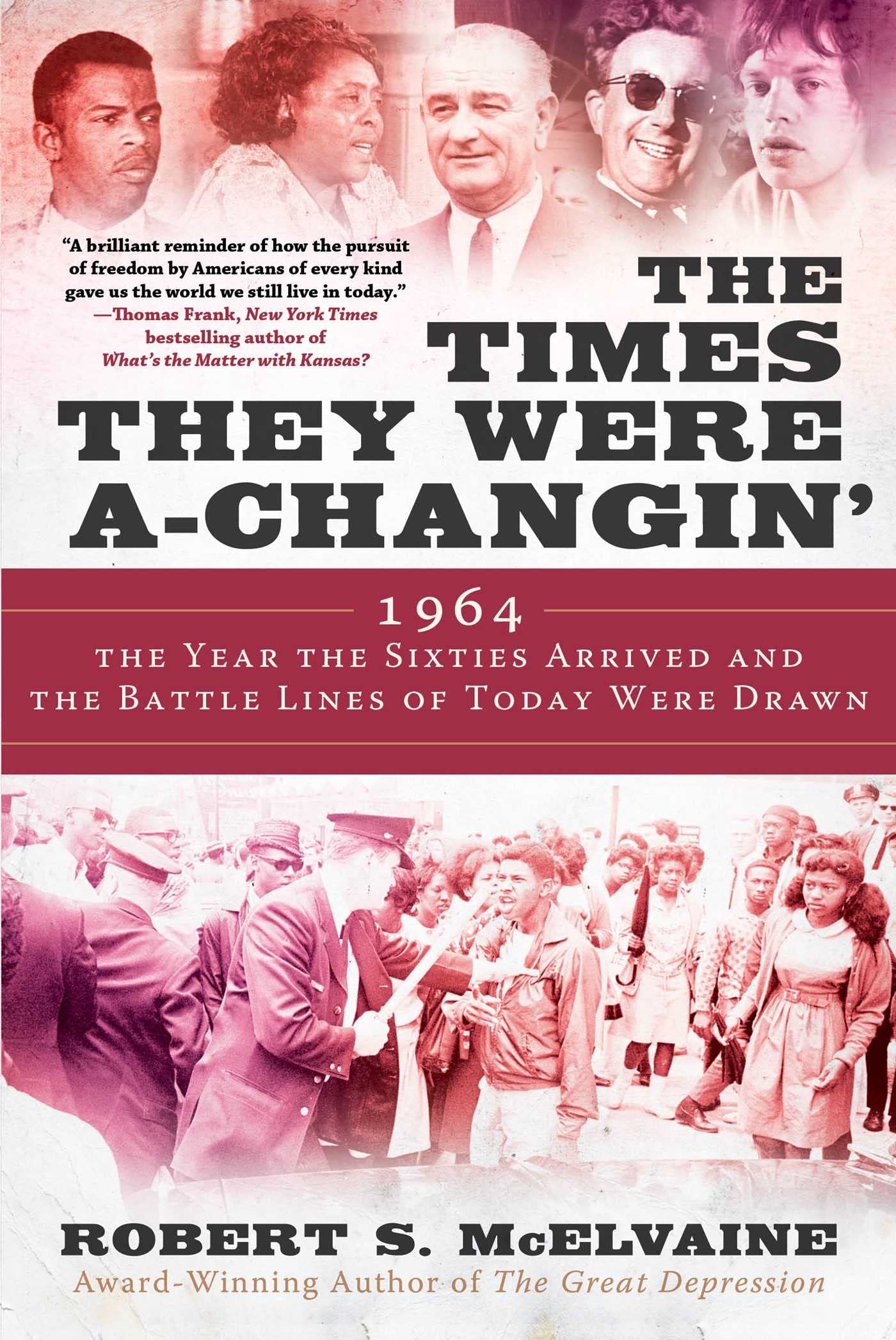
Title
The Times They Were aChangin: 1964, the Year the Sixties Arrived and the Battle Lines of Today Were Drawn,Used
Sold by Ergodebooks, an authorized reseller.
Returns accepted within 30 days | support@ergodebooks.com
Shipping Information
- Free Standard Shipping — United States only
- Processing Time: 3–5 business days
- Estimated Delivery: 6–10 business days after dispatch
- Double-boxed, fully insured & discreetly packaged
- Tracking number sent via email once dispatched
Returns & Refund
Returns accepted within 30 days of delivery.
Damaged or Defective Item
Free return shipping + replacement or full refund
Wrong Item Received
Free return shipping + replacement or full refund
Change of Mind
Return shipping at customer's expense · 25% restocking fee applies
Payment Option

An awardwinning historian on the transformative year in the sixties that continues to reverberate in our lives and politicsfor readers of Heather Cox Richardson.If 1968 marked a turning point in a pivotal decade, 1964or rather, the long 1964, from JFK? assassination in November 1963 to mid1965was the time when the sixties truly arrived. It was then that the United States began a radical shift toward a much more inclusive definition of ?merican,?with a greater degree of equality and a government actively involved in social and economic improvement.It was a radical shift accompanied by a cultural revolution. The same month Bob Dylan released his iconic ballad ?he Times They Are aChangin??January 1964, President Lyndon Johnson announced his War on Poverty. Spurred by the civil rights movement and a generation pushing for change, the Civil Rights Act, the Voting Rights Act, and the Immigration and Nationality Act were passed during this period. This was a time of competing definitions of freedom. Freedom from racism, freedom from poverty. White youth sought freedoms they associated with black culture, captured imperfectly in the phrase ?ex, drugs, and rock ??roll.?Along with freedom from racist oppression, black Americans sought the opportunities associated with the white middle class: ?hite freedom.?Women challenged rigid gender roles. And in response to these freedoms, the changing mores, and youth culture, the contrary impulse found political expression in such figures as Barry Goldwater and Ronald Reagan, proponents of what was presented as freedom from government interference. Meanwhile, a nonevent in the Tonkin Gulf would accelerate the nations plunge into the Vietnam tragedy.In narrating 1964? moment of reckoning, when American identity began to be reimagined, McElvaine ties those past battles to their legacy today. Throughout, he captures the changing consciousness of the period through its vibrant music, film, literature, and personalities.
⚠️ WARNING (California Proposition 65):
This product may contain chemicals known to the State of California to cause cancer, birth defects, or other reproductive harm.
For more information, please visit www.P65Warnings.ca.gov.
- Q: How many pages does the book have? A: The book has four hundred eighty pages. This length provides a comprehensive exploration of the transformative year of 1964.
- Q: What is the binding type of this book? A: The book is a hardcover edition. This type of binding offers durability and longevity for repeated readings.
- Q: What are the dimensions of the book? A: The book measures six inches in length, one point four two inches in width, and nine point zero two inches in height. These dimensions make it a manageable size for reading.
- Q: Who is the author of the book? A: The author is Robert S. McElvaine. He is an award-winning historian known for his insights on American history.
- Q: What is the genre of this book? A: The book falls under historical non-fiction. It analyzes significant events and cultural shifts from the year 1964.
- Q: What themes are covered in the book? A: The book explores themes of civil rights, cultural revolution, and the political landscape of the sixties. It connects past events to contemporary issues.
- Q: Is this book suitable for all ages? A: Yes, the book is suitable for a general audience. It's appropriate for readers interested in history and the social changes of the sixties.
- Q: How does the book address the Civil Rights Movement? A: The book provides an in-depth look at the Civil Rights Movement's impact in 1964. It highlights key legislation and cultural shifts that occurred during this time.
- Q: Can this book be used for educational purposes? A: Yes, this book is excellent for educational purposes. It provides historical context and analysis that can enhance learning in history classes.
- Q: What should I do to take care of the book? A: To care for the book, keep it in a cool, dry place and avoid exposure to direct sunlight. This will help maintain its condition over time.
- Q: Is it okay to write in this book? A: Yes, writing in the book is acceptable if you wish to take notes. However, consider using a pencil to avoid permanent marks.
- Q: How do I store the book properly? A: Store the book upright on a shelf or in a bookcase. Ensure it is not overloaded with other books to prevent damage.
- Q: What if the book arrives damaged? A: If the book arrives damaged, contact customer service for assistance. Most retailers offer a return policy for damaged items.
- Q: Is there a warranty for this book? A: No, books typically do not come with a warranty. However, you can return it if it is damaged during shipping.
- Q: Can I find similar books by Robert S. McElvaine? A: Yes, Robert S. McElvaine has written other historical books. Exploring his works can provide further insights into American history.
- Q: Does this book contain illustrations or photographs? A: No, this book does not contain illustrations or photographs. It focuses on textual analysis and historical narrative.