
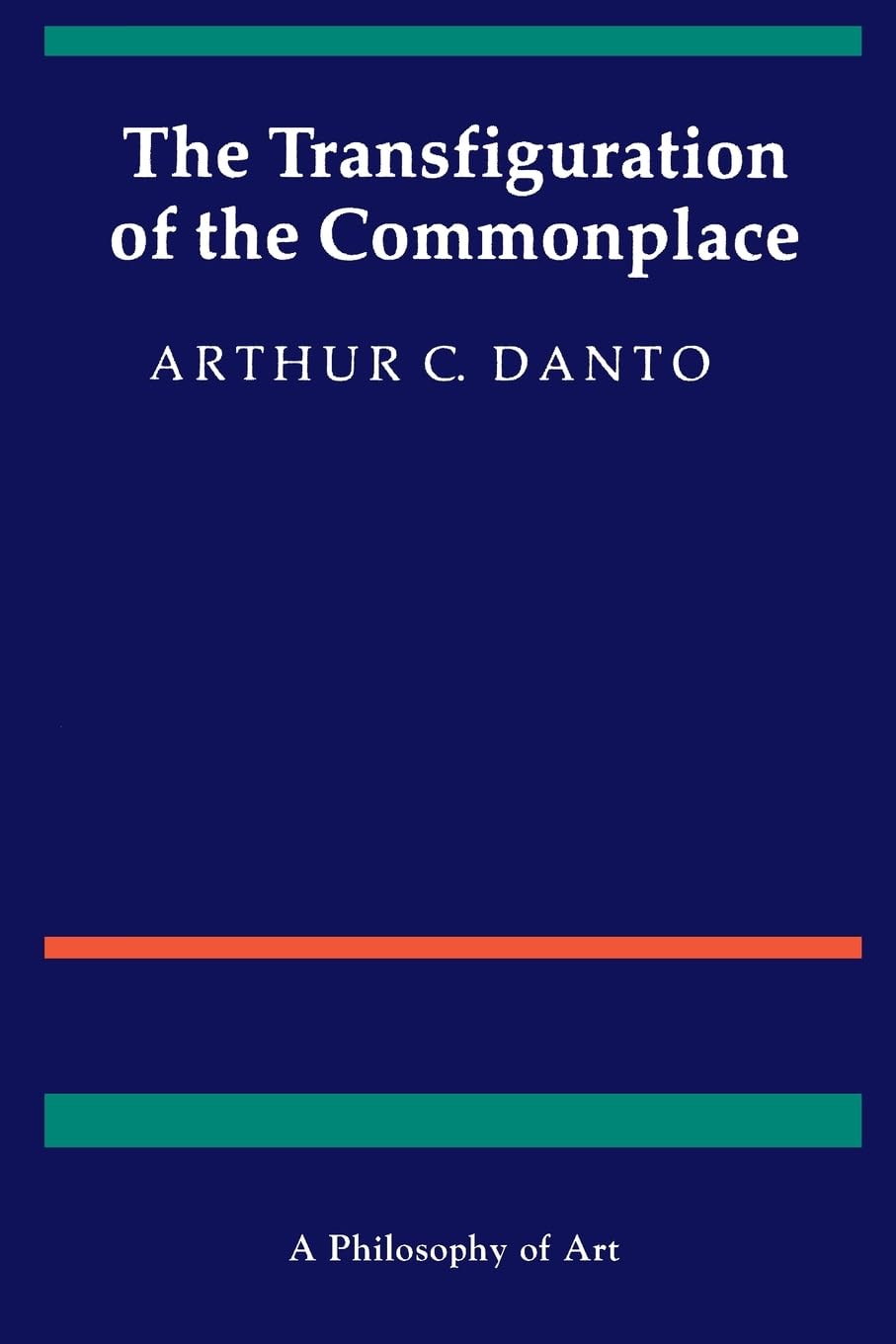
Title
The Transfiguration Of The Commonplace: A Philosophy Of Art,Used
Sold by Ergodebooks, an authorized reseller.
Returns accepted within 30 days | support@ergodebooks.com
Shipping Information
- Free Standard Shipping — United States only
- Processing Time: 3–5 business days
- Estimated Delivery: 6–10 business days after dispatch
- Double-boxed, fully insured & discreetly packaged
- Tracking number sent via email once dispatched
Returns & Refund
Returns accepted within 30 days of delivery.
Damaged or Defective Item
Free return shipping + replacement or full refund
Wrong Item Received
Free return shipping + replacement or full refund
Change of Mind
Return shipping at customer's expense · 25% restocking fee applies
Payment Option

Arthur C. Danto Argues That Recent Developments In The Art World, In Particular The Production Of Works Of Art That Cannot Be Told From Ordinary Things, Make Urgent The Need For A New Theory Of Art And Make Plain The Factors Such A Theory Can And Cannot Involve. In The Course Of Constructing Such A Theory, He Seeks To Demonstrate The Relationship Between Philosophy And Art, As Well As The Connections That Hold Between Art And Social Institutions And Art History.The Book Distinguishes What Belongs To Artistic Theory From What Has Traditionally Been Confused With It, Namely Aesthetic Theory And Offers As Well A Systematic Account Of Metaphor, Expression, And Style, Together With An Original Account Of Artistic Representation. A Wealth Of Examples, Drawn Especially From Recent And Contemporary Art, Illuminate The Argument.
⚠️ WARNING (California Proposition 65):
This product may contain chemicals known to the State of California to cause cancer, birth defects, or other reproductive harm.
For more information, please visit www.P65Warnings.ca.gov.
- Q: What is the page count of this book? A: The book contains two hundred twenty-four pages. This length allows for a comprehensive exploration of art philosophy.
- Q: What are the dimensions of 'The Transfiguration of the Commonplace'? A: The dimensions are five point five one inches in length, zero point five six inches in width, and eight point two seven inches in height. This makes it a manageable size for reading.
- Q: What type of binding does this book have? A: This book is published in paperback binding. This makes it lightweight and easier to handle than hardcover editions.
- Q: Who is the author of 'The Transfiguration of the Commonplace'? A: The author is Arthur C. Danto. He is known for his contributions to art philosophy and criticism.
- Q: What is the main theme of this book? A: The main theme discusses the relationship between philosophy and art. Danto argues for a new theory of art in light of contemporary practices.
- Q: Is this book suitable for beginners in philosophy? A: Yes, this book is suitable for beginners. It presents complex ideas in an accessible manner for those new to art philosophy.
- Q: How does Danto explain the relationship between art and social institutions? A: Danto illustrates how art interacts with social institutions through historical context. He emphasizes the importance of these connections in understanding art.
- Q: Can this book help me understand artistic representation? A: Yes, it offers an original account of artistic representation. Danto provides systematic insights into metaphor, expression, and style.
- Q: What genre does 'The Transfiguration of the Commonplace' fall under? A: This book falls under the genre of metaphysics. It delves into philosophical inquiries surrounding art and aesthetics.
- Q: How does this book compare to traditional aesthetic theory? A: Danto distinguishes artistic theory from traditional aesthetic theory. He provides a systematic account that challenges conventional views.
- Q: What is the focus of Danto's argument in this book? A: Danto's focus is on how ordinary things can be perceived as art. He argues for a need to reevaluate what constitutes art.
- Q: Are there practical examples in the book? A: Yes, the book includes numerous examples from recent and contemporary art. These examples illustrate Danto's philosophical arguments effectively.
- Q: Is this book appropriate for academic study? A: Yes, it is appropriate for academic study. The insights provided are valuable for students and scholars of art philosophy.
- Q: What makes this book a significant contribution to philosophy? A: Its argument for a new theory of art in response to contemporary practices makes it significant. Danto's insights are thought-provoking and timely.
- Q: How does Danto address the confusion between artistic and aesthetic theory? A: Danto clarifies the distinction by providing a systematic account of both theories. He helps readers understand their unique roles in art discourse.