If you have any questions, you are always welcome to contact us. We'll get back to you as soon as possible, withing 24 hours on weekdays.
Customer service
All questions about your order, return and delivery must be sent to our customer service team by e-mail at yourstore@yourdomain.com
Sale & Press
If you are interested in selling our products, need more information about our brand or wish to make a collaboration, please contact us at press@yourdomain.com
Help
If you have any questions, you are always welcome to contact us. We'll get back to you as soon as possible, withing 24 hours on weekdays.
Customer service
All questions about your order, return and delivery must be sent to our customer service team by e-mail at yourstore@yourdomain.com
Sale & Press
If you are interested in selling our products, need more information about our brand or wish to make a collaboration, please contact us at press@yourdomain.com
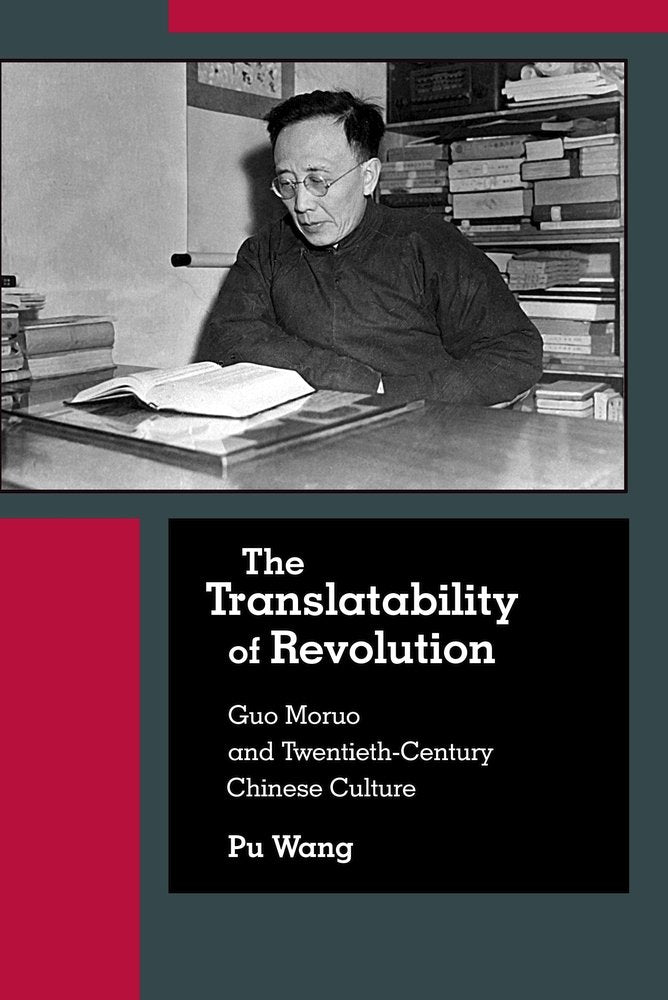
The first comprehensive study of the lifework of Guo Moruo (18921978) in English, this book explores the dynamics of translation, revolution, and historical imagination in twentiethcentury Chinese culture. Guo was a romantic writer who eventually became Mao Zedongs last poetic interlocutor; a Marxist historian who evolved into the inaugural president of Chinas Academy of Sciences; and a leftist politician who devoted almost three decades to translating Goethes Faust. His career, embedded in Chinas revolutionary century, has generated more controversy than admiration. Recent scholarship has scarcely treated his oeuvre as a whole, much less touched upon his role as a translator.Leaping between different genres of Guos works, and engaging many other writers texts, The Translatability of Revolution confronts two issues of revolutionary cultural politics: translation and historical interpretation. Part 1 focuses on the translingual making of Chinas revolutionary culture, especially Guos translation of Faust as a development of Zeitgeist. Part 2 deals with Guos rewritings of antiquity in lyrical, dramatic, and historiographicalpaleographical forms, including his vernacular translation of classical Chinese poetry. Interrogating the relationship between translation and historical imaginationwithin revolutionary cultural practicethis book finds a transcoding of different historical conjunctures into nowtime, saturated with possibilities and tensions.
⚠️ WARNING (California Proposition 65):
This product may contain chemicals known to the State of California to cause cancer,
birth defects, or other reproductive harm.
For MAP (Minimum Advertised Price) violations and Intellectual Property (IP) or Trademark concerns, please contact:
support@ergodebooks.com
⚠️ California Proposition 65 Warning: Some products sold on this website may expose you to chemicals known to the State of California to cause cancer, birth defects, or other reproductive harm. For more information, visit www.P65Warnings.ca.gov.