
Title
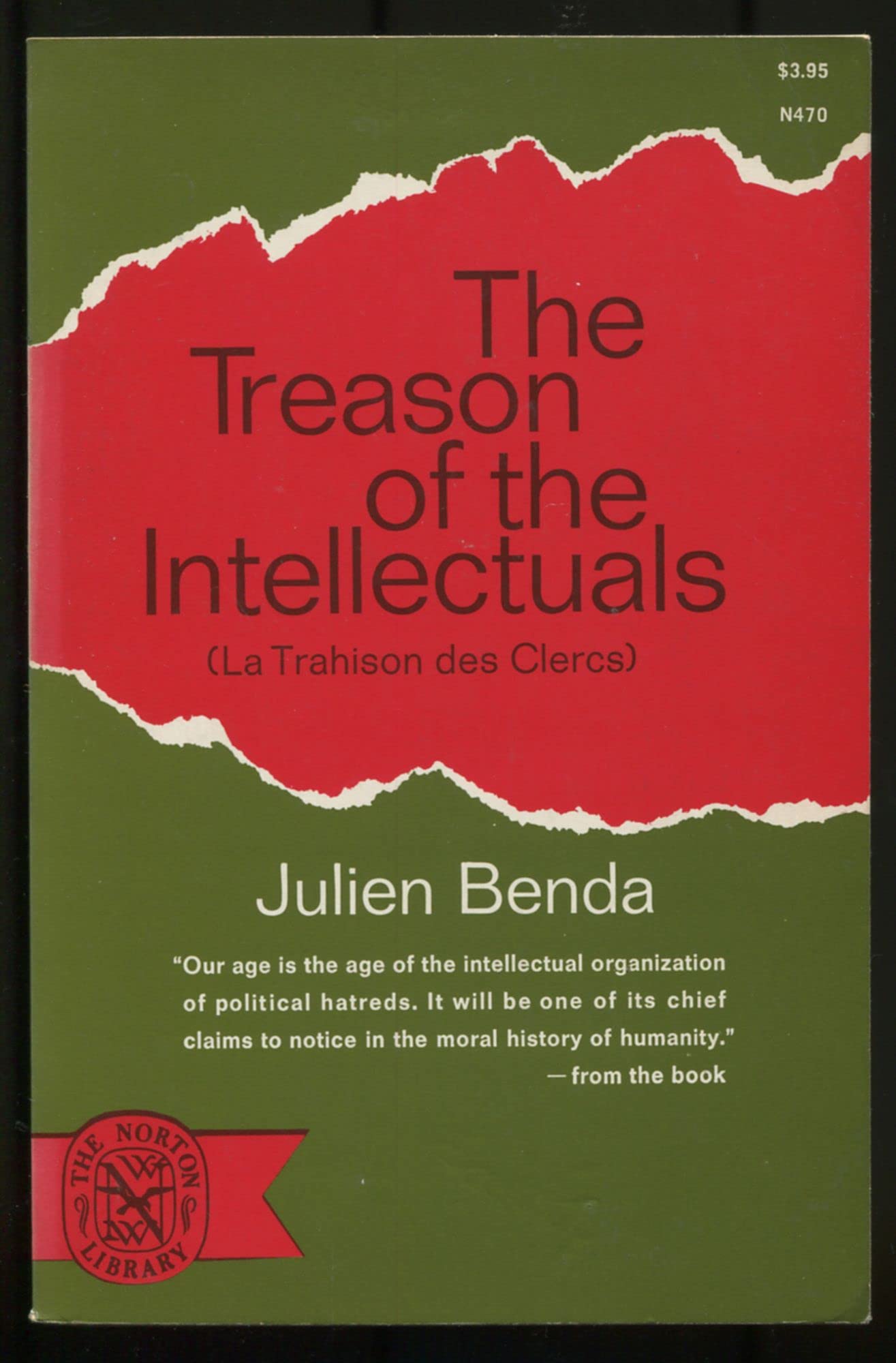
The Treason Of The Intellectuals (La Trahison Des Clercs),Used
Sold by Ergodebooks, an authorized reseller.
Returns accepted within 30 days | support@ergodebooks.com
Shipping Information
- Free Standard Shipping — United States only
- Processing Time: 3–5 business days
- Estimated Delivery: 6–10 business days after dispatch
- Double-boxed, fully insured & discreetly packaged
- Tracking number sent via email once dispatched
Returns & Refund
Returns accepted within 30 days of delivery.
Damaged or Defective Item
Free return shipping + replacement or full refund
Wrong Item Received
Free return shipping + replacement or full refund
Change of Mind
Return shipping at customer's expense · 25% restocking fee applies
Payment Option

Julien Benda'S Classic Study Of The European 1920S Resonates Today. La Trahison Des Clercs Is One Of Those Phrases That Bristle With Hints And Associations Without Stating Anything Definite. In His New Introduction, Roger Kimball Quotes From A Contemporary, Alain Finkielkraut, Who Recalls In Haunting Words The Essence Of The Treason Of The Intellectuals . 'When Hatred Of Culture Becomes Itself A Part Of Culture, The Life Of The Mind Loses All Meaning.' As Kimball Reminds Us, In The Present Age, Only The Title Of The Book, Not Its Argument, Enjoys Currency. The Book Itself Is Well Known Without Being Known Well. Its Release At This Time Should Overcome That Neglect. The 'Treason' Of Which Benda Writes Was The Betrayal By The Intellectuals Of Their Unique Vocation. From The Time Of The Presocratics, Intellectuals, In Their Role As Intellectuals, Had Been A Breed Apart. In Benda'S Terms, They Were Understood To Be 'All Those Whose Activity Essentially Is Not The Pursuit Of Practical Aims, All Those Who Seek Their Joy In The Practice Of An Art Or A Science Or A Metaphysical Speculation, In Short In The Possession Of Nonmaterial Advantages.' Thanks To Such Men, Benda Noted, 'Humanity Did Evil For Two Thousand Years, But Honored Good. This Contradiction Was An Honor To The Human Species, And Formed The Rift Whereby Civilization Slipped Into The World.' According To Benda, This Situation Began To Change In The Early Decades Of The Twentieth Century. More And More, Intellectuals Abandoned Their Attachment To The Traditional Panoply Of Philosophical And Scholarly Ideals. One Clear Indication Of The Change Was The Attack On The Enlightenment Ideal Of Universal Humanity And The Concomitant Glorification Of Various Particularisms. The Implications For Intellectual Life Today Are Transparent, And This Long Unavailable Classic Of European Thought Should Interest All Those Who Teach And Who Preach The Human Sciences.
⚠️ WARNING (California Proposition 65):
This product may contain chemicals known to the State of California to cause cancer, birth defects, or other reproductive harm.
For more information, please visit www.P65Warnings.ca.gov.
- Q: What is the page count of 'The Treason of the Intellectuals'? A: The book has one hundred pages. This classic study by Julien Benda provides a deep exploration of intellectuals' roles in society.
- Q: What are the dimensions of 'The Treason of the Intellectuals'? A: The book measures five point twenty-five inches in length, zero point seventy-five inches in width, and seven point seventy-six inches in height. These dimensions make it a compact paperback.
- Q: What type of binding does 'The Treason of the Intellectuals' have? A: It has a paperback binding. This format is lightweight and flexible, making it easy to read and carry.
- Q: Who is the author of 'The Treason of the Intellectuals'? A: The author is Julien Benda. His insightful commentary on the betrayal of intellectual ideals remains relevant today.
- Q: What is the genre of 'The Treason of the Intellectuals'? A: The genre is political philosophy. Benda's work critiques the role of intellectuals in the societal context of the early twentieth century.
- Q: How should I read 'The Treason of the Intellectuals'? A: You can read this book at your own pace. Its themes are best appreciated through thoughtful reflection on the ideas presented.
- Q: Is 'The Treason of the Intellectuals' suitable for students? A: Yes, it is suitable for students studying philosophy or political science. Its critical insights into intellectualism are valuable for academic discussions.
- Q: What age group is 'The Treason of the Intellectuals' appropriate for? A: It is appropriate for readers aged sixteen and older. The book discusses complex themes that may require a mature understanding.
- Q: How do I care for my copy of 'The Treason of the Intellectuals'? A: To care for your book, keep it in a dry place and avoid exposure to direct sunlight. This helps preserve the binding and pages.
- Q: Can I store 'The Treason of the Intellectuals' with other books? A: Yes, you can store it with other books. Just ensure it’s upright and not overcrowded to avoid damage.
- Q: How does 'The Treason of the Intellectuals' compare to other political philosophy books? A: It offers a unique perspective on the role of intellectuals compared to other works. Benda's focus on betrayal of ideals sets it apart.
- Q: Is this book a good choice for someone interested in modern philosophy? A: Yes, it is an excellent choice for those interested in modern philosophy. Benda's analysis of intellectualism is impactful and thought-provoking.
- Q: What if my copy of 'The Treason of the Intellectuals' arrives damaged? A: If your copy arrives damaged, contact the seller for a return or replacement. Most sellers have policies for such issues.
- Q: What is the return policy for 'The Treason of the Intellectuals'? A: Return policies vary by seller. Check the specific seller's guidelines to understand your options for returning the book.
- Q: Can I find 'The Treason of the Intellectuals' in libraries? A: Yes, many libraries carry this title. It's a significant work that is often included in academic collections.