
Title
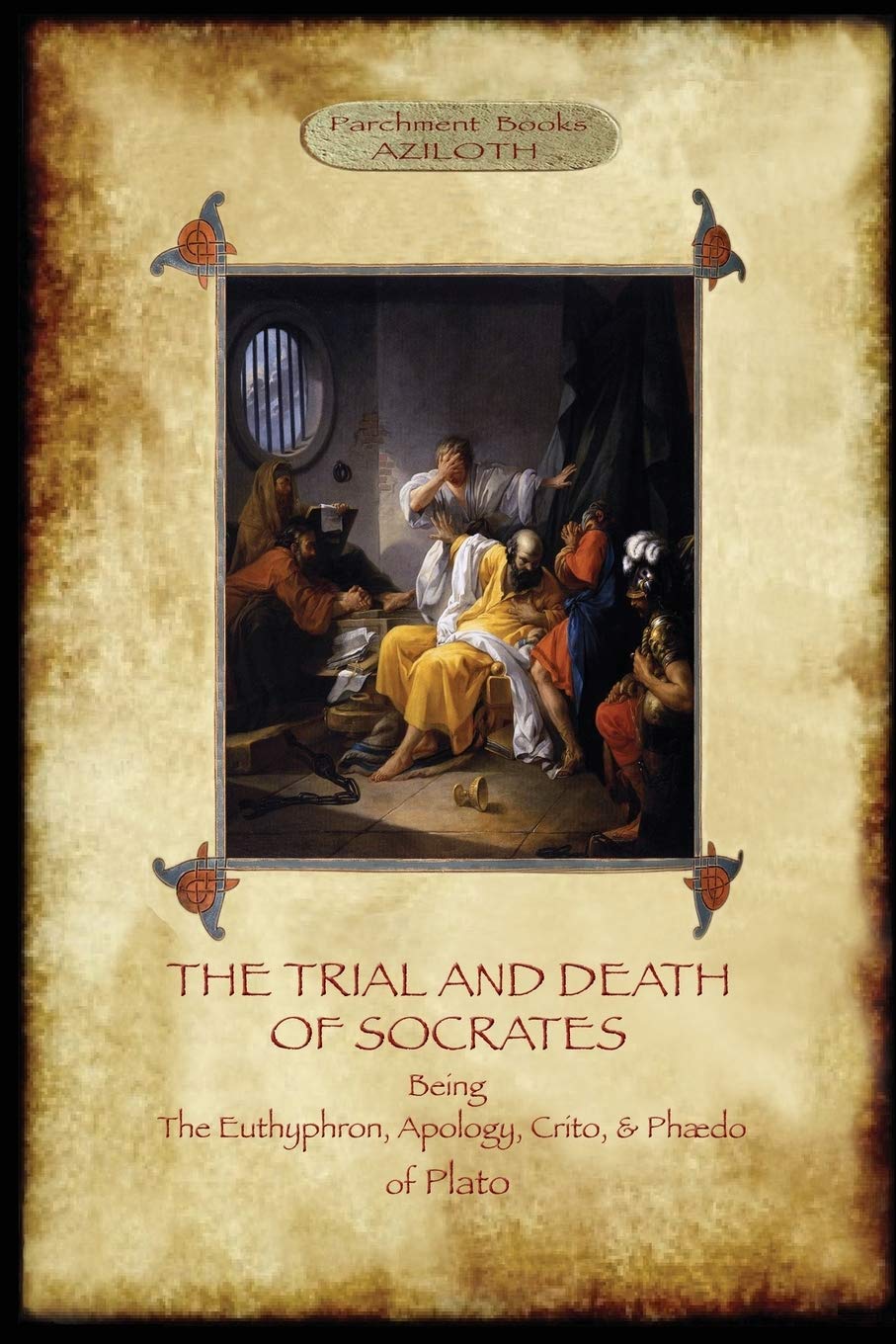
The Trial and Death of Socrates: With 32page introduction, footnotes and Stephanus references by F.C. Church, translator (Azilo,Used
Sold by Ergodebooks, an authorized reseller.
Returns accepted within 30 days | support@ergodebooks.com
Shipping Information
- Free Standard Shipping — United States only
- Processing Time: 3–5 business days
- Estimated Delivery: 6–10 business days after dispatch
- Double-boxed, fully insured & discreetly packaged
- Tracking number sent via email once dispatched
Returns & Refund
Returns accepted within 30 days of delivery.
Damaged or Defective Item
Free return shipping + replacement or full refund
Wrong Item Received
Free return shipping + replacement or full refund
Change of Mind
Return shipping at customer's expense · 25% restocking fee applies
Payment Option

In 399 B.C., Socrates was tried for religious and political crimes: refusing to recognise the gods of Athens, introducing new deities, and corrupting the youth. The verdict was guilty as charged, the penalty death by poisoning.Despite growing up in Greece's 'Golden Age' of liberalism and democracy, Socrates was not a democrat. Influencing young men with his idea that people needed direction from wise men rather than selfgovernment, was likely perceived as a threat to the cherished Athenian republic. Socrates likened himself to a gadfly stinging the 'lazy horse' of Athens and did this with zeal, believing his Godassigned purpose was to expose false wisdom as ignorance. Awareness of one's ignorance was a key first step towards true wisdom or virtue, he declared, emphasising that although he, too, was ignorant, he knew it. And that, he argued, was the reason the oracle of Delphi proclaimed 'there was no man wiser than Socrates'. Little wonder, then, that egos were pricked and enemies made.Socrates did not record any of his work, and it was left to some of his young disciples Plato, being the most famous to give an account of their master's dialogues with Athenians from all walks of life. The Trial and Death of Socrates is a collection of four such dialogues Euthyphron, Apology, Crito and Phaedo covering the period from just before Socrates' trial through his last few days in prison, to his courageous death. The reader makes contact with the Socratic method of debate known as elenchus an unwavering and incisive form of crossexamination that involved a series of questions and answers. For Socrates, definitions and rational, syllogistic argument were key tools in discussing and dissecting subjects such as piety, virtue, the immortality of the soul and the difference between right and wrong.A misfit in his time, Socrates was arguably the world's first martyr for free speech, and one that passed on an enduring legacy of questioning societal norms.
⚠️ WARNING (California Proposition 65):
This product may contain chemicals known to the State of California to cause cancer, birth defects, or other reproductive harm.
For more information, please visit www.P65Warnings.ca.gov.