
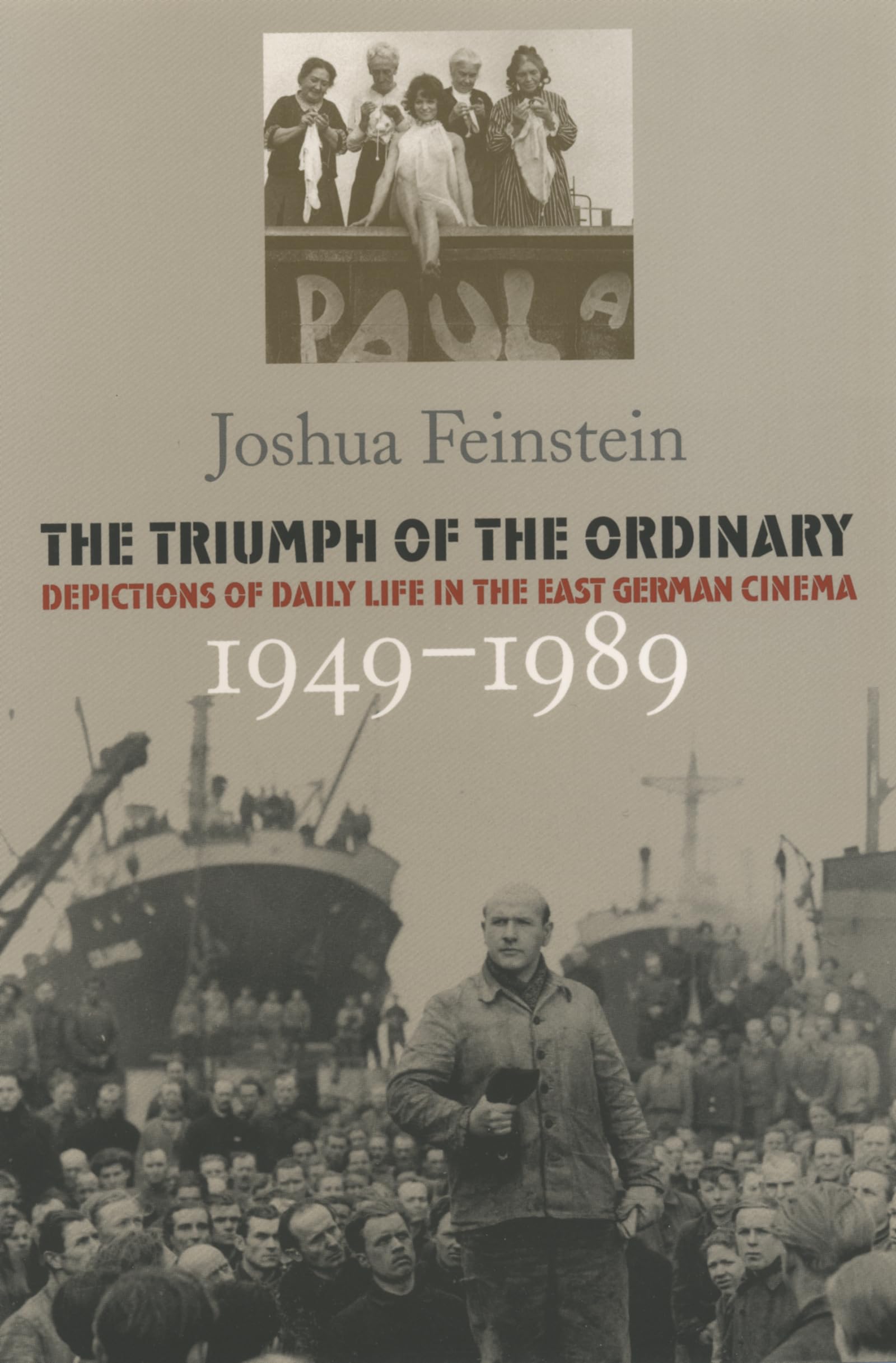
Title
The Triumph Of The Ordinary: Depictions Of Daily Life In The East German Cinema, 19491989,New
Sold by Ergodebooks, an authorized reseller.
Returns accepted within 30 days | support@ergodebooks.com
Shipping Information
- Free Standard Shipping — United States only
- Processing Time: 3–5 business days
- Estimated Delivery: 6–10 business days after dispatch
- Double-boxed, fully insured & discreetly packaged
- Tracking number sent via email once dispatched
Returns & Refund
Returns accepted within 30 days of delivery.
Damaged or Defective Item
Free return shipping + replacement or full refund
Wrong Item Received
Free return shipping + replacement or full refund
Change of Mind
Return shipping at customer's expense · 25% restocking fee applies
Payment Option

Were Movies In The East Bloc Propaganda Or Carefully Veiled Dissent? In The First Major Study In English Of East German Film, Joshua Feinstein Argues That The Answer To This Question Is Decidedly Complex.Drawing On Newly Opened Archives As Well As Interviews With East German Directors, Actors, And State Officials, Feinstein Traces How The Cinematic Depiction Of East Germany Changed In Response To National Political Developments And Transnational Cultural Trends Such As The Spread Of Television And Rock 'N' Roll. Celluloid Images Fed A Larger Sense Of East German Identity, An Identity That Persists Today, More Than A Decade After German Reunification. But Even As They Attempted To Satisfy Calls For 'Authentic' Images Of The German Democratic Republic That Would Legitimize Socialist Rule, Filmmakers Challenged The Regime'S Selfunderstanding. Beginning In The Late 1960S, East German Films Dwelled Increasingly On Everyday Life Itself, No Longer Seeing It Merely As A Stage In The Development Toward Communism. By Presenting An Image Of A Static Rather Than An Evolving Society, Filmmakers Helped Transform East German Identity From One Based On A Commitment To Socialist Progress To One That Accepted The Gdr As It Was.
⚠️ WARNING (California Proposition 65):
This product may contain chemicals known to the State of California to cause cancer, birth defects, or other reproductive harm.
For more information, please visit www.P65Warnings.ca.gov.
- Q: How many pages does the book have? A: This book contains three hundred fifty-two pages. It provides an in-depth exploration of East German cinema and its cultural significance.
- Q: What is the binding type of this book? A: The binding type is paperback. This makes it lightweight and easy to handle, ideal for casual reading.
- Q: What are the dimensions of the book? A: The dimensions are six point one two inches by zero point seven nine inches by nine point two five inches. These measurements make it a convenient size for bookshelves and carrying.
- Q: Who is the author of this book? A: The author is Joshua Feinstein. He is a recognized scholar in the field of film studies, particularly focused on East German cinema.
- Q: What genre does this book belong to? A: This book belongs to the Performing Arts genre. It specifically examines the intersection of cinema and cultural identity in East Germany.
- Q: Is this book suitable for academic research? A: Yes, this book is suitable for academic research. It is based on newly opened archives and interviews, making it a credible resource.
- Q: How do I care for this paperback book? A: To care for this paperback book, store it in a cool, dry place away from direct sunlight. Avoid bending the cover and keep it on a shelf to maintain its shape.
- Q: Can I find this book in libraries? A: Yes, you can likely find this book in libraries. Many academic libraries include it in their collections due to its scholarly content.
- Q: What is the recommended reading level for this book? A: This book is recommended for adult readers. It covers complex themes related to history and film analysis.
- Q: Is this book a good choice for someone interested in film history? A: Yes, this book is an excellent choice for anyone interested in film history. It delves into East German cinema and its historical context.
- Q: What if the book arrives damaged? A: If the book arrives damaged, you should contact the seller for a return or exchange. Most sellers have policies in place to handle such issues.
- Q: Does this book provide original research findings? A: Yes, this book provides original research findings. It draws on newly opened archives and interviews with key figures in East German cinema.
- Q: Is there a specific audience this book targets? A: Yes, the book primarily targets scholars, students, and film enthusiasts interested in Eastern European cinema.
- Q: How should I store this book for longevity? A: Store this book upright on a shelf, away from moisture and extreme temperatures. This helps preserve its condition for years.
- Q: What themes does the book explore? A: The book explores themes such as identity, propaganda, and the cultural impact of cinema in East Germany. It examines how these themes evolved from 1949 to 1989.