If you have any questions, you are always welcome to contact us. We'll get back to you as soon as possible, withing 24 hours on weekdays.
Customer service
All questions about your order, return and delivery must be sent to our customer service team by e-mail at yourstore@yourdomain.com
Sale & Press
If you are interested in selling our products, need more information about our brand or wish to make a collaboration, please contact us at press@yourdomain.com
Help
If you have any questions, you are always welcome to contact us. We'll get back to you as soon as possible, withing 24 hours on weekdays.
Customer service
All questions about your order, return and delivery must be sent to our customer service team by e-mail at yourstore@yourdomain.com
Sale & Press
If you are interested in selling our products, need more information about our brand or wish to make a collaboration, please contact us at press@yourdomain.com
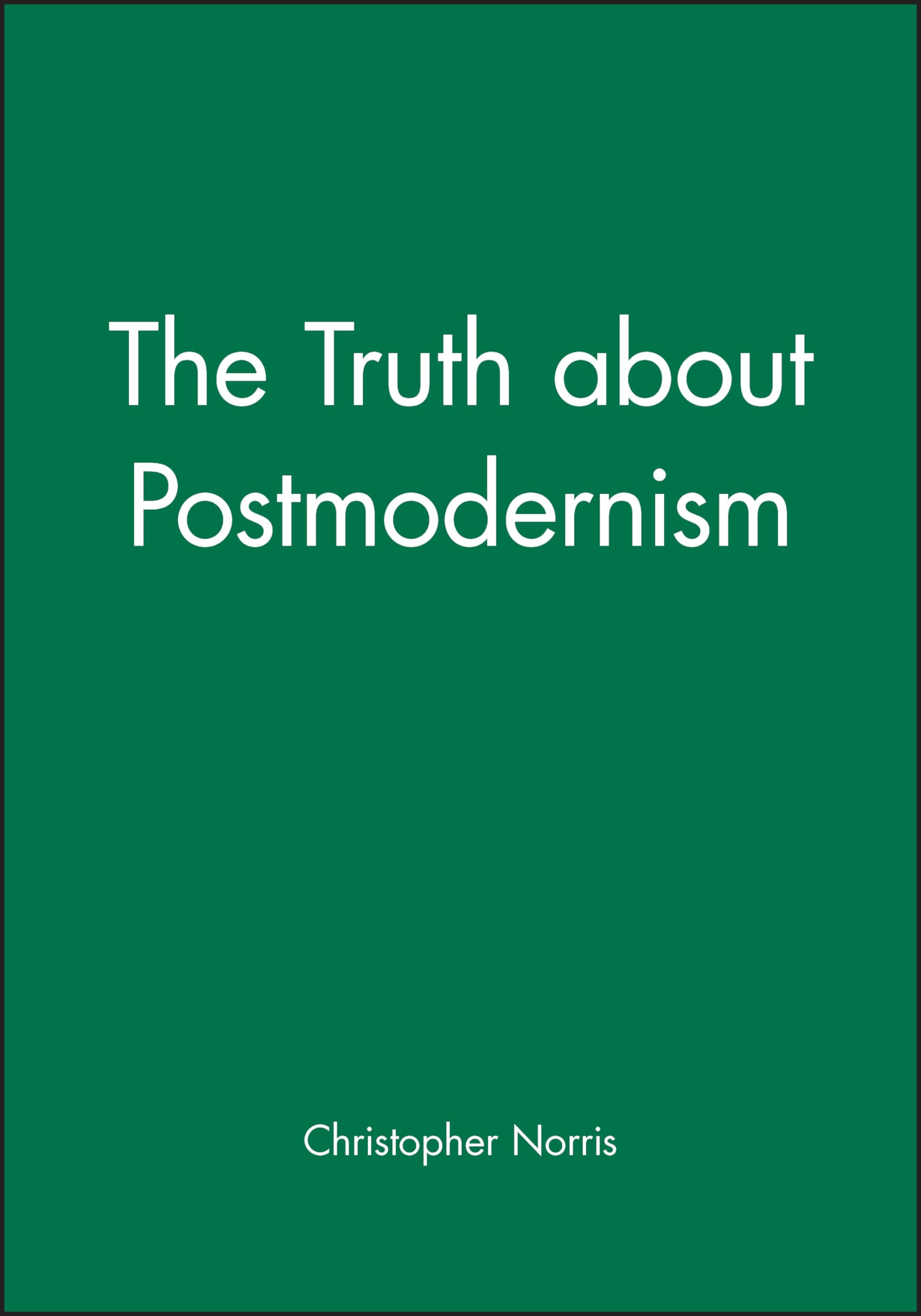
This book was written with a view to sorting our some of the muddles and misreadings especially misreadings of Kant that have charaterized recent postmodernist and poststructuralist thought. For these issues have a relevance, as Norris argues, far beyond the academic enclaves of philosophy, literary theory, and cultural criticism. Thus he makes large claims for the importance of getting Kant right on the relation between epistemology, ethics and aesthetics; for pursuing the Kantian question 'What is Enlightenment?' as raised in Foucault's late essays; or again, for recalling William Empson's spirited attempt to reassert the values of reason and truth against the orthodox 'lit crit' wisdom of his time. These are specialized concerns. But for better or worse it has been largely in the context of 'theory' that capacious though illdefined genre that such issues have received their most scrutiny over the past two decades.As its title suggests, The Truth About Postmodernism disputes a good deal of what currently passes for advance theoretical wisdom. Above all it mounts a challenge to those fashionable doctrines variants of the 'endofideology' theme that assimilate truth to some existing range of languagegames, discourses, or inplace consensus beliefs. Norris's book will be welcomed for its clarity of style, its depth of philosophical engagement, and its refusal to endorse the more facile varieties of presentday textualist thought. It will also serve as a timely reminder that the 'politics of theory' cannot be practised in safe isolation from the politics (and ethics) of activist social concern.
⚠️ WARNING (California Proposition 65):
This product may contain chemicals known to the State of California to cause cancer,
birth defects, or other reproductive harm.
For MAP (Minimum Advertised Price) violations and Intellectual Property (IP) or Trademark concerns, please contact:
support@ergodebooks.com
⚠️ California Proposition 65 Warning: Some products sold on this website may expose you to chemicals known to the State of California to cause cancer, birth defects, or other reproductive harm. For more information, visit www.P65Warnings.ca.gov.