
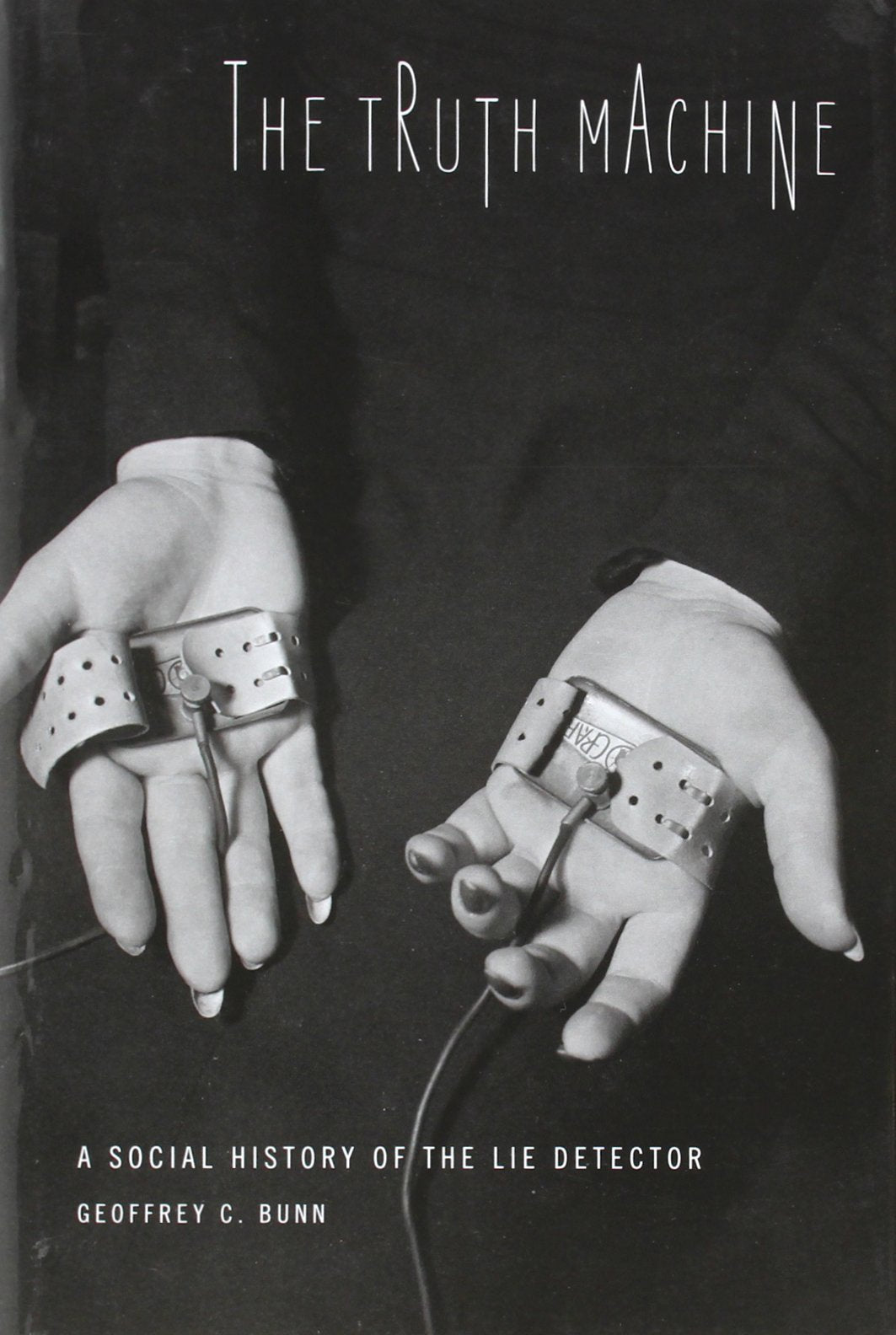
Title
The Truth Machine: A Social History Of The Lie Detector (Johns Hopkins Studies In The History Of Technology)
Sold by Ergodebooks, an authorized reseller.
Returns accepted within 30 days | support@ergodebooks.com
Shipping Information
- Free Standard Shipping — United States only
- Processing Time: 3–5 business days
- Estimated Delivery: 6–10 business days after dispatch
- Double-boxed, fully insured & discreetly packaged
- Tracking number sent via email once dispatched
Returns & Refund
Returns accepted within 30 days of delivery.
Damaged or Defective Item
Free return shipping + replacement or full refund
Wrong Item Received
Free return shipping + replacement or full refund
Change of Mind
Return shipping at customer's expense · 25% restocking fee applies
Payment Option

How Do You Trap Someone In A Lie? For Centuries, All Manner Of Truthseekers Have Used The Lie Detector. In This Eyeopening Book, Geoffrey C. Bunn Unpacks The History Of This Device And Explores The Interesting And Often Surprising Connection Between Technology And Popular Culture.Lie Detectors And Other Truthtelling Machines Are Deeply Embedded In Everyday American Life. Wellknown Brands Such As Isuzu, Pepsi Cola, And Snapple Have Advertised Their Products With The Help Of The Truth Machine, And The Device Has Also Appeared In Countless Movies And Television Shows. The Charles Lindbergh Crime Of The Century In 1935 First Brought Lie Detectors To The Publics Attention. Since Then, They Have Factored Into The Anita Hillclarence Thomas Sexual Harassment Controversy, The Oklahoma City And Atlanta Olympics Bombings, And One Of The Most Infamous Criminal Cases In Modern Memory: The O. J. Simpson Murder Trial. The Use Of The Lie Detector In These Instances Brings Up Many Intriguing Questions That Bunn Addresses: How Did The Lie Detector Become So Important? Who Uses It? How Reliable Are Its Results? Bunn Reveals Just How Difficult It Is To Answer This Last Question. A Lie Detector Expert Concluded That O. J. Simpson Was One Hundred Percent Lying In A Video Recording In Which He Proclaimed His Innocence; A Tabloid Newspaper Subjected The Same Recording To A Second Round Of Evaluation, Which Determined Simpson To Be Absolutely Truthful.Bunn Finds Fascinating The Lie Detectors Ability To Straddle The Realms Of Serious Science And Sheer Fantasy. He Examines How The Machine Emerged As A Technology Of Truth, Transporting Readers Back To The Obscure Origins Of Criminology Itself, Ultimately Concluding That The Lie Detector Owes As Much To Popular Culture As It Does To Factual Science.
⚠️ WARNING (California Proposition 65):
This product may contain chemicals known to the State of California to cause cancer, birth defects, or other reproductive harm.
For more information, please visit www.P65Warnings.ca.gov.
- Q: How many pages does the book have? A: This book has two hundred fifty-six pages. It provides a thorough exploration of the lie detector's history and cultural significance.
- Q: What is the binding type of this book? A: The binding type is hardcover. This ensures durability and longevity for readers who want to keep it in good condition.
- Q: What are the dimensions of the book? A: The book measures six inches in length, zero point eight eight inches in width, and nine point zero two inches in height. This makes it a compact and easy-to-handle read.
- Q: Who is the author of this book? A: The author is Geoffrey C. Bunn. He delves into the intricate relationship between technology and culture in his writing.
- Q: What genre does this book belong to? A: This book falls under the genre of social history and technology studies. It examines the cultural implications of lie detectors.
- Q: Is this book suitable for academic study? A: Yes, this book is suitable for academic study. It offers insightful analysis and historical context relevant to technology and society.
- Q: How do I care for this book? A: To care for this book, keep it in a dry, cool place and avoid exposure to direct sunlight. This will help preserve the quality of the cover and pages.
- Q: Is there any special storage requirement for this book? A: No special storage requirements are needed. However, storing it upright on a shelf can prevent bending or damage to the cover.
- Q: Can I read this book if I am a beginner in history? A: Yes, beginners can read this book. It is written in an accessible style that is engaging for readers new to the topic.
- Q: Is this book appropriate for young adults? A: Yes, this book is appropriate for young adults. It addresses themes relevant to their understanding of technology and society.
- Q: What if I receive a damaged book? A: If you receive a damaged book, contact the seller for a return or replacement. Most sellers have policies in place for such situations.
- Q: What should I do if I have questions about the book? A: If you have questions about the book, check the publisher's website or reach out to customer service for assistance.
- Q: Is there a warranty for this book? A: No, books typically do not come with a warranty. However, check the return policy for your purchase.
- Q: How can I verify the credibility of the author? A: You can verify the author's credibility by researching Geoffrey C. Bunn's background and previous works in the field of technology and history.
- Q: Does the book include any illustrations or images? A: No, the book does not include illustrations or images. It focuses on text to convey its historical and analytical content.
- Q: Is this book part of a series? A: Yes, this book is part of the Johns Hopkins Studies in the History of Technology series. It contributes to the understanding of technological advancements.