
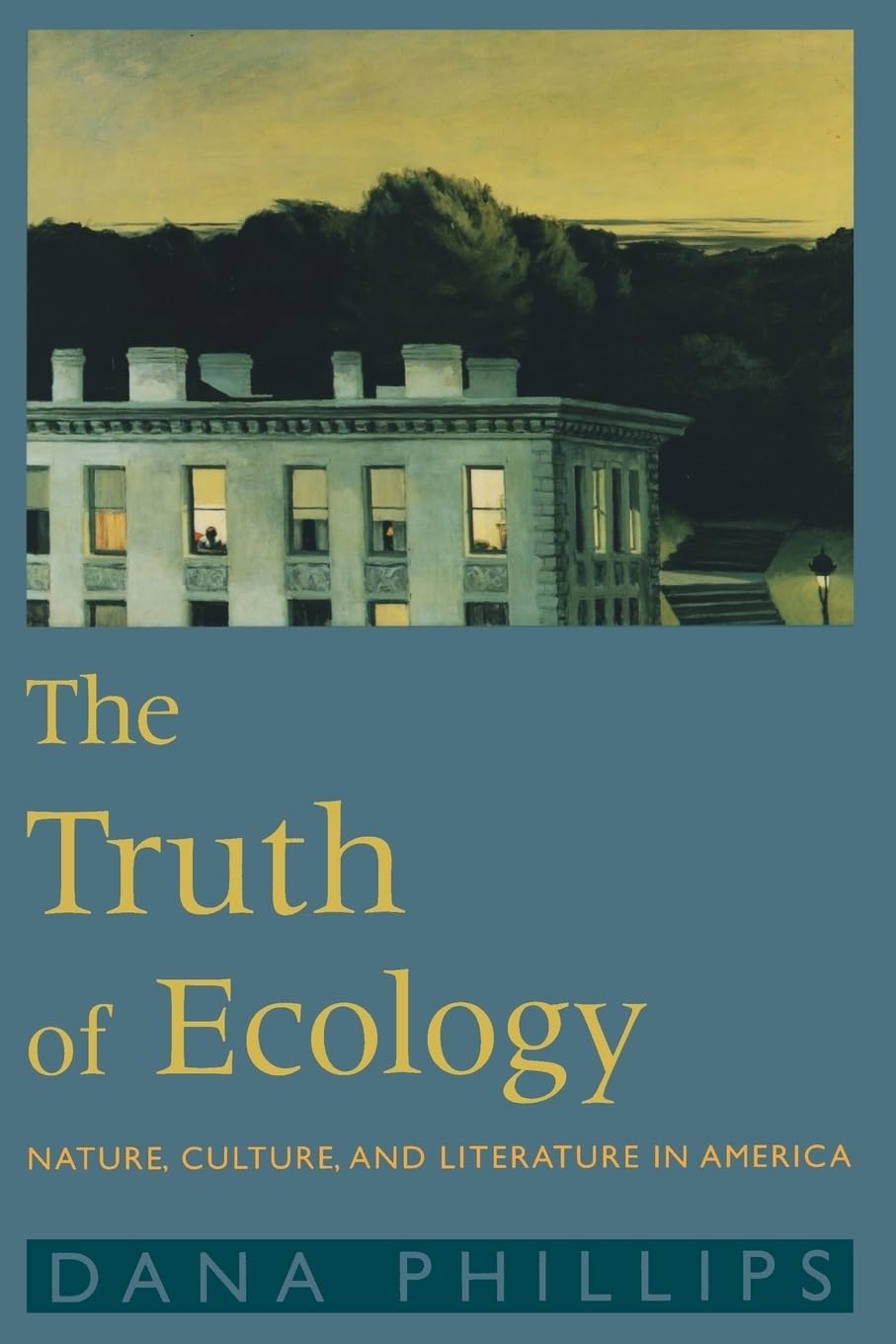
Title
The Truth Of Ecology: Nature, Culture, And Literature In America
Sold by Ergodebooks, an authorized reseller.
Returns accepted within 30 days | support@ergodebooks.com
Shipping Information
- Free Standard Shipping — United States only
- Processing Time: 3–5 business days
- Estimated Delivery: 6–10 business days after dispatch
- Double-boxed, fully insured & discreetly packaged
- Tracking number sent via email once dispatched
Returns & Refund
Returns accepted within 30 days of delivery.
Damaged or Defective Item
Free return shipping + replacement or full refund
Wrong Item Received
Free return shipping + replacement or full refund
Change of Mind
Return shipping at customer's expense · 25% restocking fee applies
Payment Option

The Truth Of Ecology Is A Wideranging, Polemical Appraisal Of Contemporary Environmental Thought. Focusing On The New Field Of Ecocriticism From A Thoroughly Interdisciplinary Perspective, This Book Explores Topics As Diverse As The History Of Ecology In The United States; The Distortions Of Popular Environmental Thought; The Influence Of Critical Theory On Radical Science Studies And Radical Ecology; The Need For Greater Theoretical Sophistication In Ecocriticism; The Contradictions Of Contemporary American Nature Writing; And The Possibilities For A Less Devotional, Wilder Approach To Ecocritical And Environmental Thinking.Taking His Cues From Thoreau, Stevens, And Ammons, From Wittgenstein, Barthes And Eco, From Bruno Latour And Michel Serres, From The Philosophers Rorty, Hacking, And Dennett, And From The Biologists Ernst Mayr And Stephen Jay Gould, Author Dana Phillips Emphasizes An Eclectic But Pragmatic Approach To A Variety Of Topics. His Subject Matter Includes The Doctrine Of Social Construction; The Question Of What It Means To Be Interdisciplinary; The Disparity Between Scientific And Literary Versions Of Realism; The Difficulty Of Resolving The Tension Between Facts And Values, Or More Broadly, Between Nature And Culture; The American Obsession With Personal Experience; And The Intellectual Challenges Posed By Natural History. Those Challenges Range From The Nearimpossibility Of Defining Ecological Concepts With Precision To The Complications That Arise When A Birder Tries To Identify Chickadees In Poor Light On A Winter'S Afternoon In The Poconos.
⚠️ WARNING (California Proposition 65):
This product may contain chemicals known to the State of California to cause cancer, birth defects, or other reproductive harm.
For more information, please visit www.P65Warnings.ca.gov.
- Q: What is the page count of this book? A: This book has three hundred twenty pages. It offers an in-depth exploration of contemporary environmental thought through various interdisciplinary perspectives.
- Q: What are the dimensions of the book? A: The book measures six point zero four inches in length, zero point seven five inches in width, and nine point four four inches in height. These dimensions make it a standard size for a paperback.
- Q: What type of binding does this book have? A: This book features paperback binding. This makes it lightweight and easy to handle for reading.
- Q: What themes does the book cover? A: The book explores themes such as ecology, culture, and literature in America. It delves into ecocriticism and contemporary environmental thought.
- Q: Who is the author of this book? A: The author is Dana Phillips. He is known for his interdisciplinary approach to environmental literature.
- Q: Is this book suitable for all ages? A: Yes, this book is suitable for adults and older teens. It discusses complex themes that may require a mature understanding.
- Q: How can I use this book for study? A: You can use this book as a resource for understanding environmental literature and ecocriticism. It's ideal for academic courses or personal enrichment.
- Q: Is this book good for beginners in ecocriticism? A: Yes, it can be good for beginners. The interdisciplinary approach allows readers to grasp foundational concepts in ecology and literature.
- Q: How should I care for this book? A: To care for this book, keep it in a dry place away from direct sunlight. This will preserve its cover and pages.
- Q: Can this book withstand frequent handling? A: Yes, paperback books can withstand frequent handling, but be gentle to avoid creasing the cover or pages.
- Q: What if my book arrives damaged? A: If your book arrives damaged, you should contact the retailer for a return or replacement. Most retailers have policies in place for such situations.
- Q: Is there a warranty for this book? A: No, books typically do not come with warranties. However, return policies may vary by retailer.
- Q: How can I find more books on similar topics? A: You can search for books on ecocriticism, environmental literature, and American nature writing. Online bookstores often have recommendations based on similar themes.
- Q: What makes this book stand out in its genre? A: This book stands out due to its eclectic approach, combining insights from literature, philosophy, and biology. It provides a comprehensive view of environmental thought.
- Q: Are there any specific philosophical influences in this book? A: Yes, the book draws influence from philosophers like Wittgenstein, Rorty, and Eco. Their ideas shape the discourse on ecology and culture.
- Q: What is the main argument or thesis of this book? A: The main argument of the book critiques contemporary environmental thought and advocates for a more nuanced understanding of ecology in the cultural context.