
Title
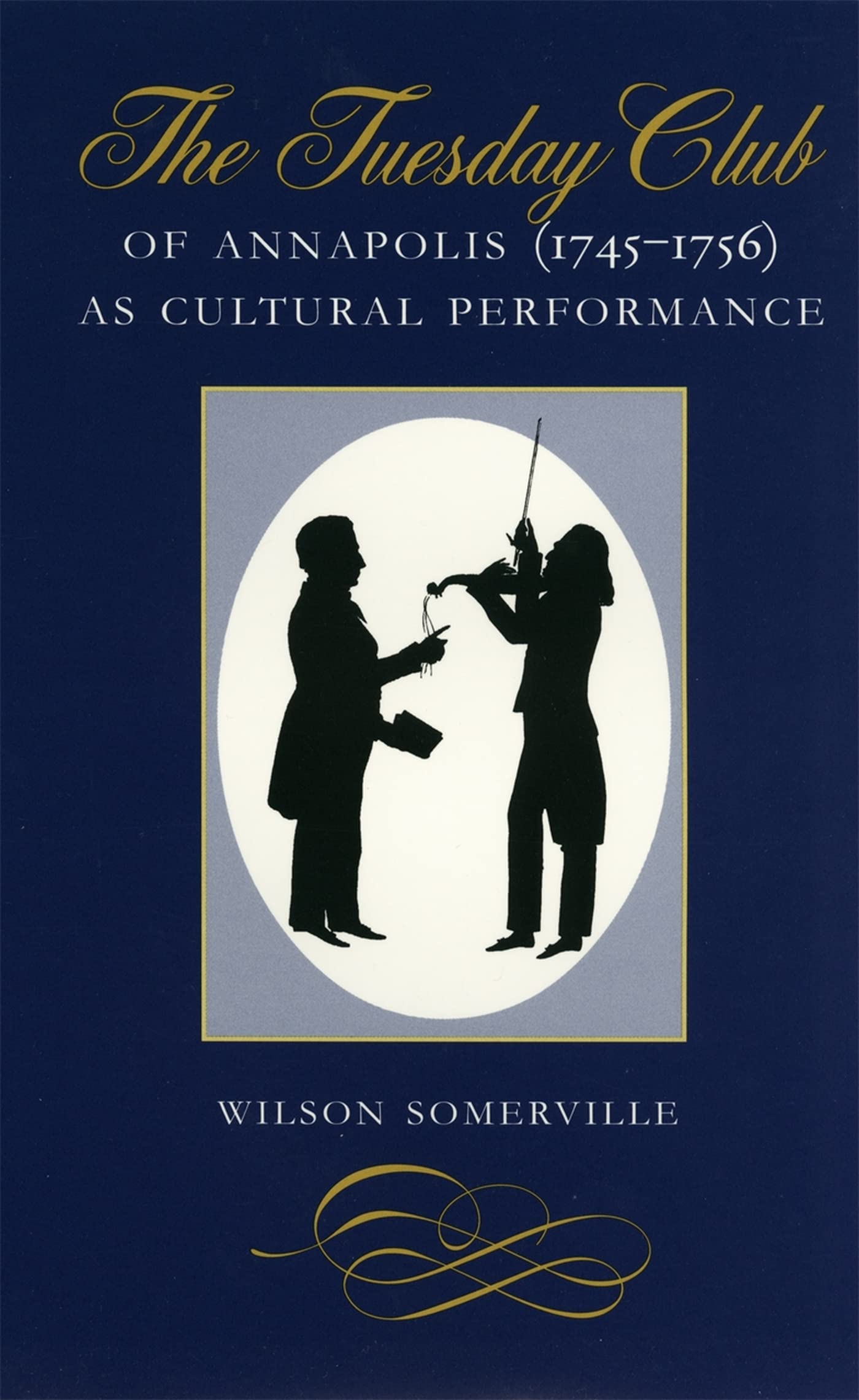
The Tuesday Club Of Annapolis (17451756) As Cultural Performance,Used
Sold by Ergodebooks, an authorized reseller.
Returns accepted within 30 days | support@ergodebooks.com
Shipping Information
- Free Standard Shipping — United States only
- Processing Time: 3–5 business days
- Estimated Delivery: 6–10 business days after dispatch
- Double-boxed, fully insured & discreetly packaged
- Tracking number sent via email once dispatched
Returns & Refund
Returns accepted within 30 days of delivery.
Damaged or Defective Item
Free return shipping + replacement or full refund
Wrong Item Received
Free return shipping + replacement or full refund
Change of Mind
Return shipping at customer's expense · 25% restocking fee applies
Payment Option

To be associated with the Tuesday Club of Annapolis was to reach the apogee of mideighteenthcentury, upper Chesapeake male society. Founded by Dr. Alexander Hamilton, the club engaged in a range of selfconscious, stylized activities that, when viewed as 'social performance,' says Wilson Somerville, sharpen our understanding of the flux of cultural forces within British America and the place of such colonial groups in an emergent, transatlantic 'bourgeois public sphere.'Using a combination of literary, historical, and sociological approaches, Somerville first examines the aesthetic dimensions of club performance and then its social and political aspects as he places the club in five major contexts: as a group with a selfconsciously dramatic deportment, as a literary guild that regulated themes and rhetorical forms, as a media station in an international knowledge network, as an institution that defined an ideal of sociability in relation to the Chesapeake household, and as a mock state within which members wielded authority.The club, says Somerville, provided a semiprivate sphere of interaction that was distinct from members' daily social order. Through the club, members tried to understand, negotiate, and mitigate the tensions of their lives arising from contradictions between brotherhood and empire, autonomy and sociability, the provincial and the metropolitan, the public and the private, and the solemn and the frivolous.To appreciate the extent to which members made sense of their world through the club, says Somerville, one must attend not only to the various modes of written, oral, and musical expression members employed, but also to the pageantry and theatrics, the self mockery and roleplaying that marked their activities, and even to club regalia and its seating arrangements.Drawing on a wide range of period resources, The Tuesday Club of Annapolis will diversify our approaches to the literature and culture of the colonies and further reveal the limits of nationalist and regionalist outlooks to their study.
⚠️ WARNING (California Proposition 65):
This product may contain chemicals known to the State of California to cause cancer, birth defects, or other reproductive harm.
For more information, please visit www.P65Warnings.ca.gov.