
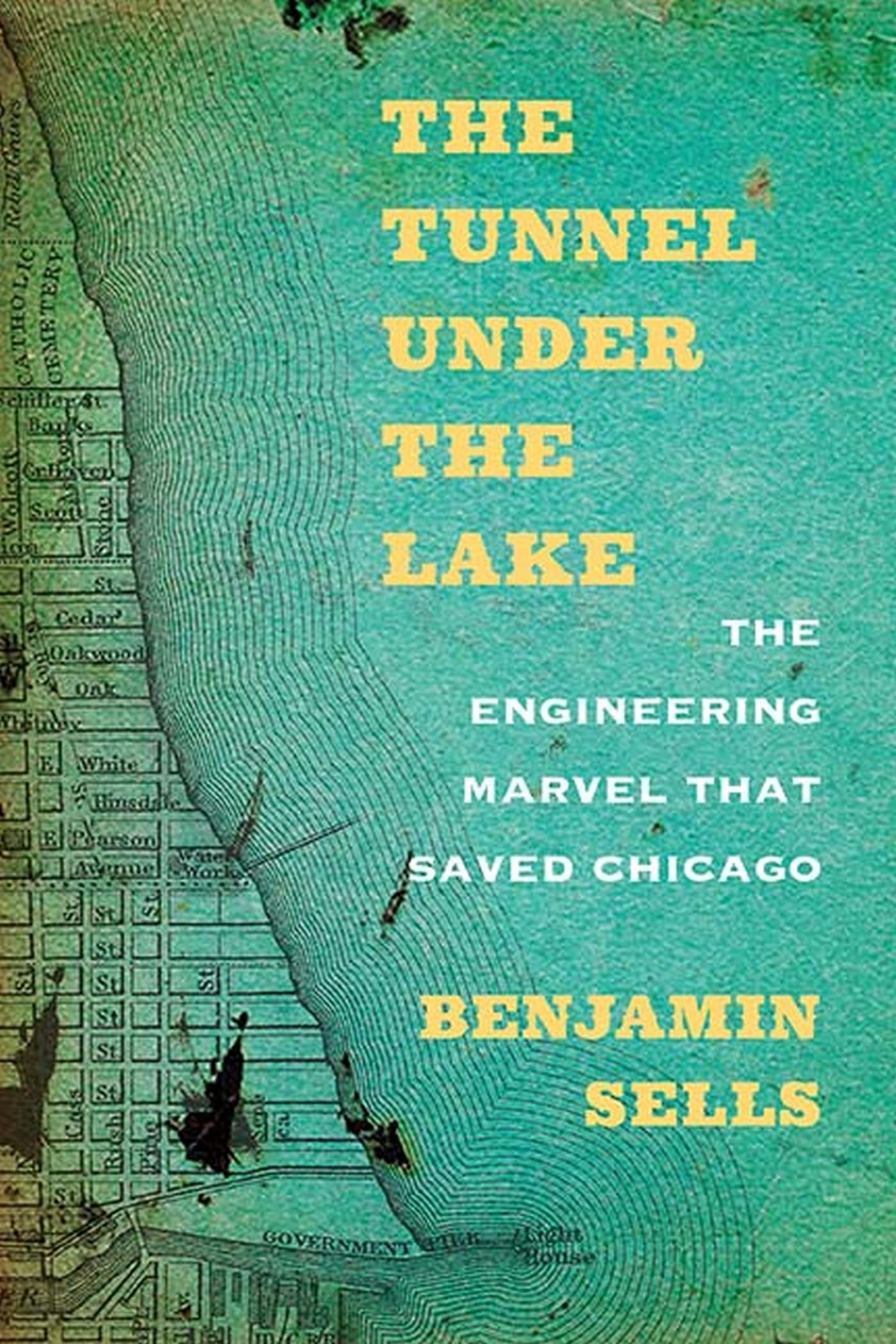
Title
The Tunnel Under The Lake: The Engineering Marvel That Saved Chicago (Second To None: Chicago Stories),Used
Sold by Ergodebooks, an authorized reseller.
Returns accepted within 30 days | support@ergodebooks.com
Shipping Information
- Free Standard Shipping — United States only
- Processing Time: 3–5 business days
- Estimated Delivery: 6–10 business days after dispatch
- Double-boxed, fully insured & discreetly packaged
- Tracking number sent via email once dispatched
Returns & Refund
Returns accepted within 30 days of delivery.
Damaged or Defective Item
Free return shipping + replacement or full refund
Wrong Item Received
Free return shipping + replacement or full refund
Change of Mind
Return shipping at customer's expense · 25% restocking fee applies
Payment Option

The Tunnel under the Lake recounts the gripping story of how the young city of Chicago, under the leadership of an audacious engineer named Ellis Chesbrough, constructed a twomile tunnel below Lake Michigan in search of clean water.Despite Chicago's location beside the worlds largest source of fresh water, its low elevation at the end of Lake Michigan provided no natural method of carrying away waste. As a result, within a few years of its founding, Chicago began to choke on its own sewage collecting near the shore. The befouled environment, giving rise to outbreaks of sickness and cholera, became so acute that even the ravages and costs of the U.S. Civil War did not distract city leaders from taking action.Chesbrough's solution was an unprecedented tunnel five feet in diameter lined with brick and dug sixty feet beneath Lake Michigan. Construction began from the shore as well as the tunnels terminus in the lake. With workers laboring in shifts and with clay carted away by donkeys, the lake and shore teams met under the lake three years later, just inches out of alignment. When it opened in March 1867, observers, city planners, and grateful citizens hailed the tunnel as the 'wonder of America and of the world.'Benjamin Sells narrates in vivid detail the exceptional skill and imagination it took to save this storied city from itself. A wealth of fascinating appendixes round out Sellss account, which will delight those interested in Chicago history, water resources, and the history of technology and engineering.
⚠️ WARNING (California Proposition 65):
This product may contain chemicals known to the State of California to cause cancer, birth defects, or other reproductive harm.
For more information, please visit www.P65Warnings.ca.gov.
- Q: How many pages are in 'The Tunnel under the Lake'? A: This book has two hundred pages. It offers a detailed account of the engineering feat that saved Chicago.
- Q: What is the binding type of this book? A: The book is available in paperback binding. This makes it lightweight and easy to handle.
- Q: What are the dimensions of this book? A: The book measures six inches in length, zero point seven inches in width, and nine point zero two inches in height. These dimensions make it portable for reading.
- Q: Who is the author of 'The Tunnel under the Lake'? A: The author is Benjamin Sells. He narrates the gripping story of Chicago's engineering challenges and solutions.
- Q: What genre does this book belong to? A: This book falls under the State and Local history genre. It specifically explores Chicago's engineering history.
- Q: What age group is this book suitable for? A: This book is suitable for adults and older teenagers. It provides historical insights and engineering concepts that may interest mature readers.
- Q: How can I best enjoy reading this book? A: To enjoy this book, find a quiet and comfortable space. Reading in a distraction-free environment enhances comprehension of its detailed engineering themes.
- Q: Is this book a good resource for students? A: Yes, this book is an excellent resource for students studying engineering or history. It provides rich context about urban engineering and its impact.
- Q: Can this book be read in one sitting? A: Yes, it can be read in one sitting. With two hundred pages, it offers a compelling narrative that keeps readers engaged.
- Q: How should I store this book to keep it in good condition? A: Store this book upright on a shelf away from direct sunlight. This will help maintain the quality of the paperback binding.
- Q: Are there any special care instructions for this book? A: No special care instructions are needed. Just keep it clean and dry to preserve its condition.
- Q: What if the book arrives damaged? A: If the book arrives damaged, contact the seller for return or exchange instructions. Most sellers have a customer-friendly return policy.
- Q: Is there a warranty on this book? A: No, there is typically no warranty on books. However, check with the seller for their specific return policy.
- Q: How can I find more books like this one? A: To find more books like this, browse the State and Local history category. Many similar titles explore urban engineering and history.
- Q: Is this book considered a classic? A: Yes, many consider this book a classic in Chicago history literature. It captures a significant engineering achievement.
- Q: Does this book include illustrations or maps? A: The book does not specifically mention illustrations or maps. It primarily focuses on narrative and historical context.