
Title
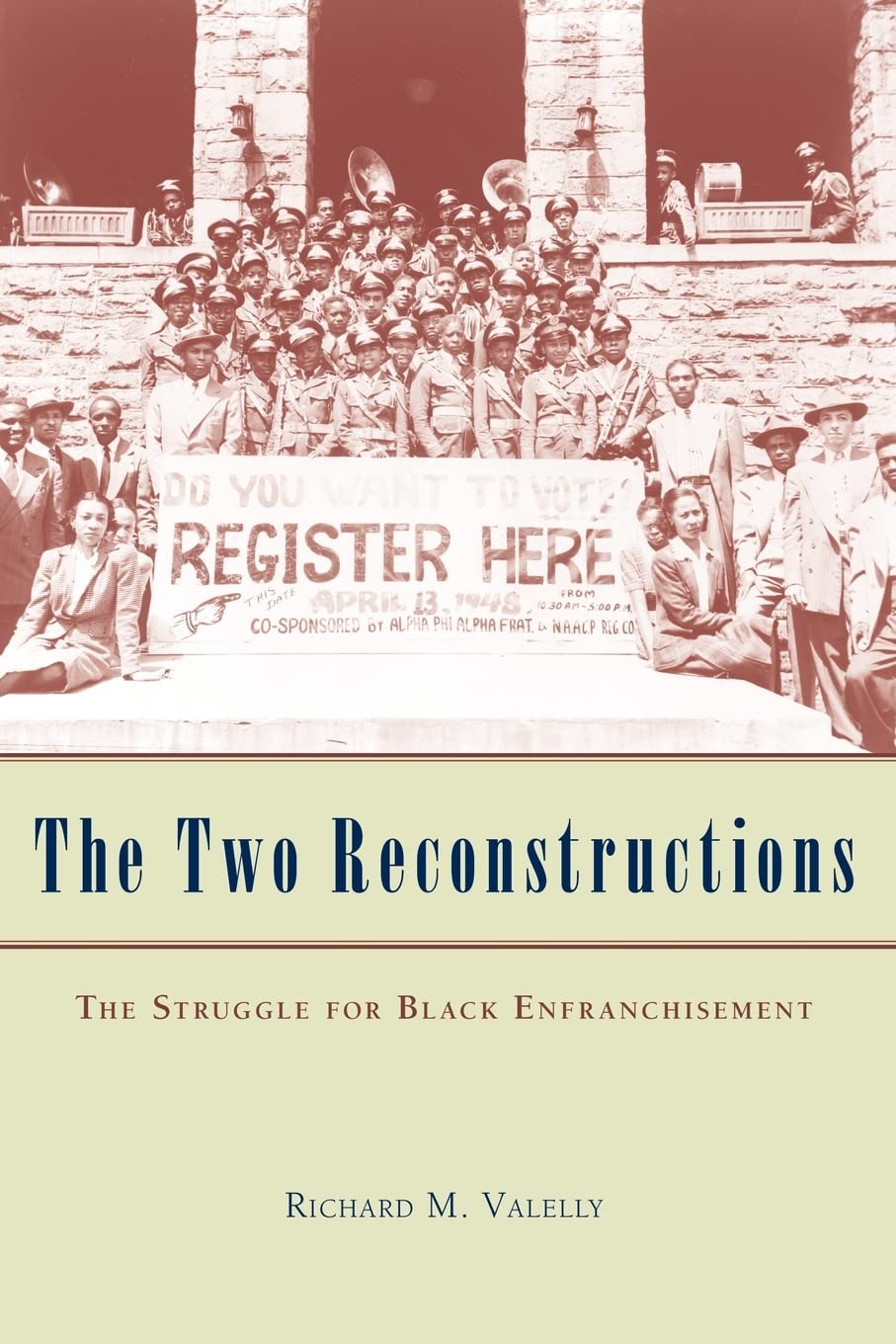
The Two Reconstructions: The Struggle for Black Enfranchisement (American Politics and Political Economy Series),Used
Sold by Ergodebooks, an authorized reseller.
Returns accepted within 30 days | support@ergodebooks.com
Shipping Information
- Free Standard Shipping — United States only
- Processing Time: 3–5 business days
- Estimated Delivery: 6–10 business days after dispatch
- Double-boxed, fully insured & discreetly packaged
- Tracking number sent via email once dispatched
Returns & Refund
Returns accepted within 30 days of delivery.
Damaged or Defective Item
Free return shipping + replacement or full refund
Wrong Item Received
Free return shipping + replacement or full refund
Change of Mind
Return shipping at customer's expense · 25% restocking fee applies
Payment Option

Winner of the 2005 J. David Greenstone Book Award from the Politics and History section of the American Political Science Association.Winner of the 2005 Ralph J. Bunche Award of the American Political Science AssociationWinner of the 2005 V.O. Key, Jr. Award of the Southern Political Science AssociationThe Reconstruction era marked a huge political leap for African Americans, who rapidly went from the status of slaves to voters and officeholders. Yet this hardwon progress lasted only a few decades. Ultimately a 'second reconstruction'associated with the civil rights movement and the Voting Rights Actbecame necessary.How did the first reconstruction fail so utterly, setting the stage for the complete disenfranchisement of Southern black voters, and why did the second succeed? These are among the questions Richard M. Valelly answers in this fascinating history. The fate of black enfranchisement, he argues, has been closely intertwined with the strengths and constraints of our political institutions. Valelly shows how effective biracial coalitions have been the key to success and incisively traces how and why political parties and the national courts either rewarded or discouraged the formation of coalitions.Revamping our understanding of American race relations, The Two Reconstructions brilliantly explains a puzzle that lies at the heart of Americas development as a political democracy.
⚠️ WARNING (California Proposition 65):
This product may contain chemicals known to the State of California to cause cancer, birth defects, or other reproductive harm.
For more information, please visit www.P65Warnings.ca.gov.
- Q: What is the main topic of 'The Two Reconstructions'? A: The book explores the history of Black enfranchisement in the United States, focusing on the political advancements and setbacks during the Reconstruction era and the civil rights movement.
- Q: Who is the author of 'The Two Reconstructions'? A: The author is Richard M. Valelly, a scholar known for his work on American politics and race relations.
- Q: What awards has 'The Two Reconstructions' won? A: 'The Two Reconstructions' has received several awards, including the 2005 J. David Greenstone Book Award, the Ralph J. Bunche Award, and the V.O. Key, Jr. Award.
- Q: What is the publication date of 'The Two Reconstructions'? A: The book was published on December 15, 2004.
- Q: What is the format of 'The Two Reconstructions'? A: 'The Two Reconstructions' is available in paperback format.
- Q: How many pages does 'The Two Reconstructions' have? A: The book contains 348 pages.
- Q: What themes are discussed in 'The Two Reconstructions'? A: The book discusses themes of political coalition-building, race relations in America, and the historical context of Black voting rights.
- Q: Is 'The Two Reconstructions' suitable for academic study? A: Yes, it is suitable for academic study, particularly for those interested in American politics, history, and race relations.
- Q: What makes 'The Two Reconstructions' unique? A: The book uniquely examines the historical failures and successes of Black enfranchisement, providing a nuanced understanding of American democracy.
- Q: Can 'The Two Reconstructions' be used as a reference for research? A: Yes, the book can serve as a valuable reference for research on political science, history, and civil rights.