
Title
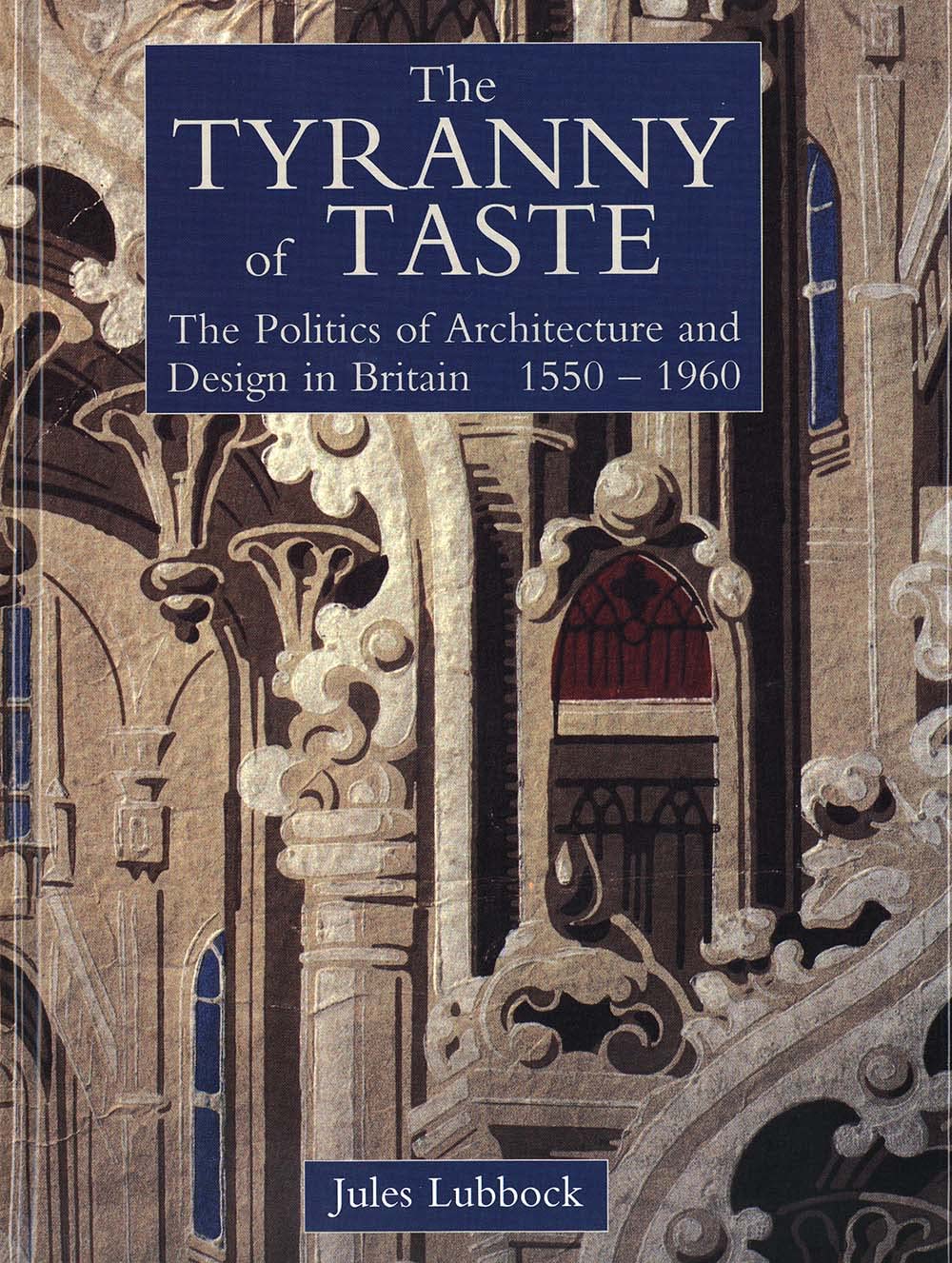
The Tyranny of Taste: The Politics of Architecture and Design in Britain, 15501960,Used
Sold by Ergodebooks, an authorized reseller.
Returns accepted within 30 days | support@ergodebooks.com
Shipping Information
- Free Standard Shipping — United States only
- Processing Time: 3–5 business days
- Estimated Delivery: 6–10 business days after dispatch
- Double-boxed, fully insured & discreetly packaged
- Tracking number sent via email once dispatched
Returns & Refund
Returns accepted within 30 days of delivery.
Damaged or Defective Item
Free return shipping + replacement or full refund
Wrong Item Received
Free return shipping + replacement or full refund
Change of Mind
Return shipping at customer's expense · 25% restocking fee applies
Payment Option

How do countries acquire their distinctive features and appearance, their look or style? In this stimulating book, Jules Lubbock answers this question by focusing on Britain, with its characteristic terraced houses, Georgian squares, postwar slab blocks, and Victorian floral ornamentation. Lubbock traces the fierce debates over consumerism, good design, and town planning that have raged in Britain since the Elizabethan period, investigating how the design of buildings and possessionsdomestic as well as officialbecomes an issue of public policy and controversy.Lubbock discusses the ideas, policies, and motivations of designers and commentators from 1550 to the present, including such figures as Charles I, Inigo Jones, Joseph Addison, Pope, Hogarth, Pugin, Dickens, Ruskin, and Le Corbusier. He describes the growing public awareness that taste and beauty are related to economic growth, that there is what he calls a political economy of design. He shows, for example, that London was shaped by a desire to control its expansion in order to maintain social stability in the face of the developing industrial and commercial revolution; that Puritans believed that the high consumption of luxury goods essential to prosperity could be made morally acceptable through good design; and that the court of James I consciously adopted classicism as the appropriate style for the newly joined kingdoms of England and Scotland. Lubbock shows the different ways in which architecture, design, planning, and style were believed to contribute to a 'Good Society.' He suggests that the political economy of design was not only viable in the past but can also provide an essential framework for the future.Published for the Paul Mellon Centre for Studies in British Art
⚠️ WARNING (California Proposition 65):
This product may contain chemicals known to the State of California to cause cancer, birth defects, or other reproductive harm.
For more information, please visit www.P65Warnings.ca.gov.