
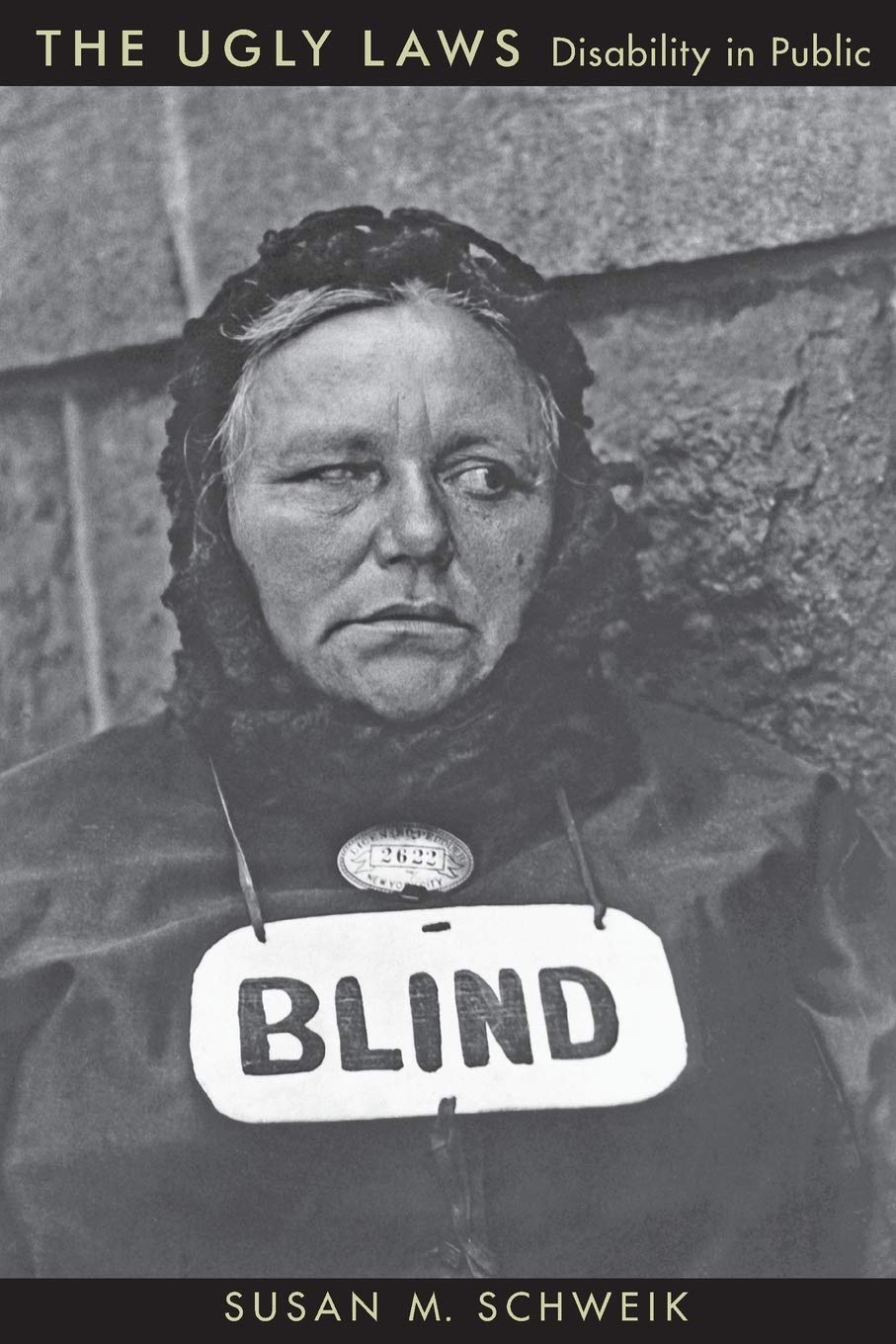
Title
The Ugly Laws: Disability In Public (The History Of Disability, 3)
Sold by Ergodebooks, an authorized reseller.
Returns accepted within 30 days | support@ergodebooks.com
Shipping Information
- Free Standard Shipping — United States only
- Processing Time: 3–5 business days
- Estimated Delivery: 6–10 business days after dispatch
- Double-boxed, fully insured & discreetly packaged
- Tracking number sent via email once dispatched
Returns & Refund
Returns accepted within 30 days of delivery.
Damaged or Defective Item
Free return shipping + replacement or full refund
Wrong Item Received
Free return shipping + replacement or full refund
Change of Mind
Return shipping at customer's expense · 25% restocking fee applies
Payment Option

The Murky History Behind Municipal Laws Criminalizing Disabilityin The Latenineteenth And Earlytwentieth Centuries, Municipal Laws Targeting Unsightly Beggars Sprang Up In Cities Across America. Seeming To Criminalize Disability And Thus Offering A Visceral Example Of Discrimination, These Ugly Laws Have Become A Sort Of Shorthand For Oppression In Disability Studies, Law, And The Arts.In This Watershed Study Of The Ugly Laws, Susan M. Schweik Uncovers The Murky History Behind The Laws, Situating The Varied Legislation In Its Historical Context And Exploring In Detail What The Laws Meant. Illustrating How The Laws Join The History Of The Disabled And The Poor, Schweik Not Only Gives The Reader A Deeper Understanding Of The Ugly Laws And The Cities Where They Were Generated, She Locates The Laws At A Crucial Intersection Of Evolving And Unstable Concepts Of Race, Nation, Sex, Class, And Gender. Moreover, She Explores The History Of Resistance To The Ordinances, Using The Often Harrowing Life Stories Of Those Most Affected By Their Passage. Moving To The Laws More Recent History, Schweik Analyzes The Shifting Cultural Memory Of The Ugly Laws, Examining How They Have Been Usedand Misusedby Academics, Activists, Artists, Lawyers, And Legislators.
⚠️ WARNING (California Proposition 65):
This product may contain chemicals known to the State of California to cause cancer, birth defects, or other reproductive harm.
For more information, please visit www.P65Warnings.ca.gov.
- Q: What is 'The Ugly Laws: Disability in Public' about? A: 'The Ugly Laws: Disability in Public' by Susan M. Schweik explores the history of municipal laws that criminalized disability in America during the late 19th and early 20th centuries. The book examines how these laws discriminated against disabled individuals and their societal implications.
- Q: Who is the author of this book? A: The author of 'The Ugly Laws: Disability in Public' is Susan M. Schweik, a scholar known for her work in disability studies.
- Q: How many pages does the book have? A: The book contains 443 pages.
- Q: What is the binding type of this book? A: 'The Ugly Laws: Disability in Public' is available in paperback binding.
- Q: When was this book published? A: 'The Ugly Laws: Disability in Public' was published on August 30, 2010.
- Q: Is this book in new condition? A: Yes, the book is listed as being in new condition.
- Q: What topics does the book cover regarding disability? A: The book covers topics such as the historical context of ugly laws, discrimination against disabled individuals, societal perceptions of disability, and the resistance against such laws.
- Q: Can this book be useful for understanding disability rights? A: Yes, 'The Ugly Laws: Disability in Public' provides valuable insights into the history of disability rights and the evolution of societal attitudes towards disability.
- Q: What kind of research is presented in this book? A: The book presents a watershed study that combines historical analysis, legislative review, and personal narratives of those affected by the ugly laws.
- Q: Is this book suitable for academic research? A: Yes, this book is suitable for academic research in fields such as disability studies, history, sociology, and law.