If you have any questions, you are always welcome to contact us. We'll get back to you as soon as possible, withing 24 hours on weekdays.
Customer service
All questions about your order, return and delivery must be sent to our customer service team by e-mail at yourstore@yourdomain.com
Sale & Press
If you are interested in selling our products, need more information about our brand or wish to make a collaboration, please contact us at press@yourdomain.com
Help
If you have any questions, you are always welcome to contact us. We'll get back to you as soon as possible, withing 24 hours on weekdays.
Customer service
All questions about your order, return and delivery must be sent to our customer service team by e-mail at yourstore@yourdomain.com
Sale & Press
If you are interested in selling our products, need more information about our brand or wish to make a collaboration, please contact us at press@yourdomain.com
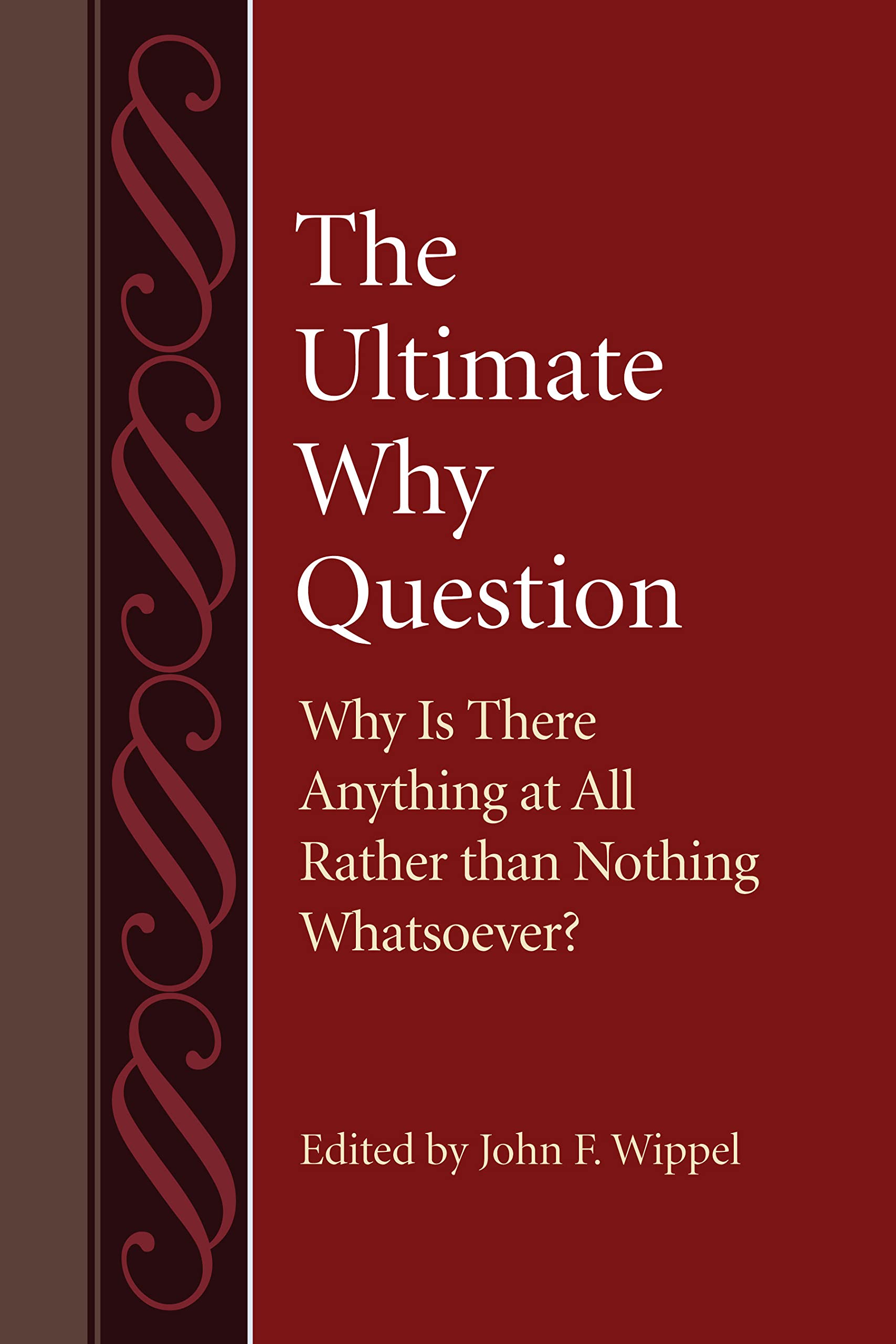
This volume gathers studies by prominent scholars and philosophers about the question how have major figures from the history of philosophy, and some contemporary philosophers, addressed 'the ultimate why question': why is there anything at all rather than nothing whatsoever? The authors take this question seriously, striving to go beyond accounting for the present state of reality as distinguished from a prior or subsequent state, to the more profound question of discerning why anything whatsoever exists.The responses are varied: Lloyd P. Gerson considers Greek philosophy, and May Sim examines Chinese philosophy. Jon McGinnis explores a leading medieval Muslim philosopher, Avicenna, and volume editor John F. Wippel explores a leading medieval Christian philosopher, Thomas Aquinas. These chapters are followed by four responses from the modern period: Tad M. Schmaltz on Descartes; Daniel Dahlstrom on Leibniz, especially as he is understood by Heidegger; Edward C. Halper on Hegel; and, finally, Holger Zaborowski on F. W. J. Schelling.The final section of the book contains personal responses proposed by three contemporary thinkers who have addressed the problem in very different waysRobert Cummings Neville, Brian Martine, and Nicholas Rescher.Readers will gain a greater understanding and appreciation of an issue that has taxed the ingenuity of many philosophers through the centuries and continues to intrigue many thinkers today.
⚠️ WARNING (California Proposition 65):
This product may contain chemicals known to the State of California to cause cancer,
birth defects, or other reproductive harm.
For MAP (Minimum Advertised Price) violations and Intellectual Property (IP) or Trademark concerns, please contact:
support@ergodebooks.com
⚠️ California Proposition 65 Warning: Some products sold on this website may expose you to chemicals known to the State of California to cause cancer, birth defects, or other reproductive harm. For more information, visit www.P65Warnings.ca.gov.