
Title
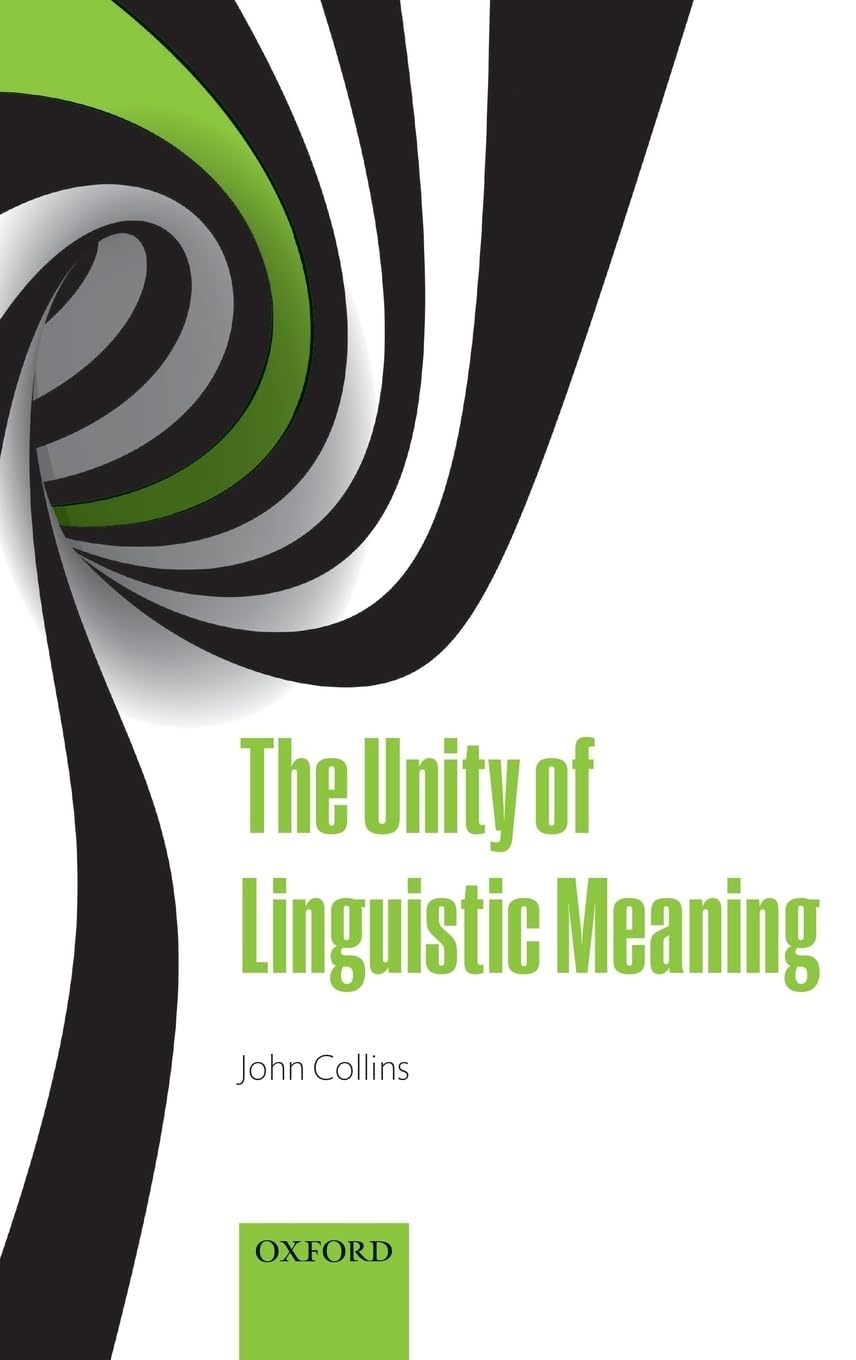
The Unity Of Linguistic Meaning,Used
Sold by Ergodebooks, an authorized reseller.
Returns accepted within 30 days | support@ergodebooks.com
Shipping Information
- Free Standard Shipping — United States only
- Processing Time: 3–5 business days
- Estimated Delivery: 6–10 business days after dispatch
- Double-boxed, fully insured & discreetly packaged
- Tracking number sent via email once dispatched
Returns & Refund
Returns accepted within 30 days of delivery.
Damaged or Defective Item
Free return shipping + replacement or full refund
Wrong Item Received
Free return shipping + replacement or full refund
Change of Mind
Return shipping at customer's expense · 25% restocking fee applies
Payment Option

The problem of the unity of the proposition is almost as old as philosophy itself, and was one of the central themes of early analytical philosophy, greatly exercising the minds of Frege, Russell, Wittgenstein, and Ramsey. The problem is how propositions or meanings can be simultaneously unities (single things) and complexes, made up of parts that are autonomous of the positions they happen to fill in any given proposition. The problem has been associated with numerous paradoxes and has motivated general theories of thought and meaning, but has eluded any consensual resolution; indeed, the problem is sometimes thought to be wholly erroneous, a result of atomistic assumptions we should reject. In short, the problem has been thought to be of merely historical interest. Collins argues that the problem is very real and poses a challenge to any theory of linguistic meaning. He seeks to resolve the problem by laying down some minimal desiderata on a solution and presenting a uniquely satisfying account. The first part of the book surveys and rejects extant 'solutions' and dismissals of the problem from (especially) Frege and Russell, and a host of more contemporary thinkers, including Davidson and Dummett. The book's second part offers a novel solution based upon the properties of a basic syntactic principle called 'Merge', which may be said to create objects inside objects, thus showing how unities can be both single things but also made up of proper parts. The solution is defended from both philosophical and linguistic perspectives. The overarching ambition of the book, therefore, is to strengthen the ties between current linguistics and contemporary philosophy of language in a way that is genuinely sensitive to the history of both fields.
⚠️ WARNING (California Proposition 65):
This product may contain chemicals known to the State of California to cause cancer, birth defects, or other reproductive harm.
For more information, please visit www.P65Warnings.ca.gov.