If you have any questions, you are always welcome to contact us. We'll get back to you as soon as possible, withing 24 hours on weekdays.
Customer service
All questions about your order, return and delivery must be sent to our customer service team by e-mail at yourstore@yourdomain.com
Sale & Press
If you are interested in selling our products, need more information about our brand or wish to make a collaboration, please contact us at press@yourdomain.com
Help
If you have any questions, you are always welcome to contact us. We'll get back to you as soon as possible, withing 24 hours on weekdays.
Customer service
All questions about your order, return and delivery must be sent to our customer service team by e-mail at yourstore@yourdomain.com
Sale & Press
If you are interested in selling our products, need more information about our brand or wish to make a collaboration, please contact us at press@yourdomain.com
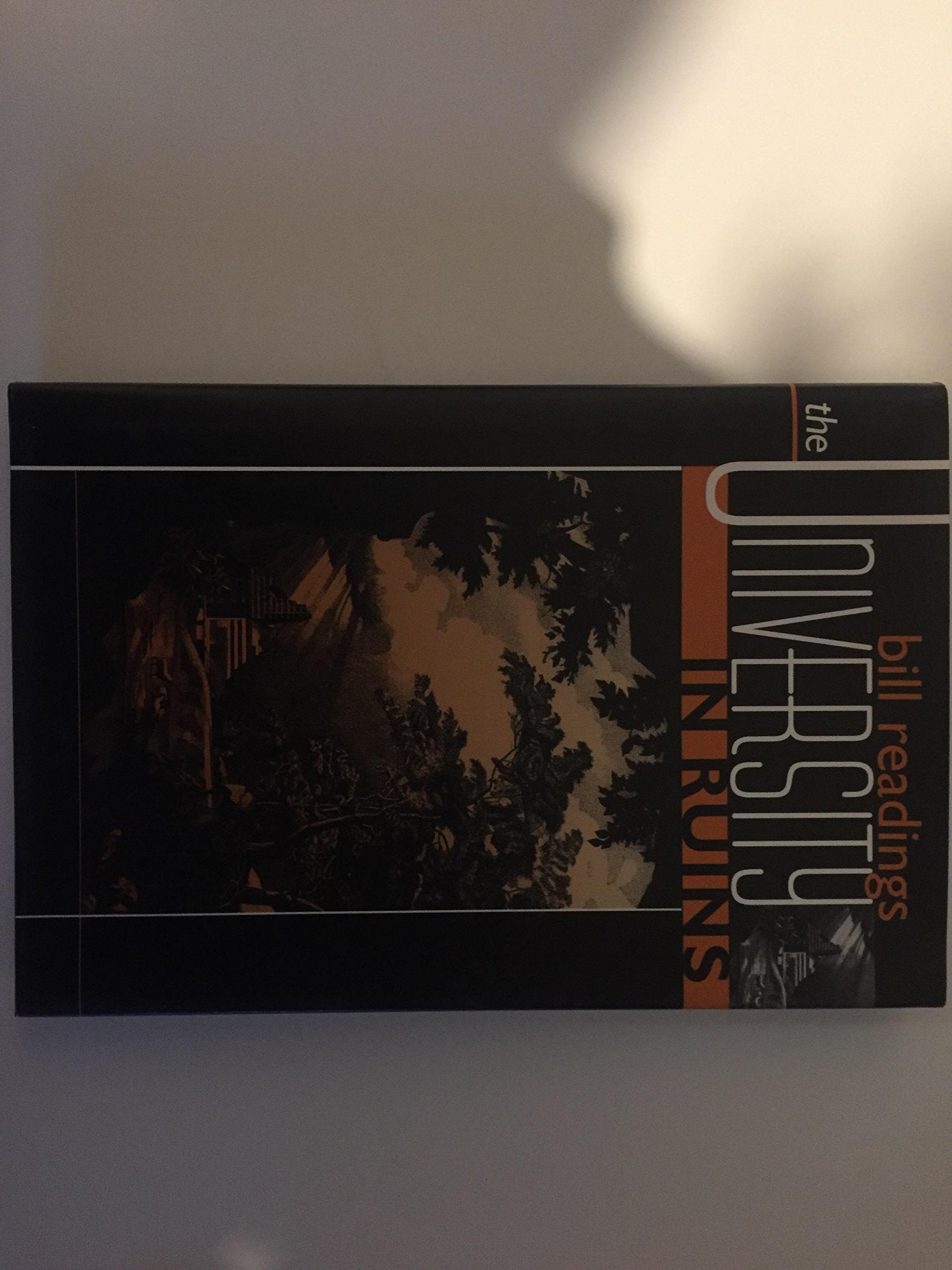
It is no longer clear what role the University plays in society. The structure of the contemporary University is changing rapidly, and we have yet to understand what precisely these changes will mean. Is a new age dawning for the University, the renaissance of higher education under way? Or is the University in the twilight of its social function, the demise of higher education fast approaching?We can answer such questions only if we look carefully at the different roles the University has played historically and then imagine how it might be possible to live, and to think, amid the ruins of the University. Tracing the roots of the modern American University in German philosophy and in the work of British thinkers such as Newman and Arnold, Bill Readings argues that historically the integrity of the modern University has been linked to the nationstate, which it has served by promoting and protecting the idea of a national culture. But now the nationstate is in decline, and national culture no longer needs to be either promoted or protected. Increasingly, universities are turning into transnational corporations, and the idea of culture is being replaced by the discourse of 'excellence.' On the surface, this does not seem particularly pernicious.The author cautions, however, that we should not embrace this technobureaucratic appeal too quickly. The new University of Excellence is a corporation driven by market forces, and, as such, is more interested in profit margins than in thought. Readings urges us to imagine how to think, without concession to corporate excellence or recourse to romantic nostalgia within an institution in ruins. The result is a passionate appeal for a new community of thinkers.
⚠️ WARNING (California Proposition 65):
This product may contain chemicals known to the State of California to cause cancer,
birth defects, or other reproductive harm.
For MAP (Minimum Advertised Price) violations and Intellectual Property (IP) or Trademark concerns, please contact:
support@ergodebooks.com
⚠️ California Proposition 65 Warning: Some products sold on this website may expose you to chemicals known to the State of California to cause cancer, birth defects, or other reproductive harm. For more information, visit www.P65Warnings.ca.gov.