
Title
The Unnatural History of the Sea,Used
Sold by Ergodebooks, an authorized reseller.
Returns accepted within 30 days | support@ergodebooks.com
Shipping Information
- Free Standard Shipping — United States only
- Processing Time: 3–5 business days
- Estimated Delivery: 6–10 business days after dispatch
- Double-boxed, fully insured & discreetly packaged
- Tracking number sent via email once dispatched
Returns & Refund
Returns accepted within 30 days of delivery.
Damaged or Defective Item
Free return shipping + replacement or full refund
Wrong Item Received
Free return shipping + replacement or full refund
Change of Mind
Return shipping at customer's expense · 25% restocking fee applies
Payment Option

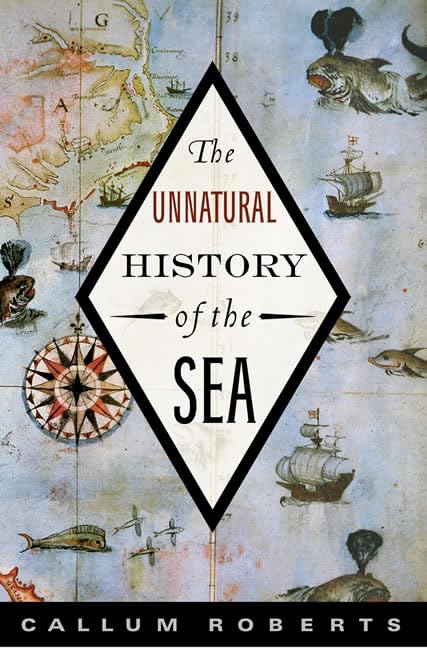
Humanity can make short work of the oceans creatures. In 1741, hungry explorers discovered herds of Stellers sea cow in the Bering Strait, and in less than thirty years, the amiable beast had been harpooned into extinction. Its a classic story, but a key fact is often omitted. Bering Island was the last redoubt of a species that had been decimated by hunting and habitat loss years before the explorers set sail.As Callum M. Roberts reveals in The Unnatural History of the Sea, the oceans bounty didnt disappear overnight. While todays fishing industry is ruthlessly efficient, intense exploitation began not in the modern era, or even with the dawn of industrialization, but in the eleventh century in medieval Europe. Roberts explores this long and colorful history of commercial fishing, taking readers around the world and through the centuries to witness the transformation of the seas.Drawing on firsthand accounts of early explorers, pirates, merchants, fishers, and travelers, the book recreates the oceans of the past: waters teeming with whales, sea lions, sea otters, turtles, and giant fish. The abundance of marine life described by fifteenth century seafarers is almost unimaginable today, but Roberts both brings it alive and artfully traces its depletion. Collapsing fisheries, he shows, are simply the latest chapter in a long history of unfettered commercialization of the seas.The story does not end with an empty ocean. Instead, Roberts describes how we might restore the splendor and prosperity of the seas through smarter management of our resources and some simple restraint. From the coasts of Florida to New Zealand, marine reserves have fostered spectacular recovery of plants and animals to levels not seen in a century. They prove that history need not repeat itself: we can leave the oceans richer than we found them.
⚠️ WARNING (California Proposition 65):
This product may contain chemicals known to the State of California to cause cancer, birth defects, or other reproductive harm.
For more information, please visit www.P65Warnings.ca.gov.
- Q: What is the page count of 'The Unnatural History of the Sea'? A: This book contains four hundred fifty-six pages. It provides an in-depth exploration of the history of the oceans and humanity's impact on marine life.
- Q: What type of binding does this book have? A: The book is bound in hardcover. This durable format is ideal for frequent reading and ensures longevity.
- Q: Who is the author of this book? A: The author is Dr. Callum Roberts. He is renowned for his expertise in marine conservation and has written extensively on oceanic issues.
- Q: What themes are covered in 'The Unnatural History of the Sea'? A: The book explores themes of marine life depletion and restoration. It discusses historical exploitation and offers solutions for preserving ocean health.
- Q: What is the genre of 'The Unnatural History of the Sea'? A: This book falls under the genre of non-fiction. It combines history, science, and environmental advocacy to inform readers about ocean conservation.
- Q: How should I read 'The Unnatural History of the Sea'? A: You can read this book at your own pace. It is suitable for anyone interested in marine ecology, history, or conservation efforts.
- Q: Is this book suitable for young readers? A: Yes, it can be suitable for older teens and adults. However, parental guidance may be needed for younger readers due to complex themes.
- Q: What format is best for reading this book? A: The hardcover format is ideal for reading at home or in a library. It offers durability and a professional appearance for display.
- Q: How do I care for my copy of 'The Unnatural History of the Sea'? A: To maintain its condition, keep the book in a dry, cool place. Avoid direct sunlight and handle it with clean hands to prevent dirt.
- Q: What is the best way to store this book? A: Store the book upright on a shelf. It’s best to keep it away from moisture and extreme temperatures to prevent damage.
- Q: Can I return this book if I don't like it? A: Yes, most book retailers offer return policies. Check the specific store's return policy for details on time frames and conditions.
- Q: What if my copy of the book arrives damaged? A: If your book is damaged upon arrival, contact the retailer for a replacement or refund. Most retailers have customer service to assist with this issue.
- Q: How can I get support for issues with the book? A: For support, reach out to the retailer where you purchased the book. They can help with returns, exchanges, or other concerns.
- Q: How does this book compare to other marine conservation books? A: This book offers a unique historical perspective on marine conservation. It stands out by detailing the long-term effects of human actions on the seas.
- Q: Is this book suitable for professionals in marine biology? A: Yes, it is suitable for professionals. It provides valuable insights and historical context that can enhance understanding of marine ecosystems.
- Q: What makes this book a good choice for learning about oceans? A: This book combines rich historical narratives with scientific facts, making it an engaging resource for anyone interested in oceanic studies.