
Title
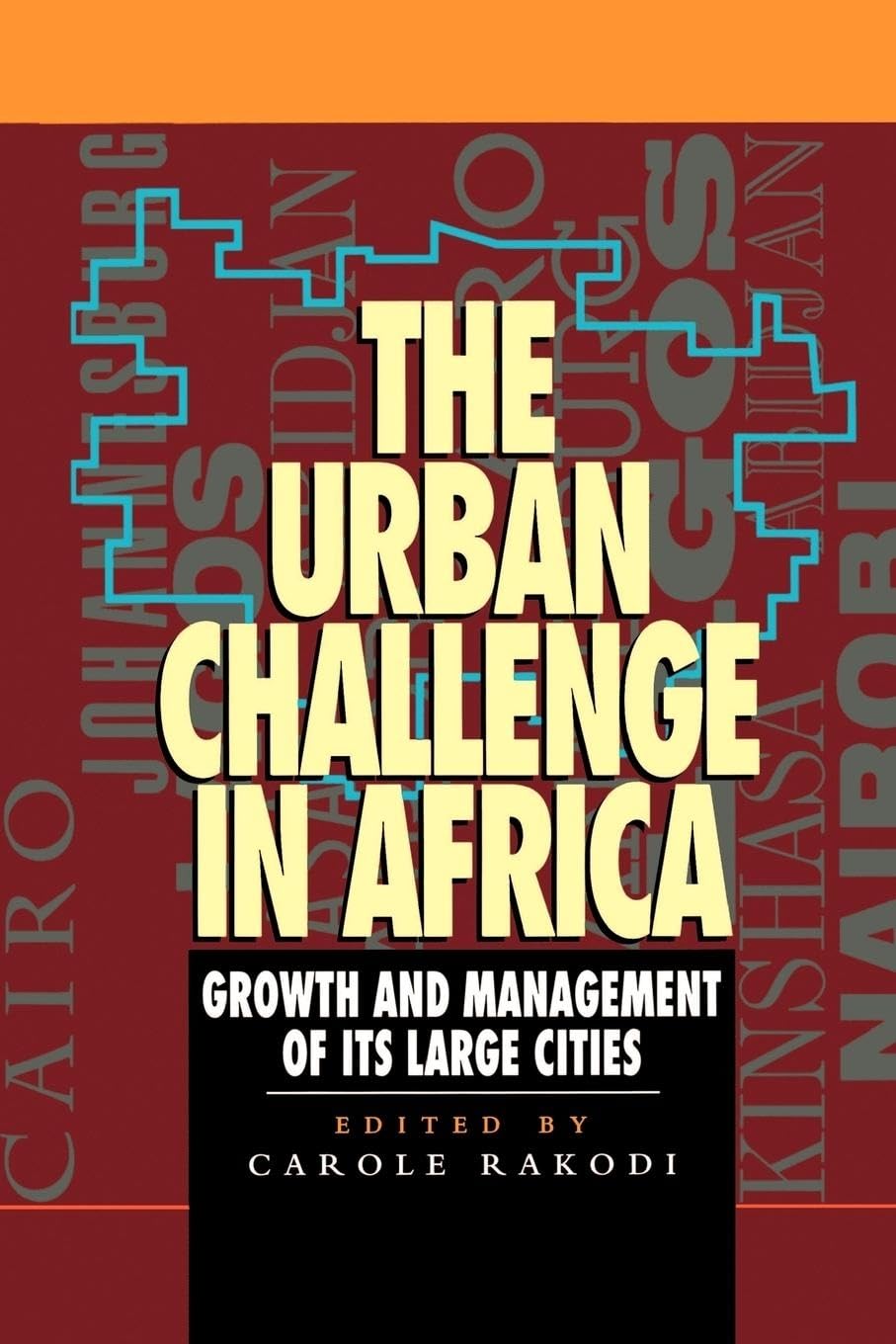
The Urban Challenge in Africa: Growth and Management of Its Large Cities,New
Sold by Ergodebooks, an authorized reseller.
Returns accepted within 30 days | support@ergodebooks.com
Shipping Information
- Free Standard Shipping — United States only
- Processing Time: 3–5 business days
- Estimated Delivery: 6–10 business days after dispatch
- Double-boxed, fully insured & discreetly packaged
- Tracking number sent via email once dispatched
Returns & Refund
Returns accepted within 30 days of delivery.
Damaged or Defective Item
Free return shipping + replacement or full refund
Wrong Item Received
Free return shipping + replacement or full refund
Change of Mind
Return shipping at customer's expense · 25% restocking fee applies
Payment Option

Scholars from a range of national and disciplinary backgrounds examine the growth of the largest cities in Africatheir characteristics, their dynamism despite economic crisis, and the results of attempts to manage them. The introductory chapters consider the effects of global forces on Africa and its major cities, revealing that the new phase of globalization has reinforced the continent's marginalization, impoverishment, indebtedness, and lack of policy autonomy, rather than leading to economic growth and diversification. Case studies of Cairo, Lagos, Johannesburg, Kinshasa, Abidjan, and Nairobi reflect the experience of the largest urban agglomerations; northern, southern, western, and eastern Africa; anglophone and francophone Africa; cities with an essentially domestic role and those with wider regional or continental roles; and cities on a continuum from relatively tight management to virtual collapse of public sector institutions. Each scholar examines economic and demographic trends; political, social, and physical characteristics; and arrangements for planning and management. The experiences of these and other cities are drawn upon in thematic chapters dealing with the characteristics of city economies, property markets, politics, governance, and social organization, and the lives of urban people; including migration patterns and the effects of impoverishment. The book shows that Africa's largest cities, even those in countries experiencing economic and state breakdown, will continue to grow and have vital economic roles. And while administrative systems have failed to cope and the institutional and financial capacity to deal with future growth is lacking, some more realistic and promising approaches to urban policy, planning, and management have emerged in recent years. The final chapters, therefore, are not entirely pessimistic about the continent's ability to rise to the urban challenge.
⚠️ WARNING (California Proposition 65):
This product may contain chemicals known to the State of California to cause cancer, birth defects, or other reproductive harm.
For more information, please visit www.P65Warnings.ca.gov.