If you have any questions, you are always welcome to contact us. We'll get back to you as soon as possible, withing 24 hours on weekdays.
Customer service
All questions about your order, return and delivery must be sent to our customer service team by e-mail at yourstore@yourdomain.com
Sale & Press
If you are interested in selling our products, need more information about our brand or wish to make a collaboration, please contact us at press@yourdomain.com
Help
If you have any questions, you are always welcome to contact us. We'll get back to you as soon as possible, withing 24 hours on weekdays.
Customer service
All questions about your order, return and delivery must be sent to our customer service team by e-mail at yourstore@yourdomain.com
Sale & Press
If you are interested in selling our products, need more information about our brand or wish to make a collaboration, please contact us at press@yourdomain.com
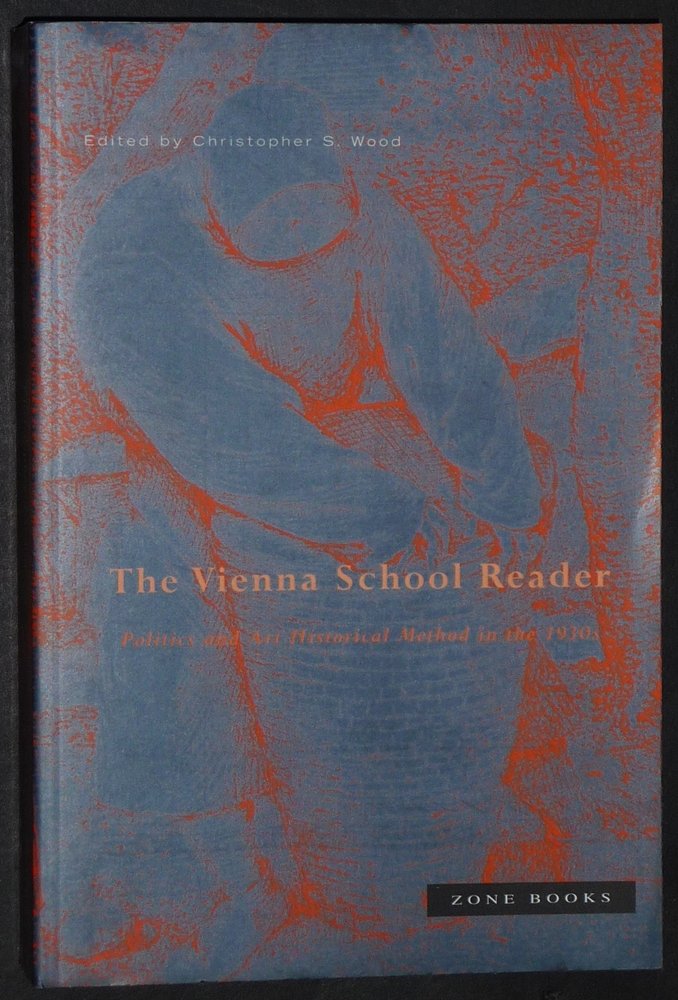
This volume introduces to an Englishlanguage audience the writings of the socalled new Vienna School of art history. In the 1930s, Hans Sedlmayr and Otto Pcht undertook an ambitious extension of the art historical project of Alos Riegl (18581905). Sedlmayr and Pcht began with an aestheticist conception of the autonomy and irreducibility of the artistic process. At the same time, they believed they could read entire cultures and worldviews in the work of art. The key to this contextualist alchemy was the concept of structure, a kind of deep formal property that the work of art shared with the world.Sedlmayr and Pchts project immediately caught the attention of thinkers like Walter Benjamin who were similarly impatient with traditional, cautious empiricist scholarship. But the creativity of the new art history had its dark side. Sedlmayr used his art history as a vehicle for a sweeping critique of modernity that soon escalated into nationalist and outright fascist polemic. Sedlmayr, and by extension the whole scholarly project of Strukturanalyse, were sharply repudiated by Meyer Schapiro and later Ernst Gombrich.The idea of this volume is to bring the drama of this methodological and political encounter to the attention of Englishspeaking art historians and reveal the analogies between the Vienna School project and the antiempiricist cultural histories of our own time.
⚠️ WARNING (California Proposition 65):
This product may contain chemicals known to the State of California to cause cancer,
birth defects, or other reproductive harm.
For MAP (Minimum Advertised Price) violations and Intellectual Property (IP) or Trademark concerns, please contact:
support@ergodebooks.com
⚠️ California Proposition 65 Warning: Some products sold on this website may expose you to chemicals known to the State of California to cause cancer, birth defects, or other reproductive harm. For more information, visit www.P65Warnings.ca.gov.