
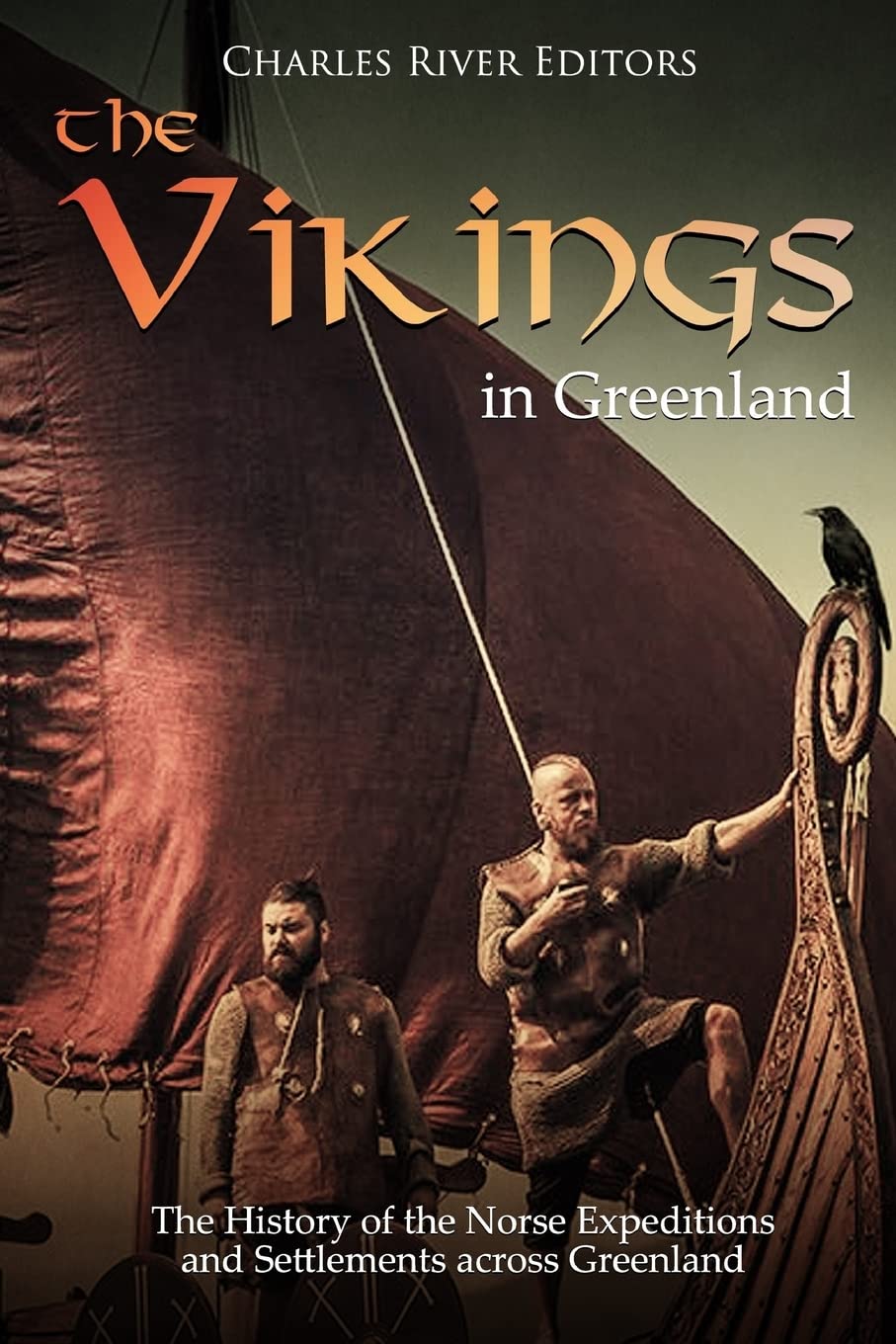
Title
The Vikings in Greenland: The History of the Norse Expeditions and Settlements across Greenland,Used
Sold by Ergodebooks, an authorized reseller.
Returns accepted within 30 days | support@ergodebooks.com
Shipping Information
- Free Standard Shipping — United States only
- Processing Time: 3–5 business days
- Estimated Delivery: 6–10 business days after dispatch
- Double-boxed, fully insured & discreetly packaged
- Tracking number sent via email once dispatched
Returns & Refund
Returns accepted within 30 days of delivery.
Damaged or Defective Item
Free return shipping + replacement or full refund
Wrong Item Received
Free return shipping + replacement or full refund
Change of Mind
Return shipping at customer's expense · 25% restocking fee applies
Payment Option

*Includes pictures*Includes medieval accounts*Includes online resources and a bibliography for further readingOver the centuries, the West has become fascinated by the Vikings, one of the most mysterious and interesting European civilizations. In addition to being perceived as a remarkably unique culture among its European counterparts, whats known and not known about the Vikings accomplishments has added an intriguing aura to the historical narrative. Were they fierce and fearsome warriors? Were they the first Europeans to visit North America? It seems some of the legends are true, and some are just that, legend.Like many civilizations of past millennia, the Vikings are remembered in popular culture more for the fantastical accounts of their history than for reality. The written records of the history of the Viking period, consisting mostly of Norse sagas, metaphoric poems called skalds and monastic chronicles, were written down well after the events they described and tended to be lurid accounts rife with hyperbole. Furthermore, the most scathing tales of Viking raids are contained in the histories of monastic communities which were targets of Norse rapacity. These chronicles speak of the heathen Viking depredations of monastic treasuries and the ferocious torture and killing of Christian monks. The colorful bloody tales were certainly based on more than grains of truth, but they were also purposefully augmented to inject drama into history. Similarly Norse sagas written down in the postViking Age fixed what had hitherto been flexible oral tradition. They were often slanted to legitimize a clan or leader's authority by emphasizing an ancestor's bravery and skill in pillaging opponent's communities.However, the Vikings reputation for ferocious seaborne attacks along the coasts of Northern Europe is no exaggeration. It is true that the Norsemen, who traded extensively throughout Europe, often increased the profits obtained from their nautical ventures through plunder, acquiring precious metals and slaves. Of course, the Vikings were not the only ones participating in this kind of income generation between the 8th and the 11th centuries, European tribes, clans, kingdoms and monastic communities were quite adept at fighting with each other for the purpose of obtaining booty. The Vikings were simply more consistently successful than their contemporaries and thus became suitable symbols for the iniquity of the times.The Norsemen were also medieval Europes greatest explorers, moving across the North Atlantic to settle in Iceland, Greenland, and even North America. Their settlements in Greenland were perhaps the most impressive, given that the bleak and unforgiving land was mostly uninhabited when they first made it there. Greenland is huge, measuring almost 840,000 square miles (1.35 million square kilometers). The interior is uninhabitable glacier and mountain, but the periphery is cut by countless fjords that shelter the inhabitants from some of the worst of the winds. The fjords in the western part of the island, especially the southwestern part, are made more temperate by relatively warm sea currents and can support grass and a diverse amount of wildlife. Even so, winters are harsh even in the southern latitudes, and ice clogs the northern reaches for much of the year.Remote, and subject to long winters during which pack ice would cut it off from the rest of the world, Greenland seemed an unlikely place to found a colony. In fact, Greenland was only circumnavigated in the early 20th century, and many of its further reaches were unmapped until the modern day. Nonetheless, the Norse managed to live there for about 450 years among some of their most remote outposts, and Greenland would maintain strong ties to the rest of Europe.
⚠️ WARNING (California Proposition 65):
This product may contain chemicals known to the State of California to cause cancer, birth defects, or other reproductive harm.
For more information, please visit www.P65Warnings.ca.gov.