
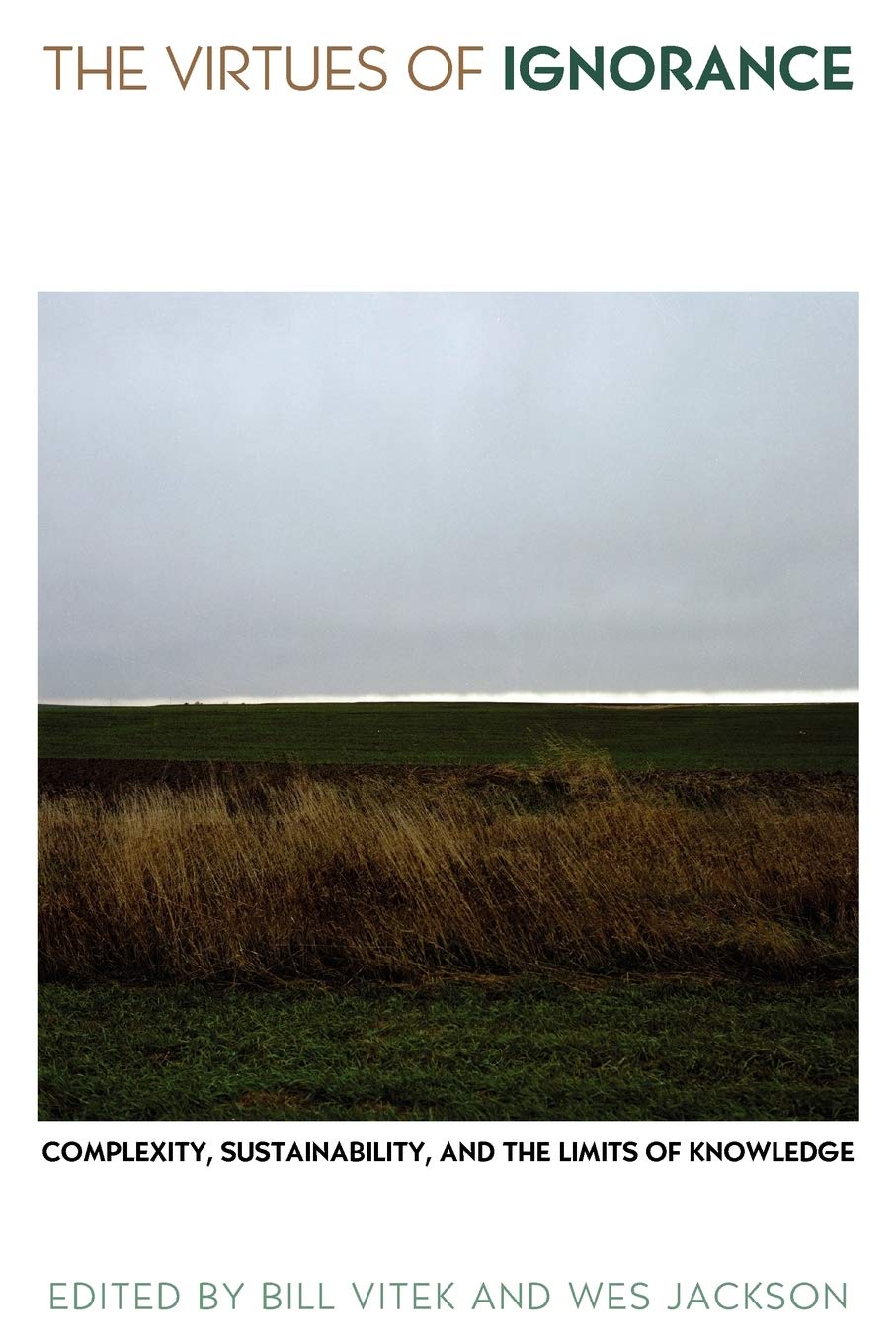
Title
The Virtues Of Ignorance: Complexity, Sustainability, And The Limits Of Knowledge (Culture Of The Land),New
Sold by Ergodebooks, an authorized reseller.
Returns accepted within 30 days | support@ergodebooks.com
Shipping Information
- Free Standard Shipping — United States only
- Processing Time: 3–5 business days
- Estimated Delivery: 6–10 business days after dispatch
- Double-boxed, fully insured & discreetly packaged
- Tracking number sent via email once dispatched
Returns & Refund
Returns accepted within 30 days of delivery.
Damaged or Defective Item
Free return shipping + replacement or full refund
Wrong Item Received
Free return shipping + replacement or full refund
Change of Mind
Return shipping at customer's expense · 25% restocking fee applies
Payment Option

Human dependence on technology has increased exponentially over the past several centuries, and so too has the notion that we can fix environmental problems with scientific applications. The Virtues of Ignorance: Complexity, Sustainability, and the Limits of Knowledge proposes an alternative to this hubristic, shortsighted, and dangerous worldview. The contributors argue that uncritical faith in scientific knowledge has created many of the problems now threatening the planet and that our wholesale reliance on scientific progress is both untenable and myopic. Bill Vitek, Wes Jackson, and a diverse group of thinkers, including Wendell Berry, Anna Peterson, and Robert RootBernstein, offer profound arguments for the advantages of an ignorancebased worldview. Their essays explore this philosophy from numerous perspectives, including its origins, its essence, and how its implementation can preserve vital natural resources for posterity. All conclude that we must simply accept the proposition that our ignorance far exceeds our knowledge and always will. Rejecting the belief that science and technology are benignly at the service of society, the authors argue that recognizing ignorance might be the only path to reliable knowledge. They also uncover an interesting paradox: knowledge and insight accumulate fastest in the minds of those who hold an ignorancebased worldview, for by examining the alternatives to a technologybased culture, they expand their imaginations. Demonstrating that knowledgebased worldviews are more dangerous than useful, The Virtues of Ignorance looks closely at the relationship between the land and the future generations who will depend on it. The authors argue that we can never improve upon nature but that we can, by putting this new perspective to work in our professional and personal lives, live sustainably on Earth.
⚠️ WARNING (California Proposition 65):
This product may contain chemicals known to the State of California to cause cancer, birth defects, or other reproductive harm.
For more information, please visit www.P65Warnings.ca.gov.
- Q: What is the page count of this book? A: The book has three hundred sixty-two pages. It provides an in-depth exploration of its themes and arguments.
- Q: What are the dimensions of the book? A: The book measures six inches in length, nine inches in height, and zero point nine one inches in width.
- Q: What is the binding type of this book? A: The book is paperback bound. This makes it lightweight and flexible for easy reading.
- Q: Who is the author of this book? A: The author of the book is Bill Vitek. He collaborates with various contributors to present diverse perspectives.
- Q: What genre does this book fall under? A: This book is categorized under Engineering. It discusses philosophical and environmental themes through an engineering lens.
- Q: Is this book suitable for academics? A: Yes, this book is suitable for academics. It provides complex arguments and insights relevant to fields like environmental studies.
- Q: Can I read this book if I'm a beginner? A: Yes, beginners can read this book. Its accessible language and structured essays make it digestible for various readers.
- Q: How should I store this book? A: Store this book in a cool, dry place away from direct sunlight. This helps preserve the binding and pages.
- Q: How do I keep this book in good condition? A: To maintain this book's condition, avoid bending the cover and keep it on a shelf upright. Handle it gently when reading.
- Q: What if my book arrives damaged? A: If your book arrives damaged, contact the seller for a return or replacement. Most sellers have customer service policies in place.
- Q: Is there a warranty for this book? A: No, books typically do not come with a warranty. However, check the seller's policies for return options.
- Q: What if I need to return this book? A: If you need to return the book, refer to the seller's return policy. Generally, returns are accepted within a specific timeframe.
- Q: Is this book appropriate for children? A: No, this book is not specifically written for children. It discusses complex themes that may not be suitable for younger readers.
- Q: Is this book part of a series? A: No, this book is not part of a series. It stands alone in its exploration of knowledge and ignorance.
- Q: Can this book help with understanding environmental issues? A: Yes, this book provides insights into environmental issues through its examination of knowledge and ignorance. It challenges conventional beliefs.
- Q: What are the key themes of this book? A: The key themes include the limits of knowledge, ignorance as a virtue, and the relationship between humanity and the environment.